


Who’s Still Sending the Ladder Down? Animation Talent Development in 2026

Perspectives from UAL, ScreenSkills and Blinkink on entry-level roles and early-career development.
Something’s felt a little…different in the animation industry lately.
Studios big and small are hustling just to keep the lights on, and you’d be hard pressed to find someone who hasn’t (directly or indirectly) been affected by closures or layoffs. Unfortunately, we often pass these savings onto the most vulnerable; in our case, early-career professionals. Junior role vacancies declined by 6.8% in the last twelve months and, even for those in a job, 40% of creative employers say they can’t afford staff training anymore (1, 2)
That’s why Playgrounds In Motion, where I was producing the industry area, felt like such a breath of fresh air. With artists, studios and students all in the same room for once, it was clear that the desire to send the ladder back down is still there, while young artists’ drive to climb it hadn’t waned either.
Still from BlinkInk’s Trading Cards (Image courtesy of BlinkInk)The only problem is, there just aren’t as many rungs as there used to be.
So, I kept the conversations going. Not from any twisted desire to add to your doomscroll diet, but because I discovered along the way that there was still a lot to celebrate, even if it’s also worth considering how we could be doing better.
UAL
The task of launching young creatives from university into an industry in a state of near constant flux is no mean feat.
Susi Wilkins, Programme Director, Moving Image & Digital Arts, at UAL, explained finding balance in this challenging endeavour is key. Next to craft development, she argues, non technical skills are just as important. That’s why professional skills units also focus on tangible training in building your online presence or even writing a CV, while pointing to the impact of external live briefs in providing hands-on experience for students.
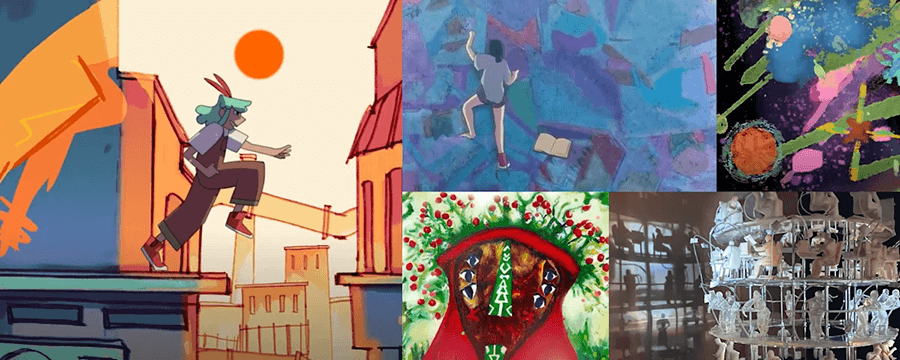
UAL Animation work by Urte ‘Avi’ Karvelyte, Yifei Long, Diana Song, Miki Kondo, Despina Markaki, Patricia Seriniyom, Tiantian Mai, Xin Yue Geng, Flora Cattrell, Mengchao ‘Victor’ Huang, Jack Mirfield, Abby Hunt, Salma Sheik Abdi.
But the early career artists I spoke to, when looking back on university, did have feedback including a perceived lack of teaching on how to move between and within industries, or actionable, up-to-date advice on finding that first rung. As one artist put it, “I saw the entire industry as a nebulous thing to strive for rather than a tangible goal until recently.”
It’s clear that as the industry evolves, so must the systems around it.
This requires close collaboration. Optimistically, Susi notes that in recent years the relationship has felt easier to develop, and through an increase in studio visits, masterclasses and workshops, “there is recognition of a shared responsibility for ensuring our graduates are prepared for industry.” It’s a relationship that is mutually beneficial, for students in need of opportunity and studios in need of skilled workers.
Issues that were already plaguing the industry, such as inequality in access, have only been exacerbated by recent shifts, not to mention wider societal developments like the cost-of-living crisis. Many younger professionals face significant financial barriers, and Susi points to the desperate need for “paid internships for students to gain industry experience” providing them with much needed mentorship from working professionals and their mentors concurrently.
ScreenSkills
No conversation about breaking into UK animation gets far without ScreenSkills entering the chat.
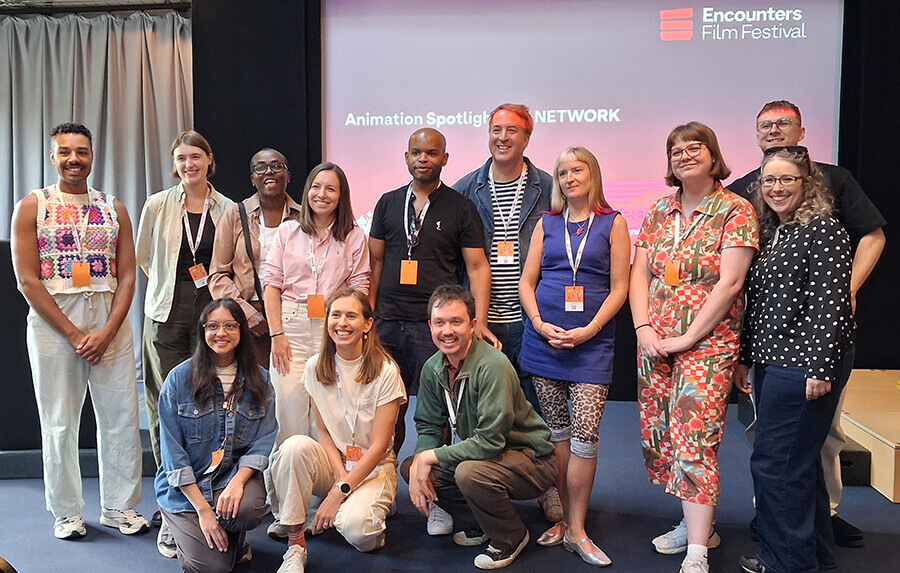
Cohort at Encounters – ScreenSkills (Image courtesy of ScreenSkills)
Through their Animation Skills Fund, they offer a range of programmes from the more technical, like courses in Toon Boom, to training in softer skills on topics like how to handle difficult conversations. Yet, perhaps the most significant offering for early career professionals comes in the form of the Animation Trainee Finder. This keystone programme subsidises paid placements across 2D, 3D, stop-motion, art department and production roles, placing trainees directly on live productions while studios receive co-funding to offset training costs.
With many early career professionals I spoke to, reporting 50 or more applications before even finding themselves in an interview, programmes like this feel like a lifeline.
Kieran Argo, Animation Production Liaison Executive at ScreenSkills, plays a vital role in addressing the immediate skills gaps the industry faces but is also clear-eyed on what the longer-term response needs to be: “we need to think less about filling today’s vacancy and more about building tomorrow’s workforce.”
It’s this macro perspective which, by virtue of sitting above the day-to-day survival pressures of individual studios, ScreenSkills is uniquely positioned to consider.
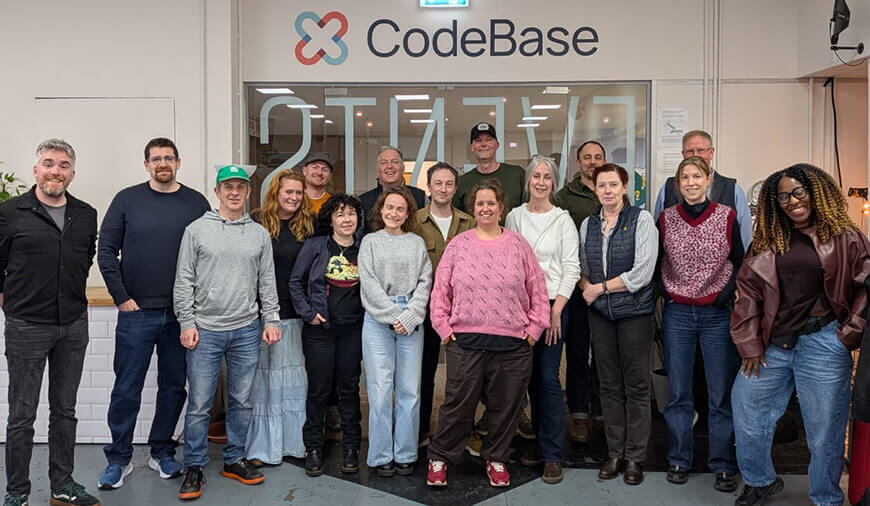
ScreenSkills CodeBase group (Image courtesy of ScreenSkills)
Kieran points out that the industry has long run on a boom-to-bust hiring model, expanding rapidly when productions are greenlit and contracting sharply when they are not. “Talent is not a competitive advantage for one organisation,” Kieran notes. “It is a strategic asset for the industry as a whole.”
Impressively, the current Animation Trainee Finder round has secured 124 weeks of paid placements across a range of productions. That being said, this round saw 530 applicants with only 25 places being offered. It has proven a vitally important rung in the early-career ladder, so one has to consider the impact it could have if only it was made wider.
Blinkink
Great. You’re trained up. Now, how do you get that first job?
It’s a version of the question studios will field at almost every industry event. When I spoke to Bart Yates, Founder and Executive Producer at Blinkink, he suggested the answer lies in a mix of formal pathways and a fair bit of grit.
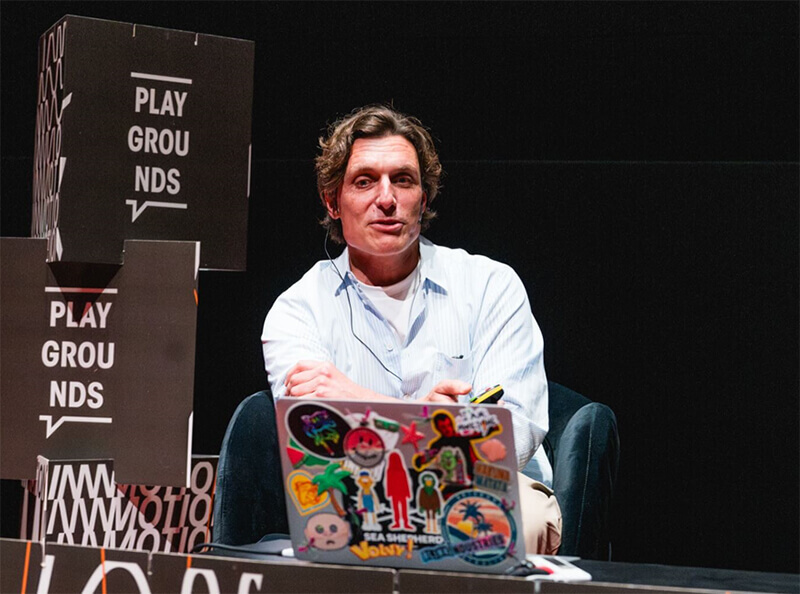
Bart Yates at Playgrounds 2025
From a studio’s perspective, a lot more goes into entry-level recruitment than weighing the relative value of skill sets in Toon Boom vs. Moho. In fact, early on, soft skills are often a better litmus test of whether someone will thrive in a studio environment than their animation chops. According to Bart, even a job at Nando’s might be better preparation than you’d think. It teaches you “to be under pressure, to work as part of a team, to be public facing.”
Their runner programme puts this thinking into practice, and has yielded real results, production manager Charlie Herbert, who started on the front desk, being just one example. These roles expose you to general professional skills, give early career professionals hands-on insights into the runnings of a studio, and often allow them to job shadow across a range of roles.
Bart is candid about the word-of-mouth nature of these opportunities: networks will always matter in this industry. So it was encouraging to see Blinkink’s outreach working to address the imbalances this can create, looking beyond the usual RCAs and NFTSes, with talks at places like Leeds Arts University and as far afield as Brigham Young University in Utah.
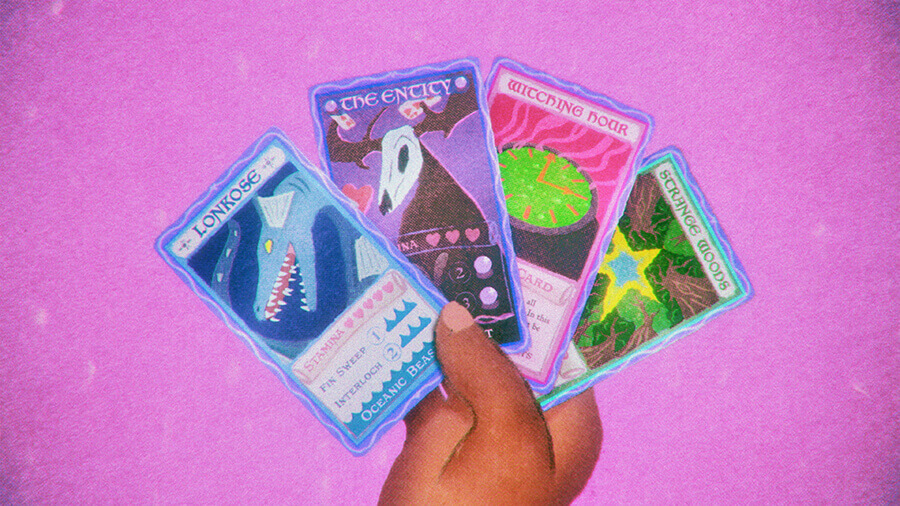
Still from BlinkInk’s Trading Cards (Image courtesy of BlinkInk)
This also extends into creative development initiatives like Film London’s FLAMIN Animations, a commissioning programme for early-career Black-identifying animators, which Blinkink supports with studio access, mentorship and critique sessions. While FLAMIN talent hasn’t yet made it onto their roster, similar initiatives have led to real careers such as the recently signed director Radheya Jang.
With studios time-poor and with budgets tight, seeking out opportunities to help early-career talent can easily fall down the list. But Bart suggests if you ask, “would you mind giving an hour to help a student out? Everybody says yes.” Which is where the grit comes in. That might mean taking that job at Nando’s while you look for that first rung.
Or it might be something that takes a bit more nerve: “Nobody ever calls. Ring reception and go, hi, I’m a student, I’m interested in your company.” I know, phone calls, yuck. But fortune favours the bold, and in 2026, being bold might just look like picking up the phone.
On an industry level, I kept returning to Kieran’s call to think less about today’s vacancies and more about tomorrow’s workforce. That’s admittedly harder when nobody knows what the industry will look like in six months’ time, but creative talent will surely remain its lifeblood, and that makes it worth our investment.
Sweeping changes are hard, especially now, but for both studios and individuals, even small gestures can have real impact. Mentor, inside your company or outside it. Get in touch with unis or ScreenSkills for that. Go to events not just to network for your own benefit, but to give back (Playgrounds In Motion, is a great shout…). At the very least, just don’t ghost job applicants, especially after an interview or two.
I’ve avoided naming AI so far – it seems to get enough airtime as it is – but in response to the changes it has created (and please forgive the corniness), it’s important to keep humanity in how we approach all this. We are still dealing with people, their hopes, dreams, their creativity, their passion.
Those of us lucky enough to work in this industry got here because someone sent the ladder down. Despite the realities of 2026, isn’t it important that we continue to do the same?