

GOAT Review: A Polished Brick

© Sony Pictures
GOAT suffers from a fatal imbalance. What’s on one hand yet another dedication to the visual ingenuity of Sony Imageworks is simultaneously a vapid sports movie that bends the knee to some of American animation’s worst storytelling habits. After movies like Into the Spider-Verse, The Mitchells Vs. The Machines and K-Pop Demon Hunters built Sony’s reputation as a studio with their finger on the pulse of what kinds of stories modern audiences crave, GOAT is a step backwards. Its animation is just as pristine as the very best of Sony’s work, maybe even moreso, but the greatest artists on the planet can’t make up for a rushed story and paper thin characters.
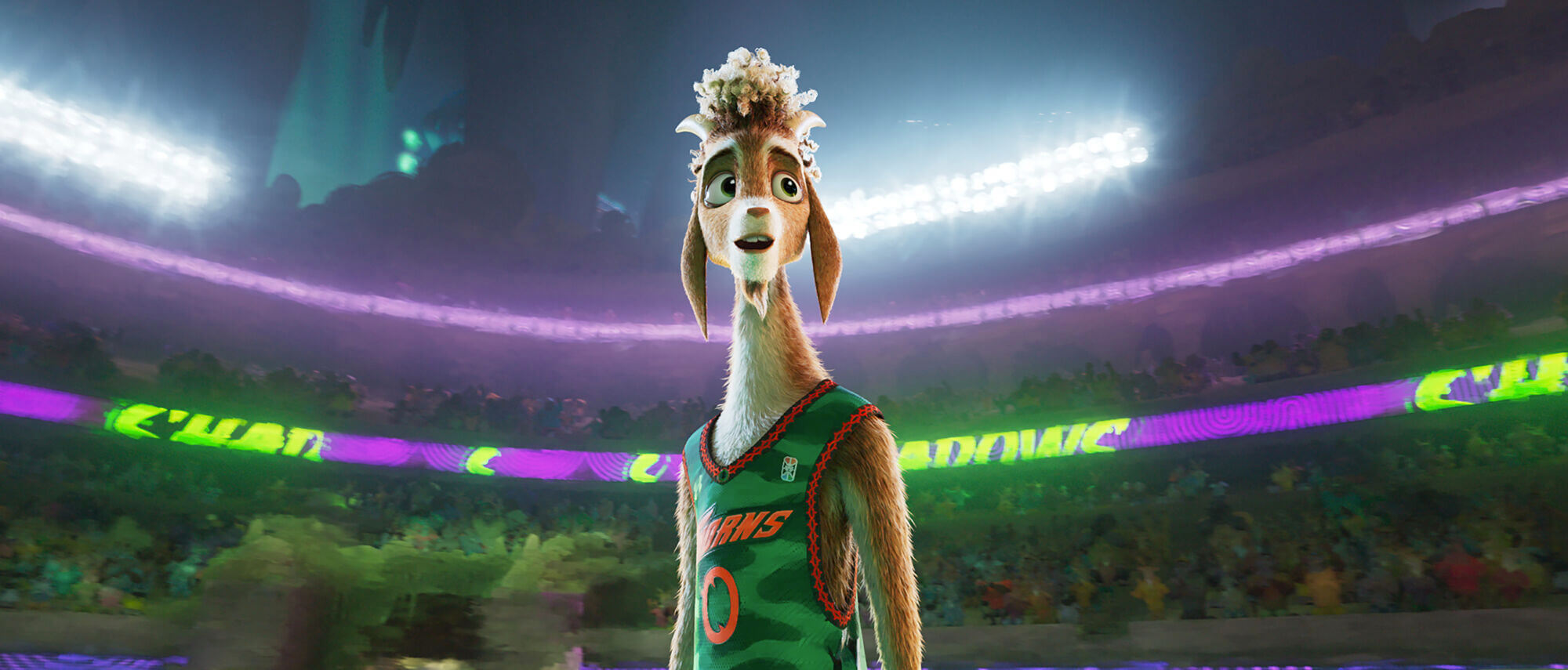
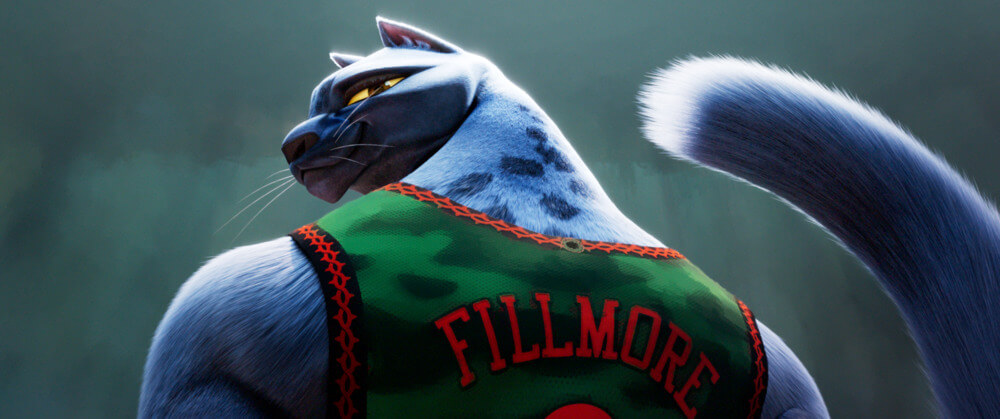
One thing that GOAT gets right is its worldbuilding, as we’re introduced to this universe of anthropomorphised animals. We see the world through Will, the titular goat with dreams of becoming a starting player on the Vineland Thorns Roarball team, GOAT’s slightly more violent, animal-friendly version of basketball. It’s incredibly easy for us to settle into this story having seen versions of it play out on-screen over the decades, alongside the mythologising of the journeys of real world athletes. The character archetypes are fully established through the introduction of Jett Filmore, one of the most celebrated Roarball players in history whose body is slowly letting her down as she looks to guide the Thorns to one more title.
The worldbuilding in GOAT is its greatest strength, next to its animation style. The lives of large, medium and small animals are clearly thought through with a lot of depth. We’re more keenly aware of Will’s dire financial situation by seeing him rent a room from his gerbil landlord, rather than living amongst animals of his own size. Each Roarball match also has its own flavour with different terrains and obstacles built into different courts across the league that reflect the natural habitats of each team’s players. Some of these matches play more like games of Mario Hoops 3-on-3 than actual basketball games, but it adds to the charm of the world, giving it a unique flavour.
For as well crafted as the world of GOAT is, it simultaneously fails to be immersive. This is because of the film’s breakneck pace that refuses to give you a second to take in the details of any given environment. GOAT wants you not resting and not thinking, a decision that could have been made to emulate the feeling of a basketball game, known for its fluidity and end-to-end action. That’s a more charitable take on the film’s pacing that some might eschew in favour of a more cynical outlook based on children’s shrinking attention spans. Whatever the reason, the pacing only discredits the hard work the film does in other departments.
Another casualty of the pacing is the character work. Will himself is a likeable character, but he doesn’t really have a flaw. Taken in isolation, Will’s story is about someone who was very good at something and achieved it with minimal fuss. He has to prove himself as smaller animals are naturally less gifted at Roarball, but that journey doesn’t actually teach him anything. Once he goes viral for showing off his skills, it’s a straight shot to success.
© Sony Pictures
Jett is a far more compelling character, and the only one in the film who goes through an arc. She has to brush aside her ego and the media in order to trust her teammates, elevating their skills above her own. However, that arc feels unsatisfying in practice because of two main factors – the pacing of the film and her role as a side character forces Jett’s journey to take place over a couple of scenes, and it’s the exact kind of story we’ve seen play out on the big screen before.
This bitter pill of a movie would be easier to swallow if it managed to nail its attempts at humour, but this is yet another area where GOAT’s script needed another pass. Comedy is rarely the star of the show in Sony’s recent output, but both Spider-Verse films, Mitchells and K-Pop Demon Hunters have such a singular comedic tone that GOAT’s flat and predictable jokes feel unrecognisable in comparison.
If there’s any reason to rush out and see GOAT on the big screen, it’s the visuals. The jungle-metropolis setting is an incredible sandbox for the artists at Sony to come up with remarkably distinct and beautiful concepts, mashing together New Yorkian architecture with the dense, overgrown aesthetic of the Amazon. The signature Sony variable frame rate animation is also present here, and is used to incredible effect in the Roarball games themselves. The ability for characters to strike more exaggerated poses makes those sequences light up like little else in the film. A big boon in the Roarball scenes is the camera movement, which is so dynamic, often emulating that handheld shakiness.
GOAT is representative of a problem in Hollywood animated storytelling. In the quest to make a film that looks and feels otherworldly enough to warrant spending five years animating it, filmmaking basics like pacing and character are lost in the shuffle. Not every animated movie needs to take place in a fictional universe, and GOAT could have been a human sports story with actually fleshed out characters. Instead we have a polished brick, a shot delivered with seemingly excellent technique, but one that doesn’t even reach the net.