
CAF 2026: Julia Pott on her career, leaving the UK and Summer Camp Island

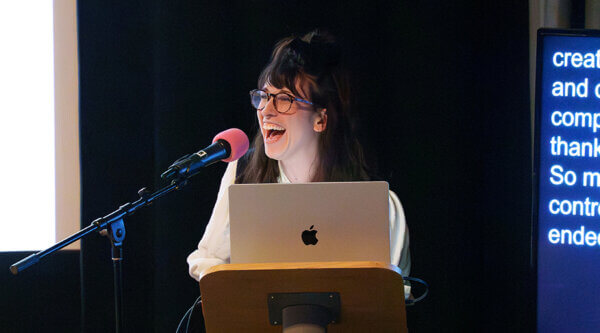
Julia Pott presenting at this year’s Cardiff Animation Festival (Photo: Gregg Willis, Image courtesy of CAF)
Julia Pott has lived the dream of so many British animators. After completing her studies and making a handful of acclaimed short films, Pott left the British Isles for the bright lights of Hollywood, crafting six seasons of Summer Camp Island at Cartoon Network and HBO Max. Pott’s signature style of blending cute, simple aesthetics with eerie atmospheres has persisted from her more adult shorts to the more kid-focused Summer Camp Island, and now that the show is ended, she’s looking to get back into that creepier place.
We caught up with Pott at the Cardiff Animation Festival to chat about developing her style, the joys and stresses of creating a TV show and emailing Don Hertzfeldt about Diet Coke.
What first got you into animation?
I always wanted to be an animator when I was a kid. I was very, very shy and wanted to make films and tell stories. Animation felt like the best way to do it without interacting with too many people. I got to be alone in my room with a light box and a scanner. I also grew up with Rugrats, The Simpsons, Aaahh!!! Real Monsters and just absolutely loved them for far longer than the rest of my friends. I was still watching them when I was 18, and it became clear that it was more of a passion that other people didn’t have. I thought I wanted to start as a children’s book illustrator, and I went to Kingston to do a BA in illustration and animation. But when I did the animation walk cycle, I was like, ‘Oh, this is magic, I’m experiencing magic, and I can feel the soul of a character coming through,’ and I was completely hooked. It felt like a really good way of expressing how I was feeling internally.
How did you go about developing your creepy, cute, romantic style?
The style was just based on what I could draw. I wasn’t very good at drawing, and so it had this naive quality, and I really loved other naive things that came from people that could draw. And then for the cuteness mixed with horror, I really loved Gremlins, and I loved things that looked aesthetically cute but pushed boundaries. I felt like you could go spookier and explore more haunting concepts because you felt safe.
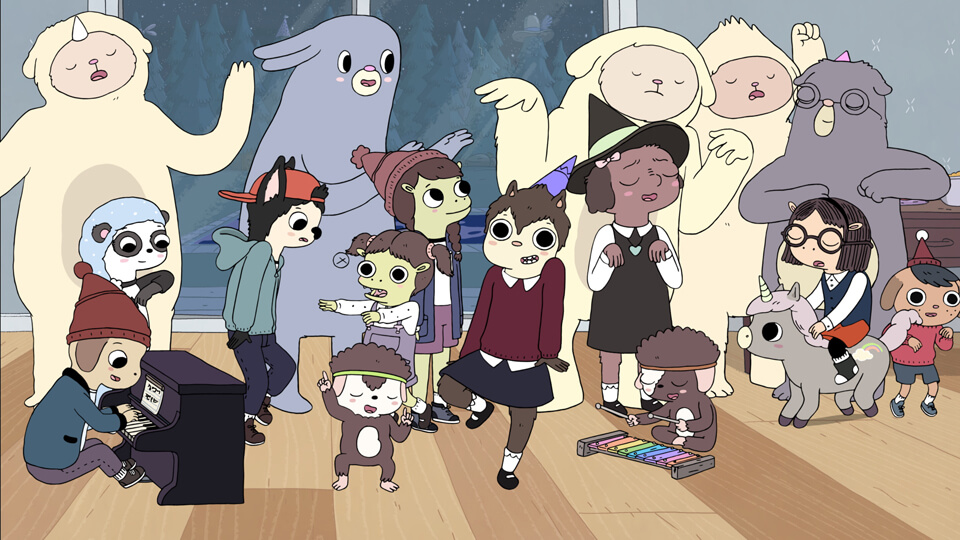
Summer Camp Island © HBO Max & Cartoon Network
I only saw Gremlins 2 for the first time last year and loved how much it breaks every rule possible. Do you try to embrace that in your work?
I always like a certain amount of boundaries in my work. I feel that if there’s nothing to push up against, I go a little bit mad. I don’t know about the no rules. I like rules, it’s in my British spirit.
What got you into drawing animals and centering them in your work?
Similar to Gizmo and E.T., I felt like they were one step away from a human being, so you project onto them more than you would if you were just seeing a human going through the same thing. It was more interesting to me. I grew up with The Animals of Farthing Wood and Watership Down, those were huge inspirations for me. Creature Comforts was also a huge reference point for my first film, My First Crush, and I think that kicked off a love affair with drawing animals. Someone said to me recently, ‘It’s okay to be the animal person.’
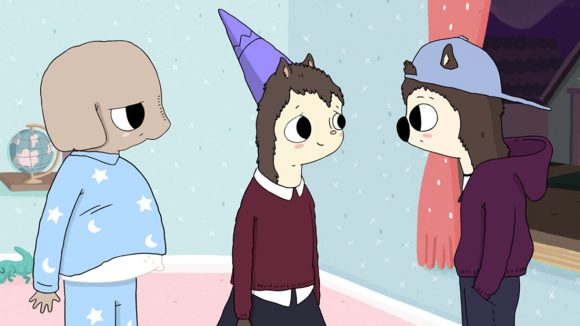
Summer Camp Island © HBO Max & Cartoon Network
I find your backgrounds really interesting, they can swing between mundane and surreal so easily. In Belly the underwater shots look insane, and in Howard there’s the fantasy sequence set in space. Where does that come from?
There is, I guess, a sense of no rules. I like to sit and stream of consciousness what it actually feels to be in that moment, when you’re thinking about something from the past or what you feel like as a kid. Belly was very much inspired by the physical boundaries I felt like I had as a child, which was that everything was more malleable, and that it felt like you could push through another human being and that they would just split in two. And when you’re embarrassed, it feels like you are sinking into the ground or that it should be possible because you’re more attuned to magical thinking. My son is constantly pointing at what I hope is not ghosts in our house and chatting to them and waving and I’m like, good for you.
I also used to be really inspired by the feeling of having a fever. I remember my mom coming in once, and I was crying in bed just going ‘Margaret, Marjorie, Marigold,’ all these names starting with M. And she was like, Oh no, she’s gone. But that strangeness of feeling slightly elevated from your mental experience was very inspiring to me. Twin Peaks had that too. Like, what’s just one step behind the curtain.
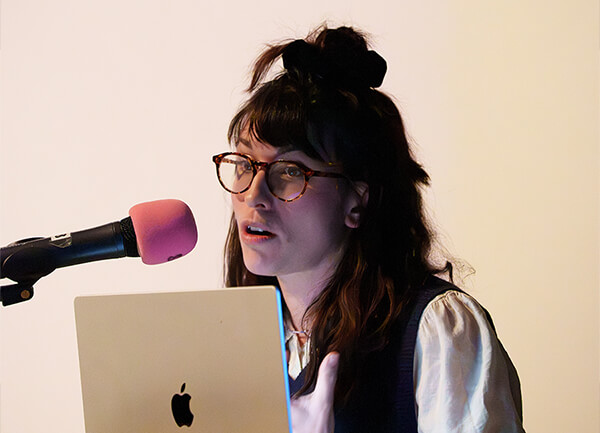
Julia Pott presenting at this year’s Cardiff Animation Festival (Photo: Gregg Willis, Image courtesy of CAF)
What made you first move out to New York?
My mum’s from New York, so I have a passport, and we would spend a lot of summers visiting my grandparents. I fell in love with it slowly. I didn’t plan to move permanently, it was just supposed to be a jaunt. When I graduated from the Royal College of Art, I had been signed to Hornet, which was a New York commercial agency. I could have done it remotely, but I just wanted to try something new. I remember saying at the time, and maybe I should have stayed because it would have been inspiring, ‘England feels haunted to me.’ There’s too much history.
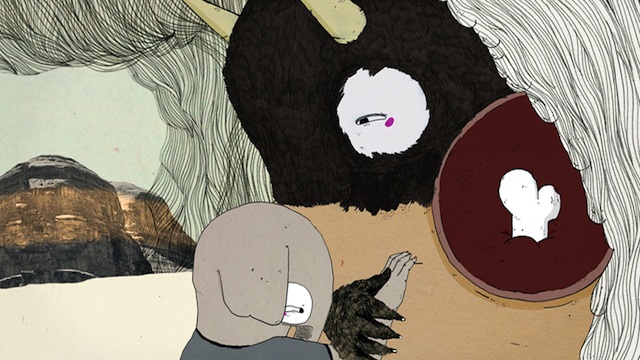
Belly © Julia Pott
My bones felt damp, I just had to change the channel for a minute. I loved New York, and it was the time of my life. I moved to Los Angeles for Summer Camp Island, and I just don’t care for it. I’ve never liked it. My husband doesn’t really like it. But now we have our lives there and our family and we have friends with kids and we’re there. just there. I watch friends that stayed in the UK, and I pine for that existence. My friend Mikey Please, he stayed and has a burgeoning career. I think I thought there wasn’t anything here for me somehow, but the funding at the time here was amazing in comparison to America. There’s a version where I stayed, and it would have been great, but now I miss it.
A lot of animators dream of going to the US and creating a show for a big studio. At the time, did it feel surreal that it was actually happening for you?
It definitely felt like that. It felt like I had accidentally gotten into a scenario that I wasn’t supposed to be in. I had made short films that went to festivals and I remember when Summer Camp Island got picked up to be a show, I just went down the avenue. Much like getting married and having kids, I just did what I thought I was supposed to do. When someone was like, ‘pitch a TV show,’ I was like, ‘Well, yeah, of course.’ I remember talking to Kirsten Lepore and I was like, ‘Do you think you’ll ever pitch a TV show?’ And she was like, ‘No, having a show is too stressful.’ I didn’t know you were allowed to do that. I really loved making the show. I’m so glad I did it, but there was also a part of me that was trapped in an ambition that I felt was somehow mandatory.
I didn’t see my friends for like seven years and I felt a heavy amount of imposter syndrome. I started taking an anti anxiety medicine because it was a lot. But I think it grew muscles in me that I didn’t have before I grew as an artist and a storyteller. But it was bonkers, and I don’t think it’s a healthy existence for anyone. I don’t think anyone’s being paid enough or given enough time to make the things that they’re making.
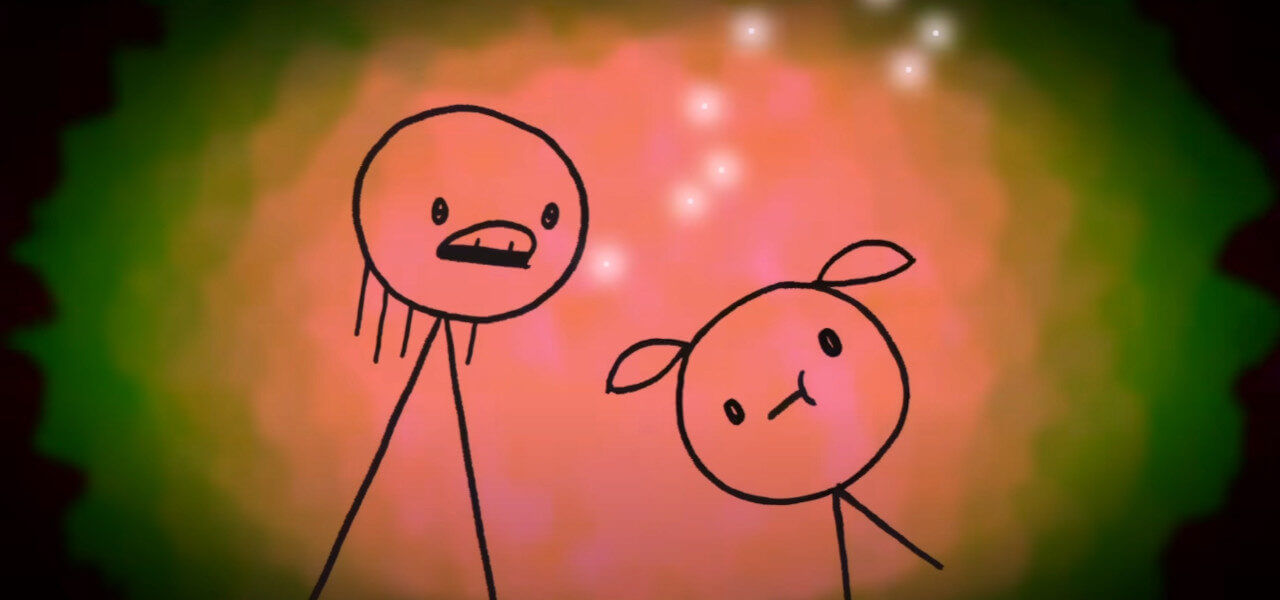
World of Tomorrow © Don Hertzfeldt
One of my favourite things you’ve been a part of is Don Hertzfeldt’s World of Tomorrow. What was it like to work on those films?
We met at Sundance when Belly was in and I believe It’s Such A Beautiful Day was playing. We became friends because we were in the same category. We hung out a lot, and then he asked me to do the voice, and I flew to Austin a few times to do it. I never mentioned the fact that I had sent him fanmail. When I was in school in like 2006 I got to see him speak in the UK, and, it was so lame, he had mentioned liking Diet Coke and I was like, ‘I also like Diet Coke. Did you know about this French Diet Coke?’ He had very politely emailed back. After we met I was worried that if he ever searched for my email, he’d find this email. I was so terrified I just showed it to him eventually.
A lot of your earlier work is far more horror tinged than Summer Camp Island. Is that something you want to return to?
Definitely. I had a meeting with the head of a studio who said, ‘You should be making horror movies.’ I went home and started thinking of horror movies. I was so excited. Summer Camp came from a place of utility. At the time, the studio didn’t want another Adventure Time so we had these boundaries that we had to work within. Like with ghosts, we couldn’t say that they were dead, we had to come up with something else.The original pitch was much darker. There was death in the pitch. There were much spookier things. I had to adjust because I wanted it to be an animated Buffy, and I still want to make an animated Buffy.
The reason I liked animating all those body parts and things being decapitated was catharsis. It was really helping scratch an itch. But I’ve stepped away from horror since I had a kid, and my husband said it’s because I’ve literally experienced gore. Maybe it’ll come back slowly, maybe. I want to make things that feel eerie, adult Goosebumps is my favorite genre. I have projects coming up that are more adult than Summer Camp, and then they’re fun to work on, but not a lot of blood or decapitation in them.
See more of the work of Julia Pott at juliapott.com