

Hospital, With Love
What is the film about?
As a surgeon’s daughter, she once roamed the hospital with wonder. Returning as a patient in adulthood, she encounters a medical system where machine precision has displaced the human touch.
A film from the Alambic program, the NFB French Animation Unit’s creative lab for emerging filmmakers.
What influenced it?
Hospitals have always been part of my life. I grew up in northern France, in Berck-sur-Mer. Back then, hospitals were built facing the ocean; people went there for surgery, for rehabilitation, to accompany patients, or to provide care. They would stay for a few days, a few months, or sometimes their whole lives. As a surgeon’s daughter, I went with my father every chance I got, just to be with him. I spent my time watching and listening. Hospitals are a part of me, and though I never embarked on a career in healthcare, I’ve always felt a strong attachment to them and a deep appreciation for the bond that unites everyone working in a hospital. When I returned as a patient in adulthood, I was struck by the technical and technological progress in hospitals. At the same time, I found the changes in human relationships—and sometimes complete lack of them—unsettling and indicative of profound social changes. So I felt the need to highlight the effects of this disappearance and spark a discussion about these changes.
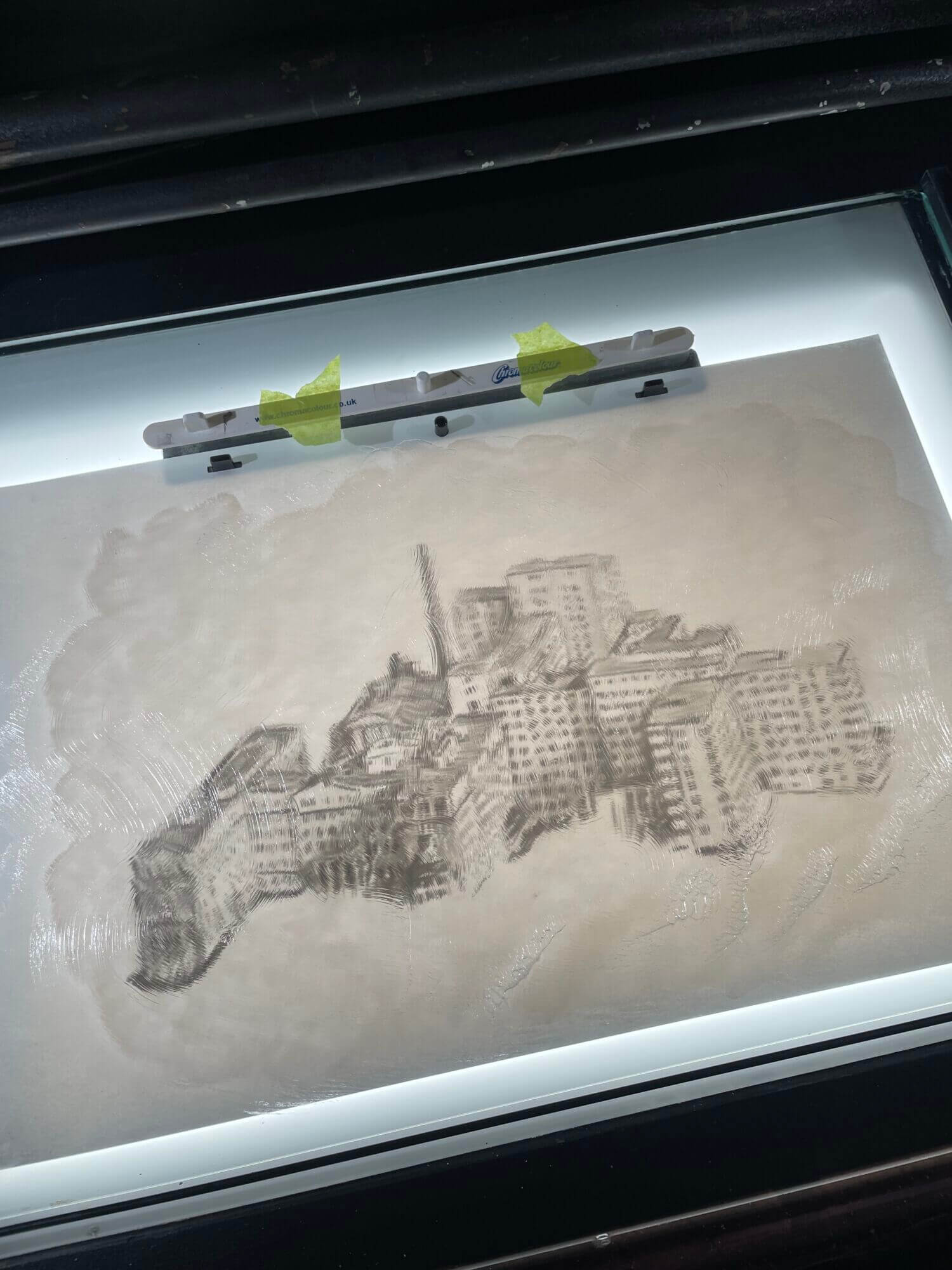
Image: NFB
A little background information...
I used my own story to try and convey an increasingly widespread sentiment about our relationship with care, both as patients and as healthcare providers. Hospitals are huge machines—literal micro-societies embedded in our cities and regions, and various factors are undermining their purpose. I feel that it’s important to talk about the need to heal our hospitals and focus on a more human system for those moments when we are most vulnerable.
How was the film made?
The film was created directly under the camera on a custom-built backlit multiplane setup. The backgrounds were made using traditional animation with charcoal on paper, while the characters and water textures were made using oil paint on a glass plate above the background. To avoid compositing as much as possible, each image was taken as a stacked whole: paper in the background and paint on the glass plate.
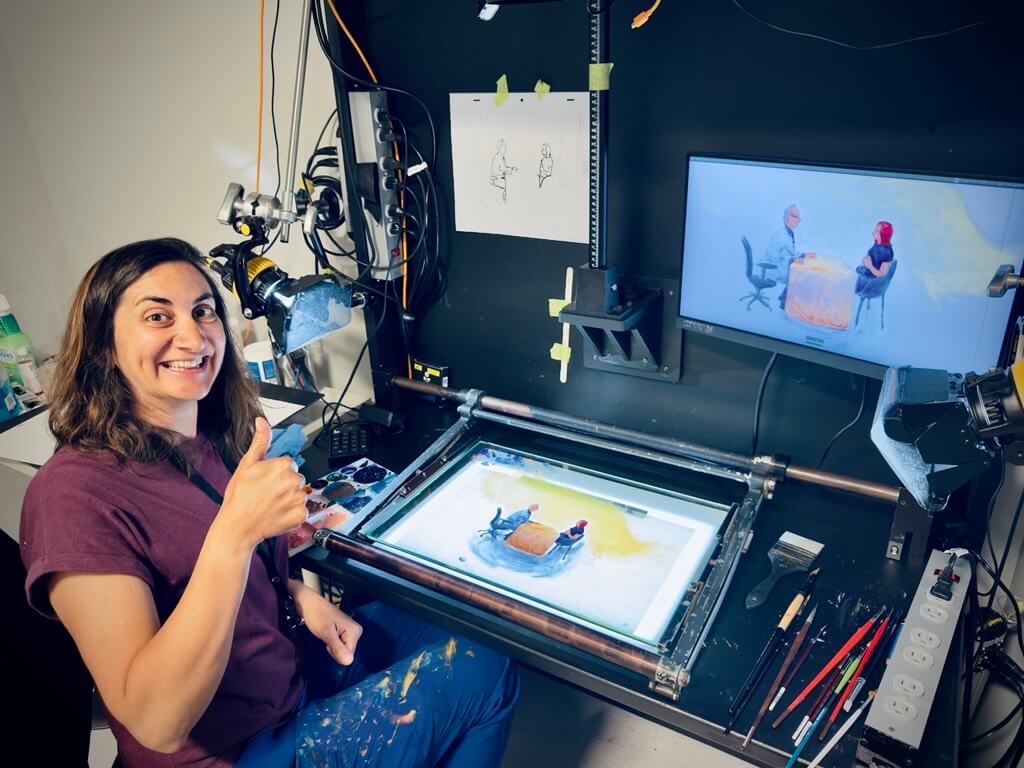
Carine Khalifé (Image: NFB)
The colour and black-and-white composition are integral to expressing the tension between humanity and technology: charcoal was the raw material used for buildings and machines, while paint enabled fluid, organic motion for people and water. The richness and depth of the texture and colours blend naturally into the surroundings before disappearing without a trace.
I also used bicycle grease on the top layer to create optical distortion and make the drawings appear to vibrate without altering them, producing a controlled blur that reflects the painting and the subjective perception of space.
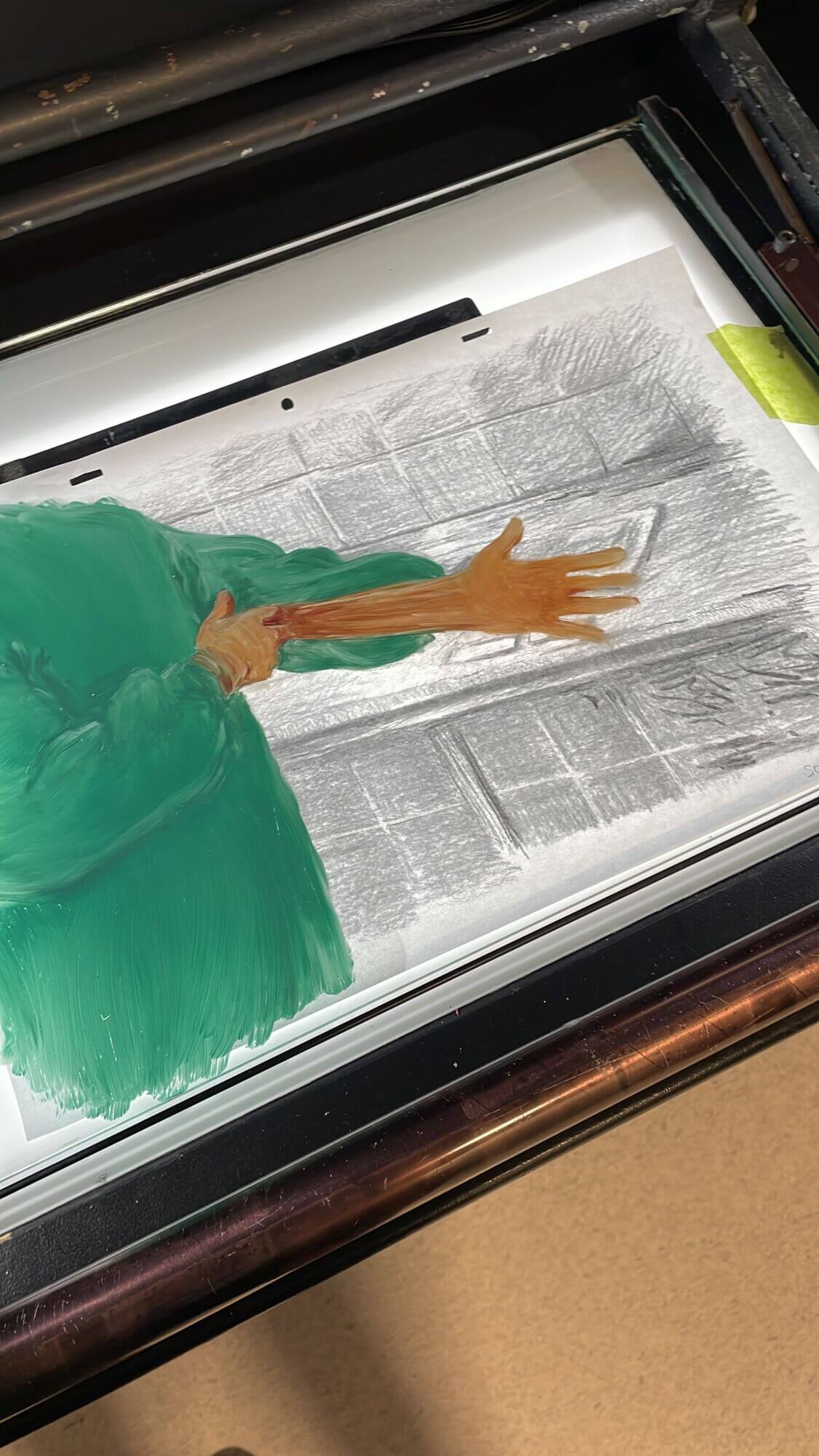
Image: NFB