

Matrescence
What is the film about?
This very short animated documentary tries to define and explain matrescence: the transformation a woman undergoes when she becomes a mother. I wanted to show what science is slowly uncovering but also what we feel inside our bodies, our minds and our souls during this massive transition.
A film from the Alambic program, the NFB French Animation Unit’s creative lab for emerging filmmakers.
What influenced it?
It was almost seven years after the birth of my first child when I even heard the word. I couldn’t believe there was a name for the metamorphosis I had gone through, one that changed me on so many deep layers. I was also astounded by how thin the science around women’s health during and after pregnancy still is. We’re only starting to pay attention, and yet every single person walking this Earth was once inside another human’s womb. That person was forever changed by giving life, psychologically and neurologically. It’s a wild thing when you stop to think about it.
A little background information...
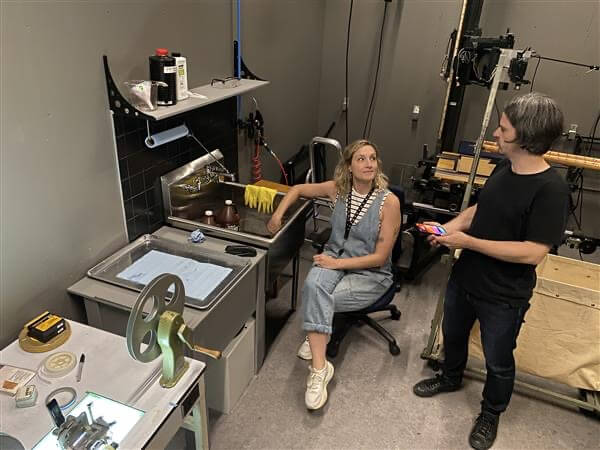
Image: NFB
I made this film through Alambic, a mentorship program run by the National Film Board’s French Animation Studio, where emerging filmmakers are given the chance to create a very short animated documentary. I come from a graphic design background and have worked in the motion design industry for several years, so this is my first short film. With that background, it felt completely natural to bring together as many analog and compositing techniques as I could, in a playful way. Painting directly on film had also been a dream of mine ever since I studied McLaren’s work as a design student.
I hope this very short film sparks curiosity about women’s health, in a holistic way. I hope the audience comes away from the film fascinated by the human body and the human experience. I hope we start paying more attention to how women change in order to give life. And I hope that new mothers discover that there’s a word for what they’re going through, and that they find some relief in knowing they’re not going crazy and something very powerful is at work inside them.
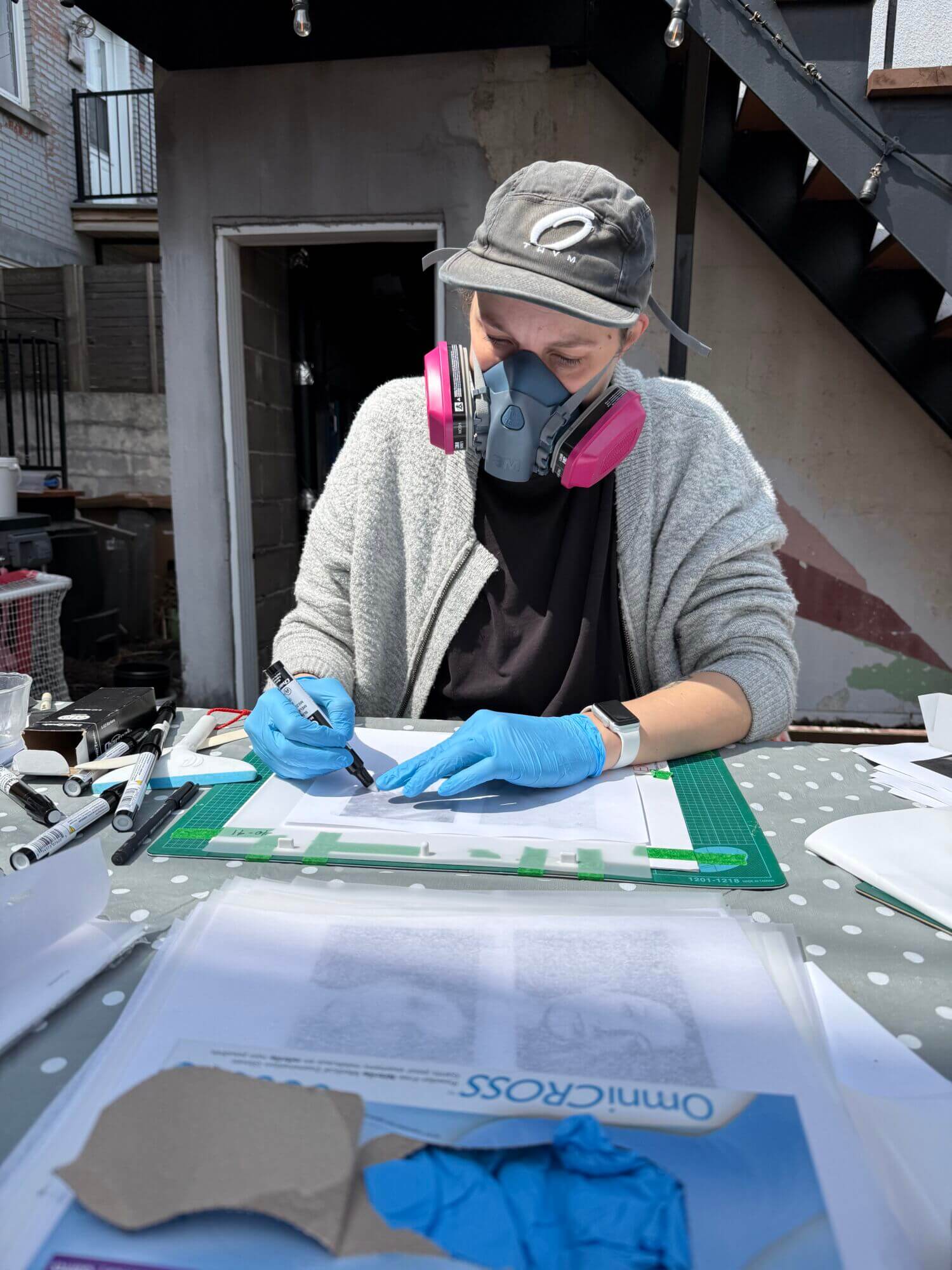
Image: NFB
How was the film made?
The audio is a real voice note I sent to my friend Lily Pinsonneault. She was writing a play on the subject at the time and was curious about what I had read on my end. It ended up being the perfect backbone for such a short film, and it captured how new mothers actually talk to one another.
The film itself is a big melting pot of techniques. Stephanie Weber Biron shot the portraits of my mother, my sister and my daughter. I rephotographed them on 16 mm with our mentor, Karl Lemieux, and we developed the film together in his studio. I then transferred the images onto Mylar sheets with acetone. The idea was to use an image to generate another version of itself, leaving it forever changed. I played with scale: the main portrait was transferred with acetone onto 35-mm clear film. I also painted with inks directly on 16-mm and 35-mm film, as an abstract metaphor for the inside of our brains and our blood cells.
Everything was then stitched together in After Effects, which is my weapon of choice. I knew how to take these analog elements and mix them together in that software, and it gave me complete freedom to move the pieces around. The film contains almost no cuts. It is one long flow of metamorphosis, just like matrescence itself. We start on a portrait, dive into it to discover her insides, her brain but also her mind, then come back to the surface through generations of women: an elder, a new mother, a child. We are all intertwined.
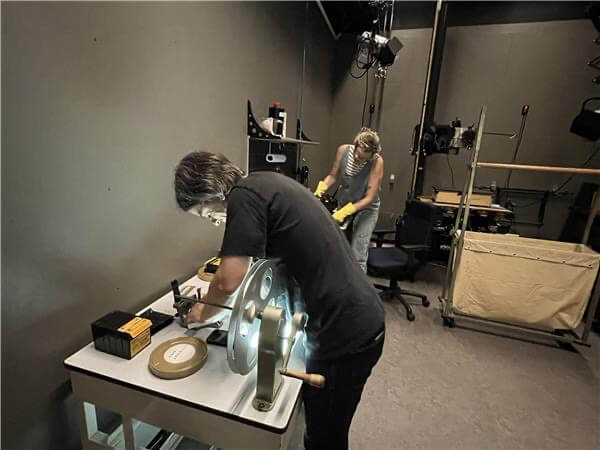
Image: NFB
Sacha Ratcliff did an amazing job on the soundtrack. I was very inspired by Brian Eno’s work for this piece. I wanted looped sounds, no specific instrument, but rather a collage of organic sounds slowly building into a powerful and raw atmosphere.
It took a village to bring this film into the world, much like raising a child.