

Small Prophets | An interview with animators Ainslie Henderson and Will Anderson

Earlier this year, audiences were treated to a curious new BBC series created, written and directed by Mackenzie Crook (Detectorists, Worzel Gummidge). The first series of Small Prophets (2026) follows down-on-his-luck Michael (Pearce Quigly, Detectorists) who, with the knowledge passed down by his father (Michael Palin) creates a menagerie of homunculi – magical prophesying spirits that can predict the future – to help uncover the mystery of his missing partner.
The eagle-eyed amongst viewers may recognise the fleshy and ethereal homunculi, rendered in beautifully crafted stop-motion, as being crafted by puppetmaking powerhouse Mackinnon & Saunders and brought to life by the super-talented, multiple BAFTA-winning duo Ainslie Henderson and Will Anderson, who were tasked by Crook to bring a dash of old-school magic to the unusual, funny and incredibly heartwarming world of Small Prophets.
With a second series announced earlier this month, Skwigly were excited to have Will and Ainslie back once again to talk to them about the challenges and triumphs of this new venture and how they worked with the creative team to bring Crook’s vision to life.
Ainslie, you have a previous connection with Mackenzie Crook, as he and his son were voice actors for your first short film I am Tom Moody. How did you initially meet, and how did this current collaboration start?
Ainslie Henderson: Well, I’ve known Mackenzie for about 20 years. I met him when I was living in London. Then for my grad film I am Tom Moody, he and his son Jude did the voices. So that was the first and only other thing we’ve done together. But we would occasionally meet up and wonder about what else we might be able to do. He wrote and illustrated a kid’s book some years ago called The Windvale Sprites and it’s beautiful. We thought about turning that into a feature film for a while, but then it was about 2022, I was in London, and I went to visit him in his shed, and there was this mad, white, little homunculus he’d built out of Fimo which was sitting on his shelf. I was like “What’s that?” and he said “It’s a homunculus”. Then that was it, we started chatting then.
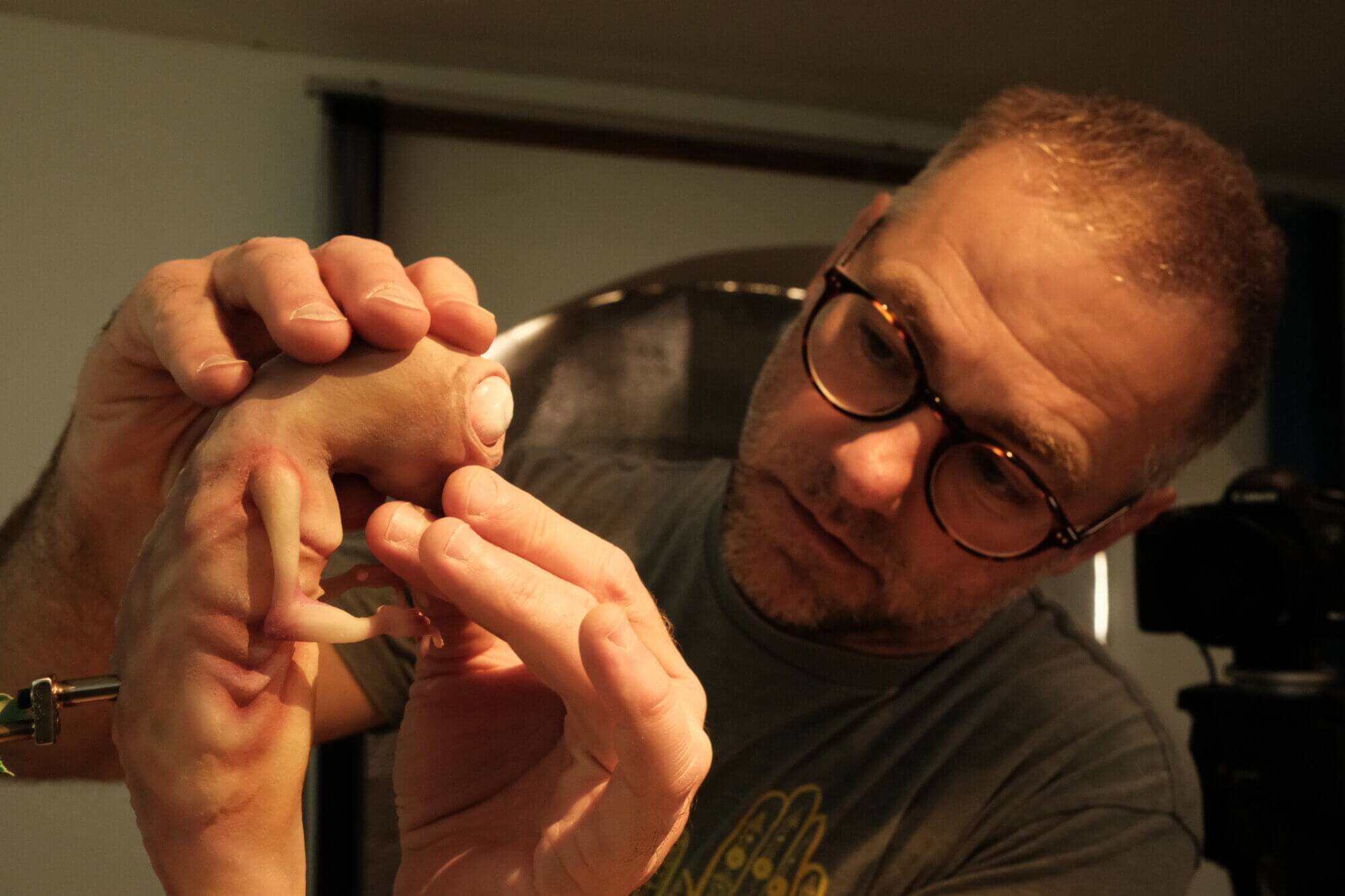
Image courtesy of Ainslie Henderson
I’ve seen some photos of his shed, it looks magical.
AH: It is magical and he’s a really artistic guy and really into crafting things. So when he’s writing, he’s constantly crafting at the same time. There were a few props in the show actually, that he went away and crafted. You’ll notice in the old people’s home, where Michael’s dad is, there’s a charity box, Mackenzie made that himself. So, yeah, his shed is a really interesting, creative little place.
Will Anderson: We made a test a year and a half before, partially as a teaser to sell the show, which we did in his actual shed. The one in the show is very close to his, just a bigger version. So we were quite aware of the space and how we would shoot and compose things, because we already had a test run in the bottom of his own garden.
Ainslie and Will, you work together quite often, can you tell us how you split the work and what skills you both brought to this collaboration?
AH: With Will and I, we have certain modes that we are more practiced in, like writing and voicing things together, that are done digitally, that Will leads the design and the animation of. But then, over the years, we’ve done loads of different projects, and we often have to shift roles and work in different ways, but I think this is one of the projects that taps into our most natural skills in a really obvious way. We knew right away “Okay, these creatures are all going to be in stop-motion, they’re going to be in the jars nearly all the time”. So we knew I was going to handle the stop-motion and Will was going to handle all the compositing and make sure it all sits beautifully in the world. So of all the projects we’ve done. I think this one was pretty obvious how we were going to divide up the work.
WA: Yeah, I always take on that compositing role more because, at the end of the day, when you make a thing, you’re going to have to colour it, add the effects and make the final image. Which is something I would always be slightly more positioned to do when we’re working together. A good example for Small Prophets was when we were working closely with Mackinnon and Saunders, the brilliant puppet fabricators, there were quite open conversations about how some of the clothing would be really time consuming to build and animate. So I could help there, and do some computer graphics to remove an animation job. It’s a constant weighing up of the creative challenges and what we’re trying to achieve all the time. And that’s why, when there’s two of us who do very different things, it makes it more possible, and more creatively exciting as well, because we can basically build it the way that we want to do it as creative individuals, much more openly, when we’re not tied to a studio to do that.
AH: I suppose it’s like the bridging of the physical world and CG world, and the more physical it is, the more I take charge of it and the more digital it is, Will takes charge of it.
As you just mentioned Will, the puppets were made by Mackinnon and Saunders, but I believe they were based on Mackenzie’s original designs – could you talk us through some of the process in taking those designs through to puppet and your involvement with that?
WA: Mackenzie’s a great illustrator, as Ainslie’s touched on – he didn’t just write The Windvale Sprites, but he illustrated the book. He’s a very visual person, so he had these drawings, he was very clear about the look and feel he was going for.
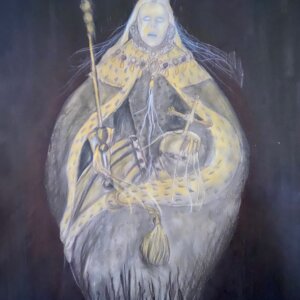
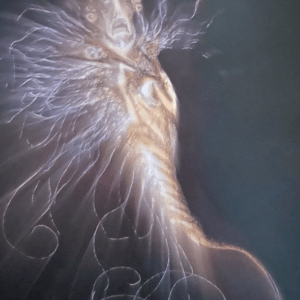
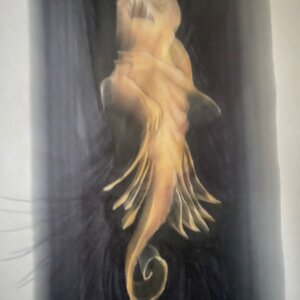
Ainslie originally designed for the test we did ourselves, but when we were making it we quickly realized we were going to need many iterations of the prophets, as they grew over the course of the series. So we needed, I think, seven in all – the King, the Queen and the Seraph are the ones that exist in the show, and they grow over the course of the six episodes. So there was a lot to make there, and it kind of magnified our animation director roles. We realized we should just be focused on how this was going to come together, and what the performances and final thing would look like.
So we teamed up with them, and they’re fantastic, and particularly an artist called Glen Southern who’s an amazing 3D/VR sculptor and wonderful guy. He did all the sculpting and iteration, and then it was printed, and then went to MacKinnon and Sanders. I’m not even going to pretend to know exactly how they did it. But they did all the armatures and the molds and painting. It was out of necessity, but it was also a good way to position ourselves to do the best that we could do, and not just build puppets for six months.
-
- Image courtesy of Ainslie Henderson
-
- Image courtesy of Ainslie Henderson
-
- Image courtesy of Ainslie Henderson
AH: There was definitely something reassuring about handing that over to them and knowing they were going to do this brilliantly, better than we ever could. They are amazing, they’re like the Rolls Royce of makers, and you know what you’re gonna get at the end of it is something that looks beautiful, but also something that’s going to last and be so well made, it’s gonna see you right through the shoot.
WA: Something extra that I do like about the process is the element of discovery. At the end of the day, we’re making them look the way we want to make them look, because we’re dealing with the comp and adding other elements. So I think it’s more collaborative the way that we did it, than just taking it all on ourselves. Which I prefer.
-
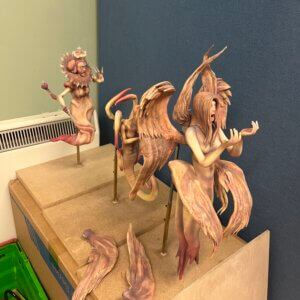
- Image courtesy of Ainslie Henderson
-
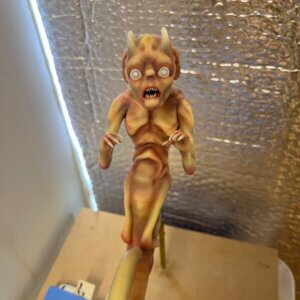
- Image courtesy of Ainslie Henderson
-
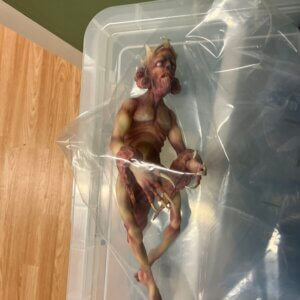
- Image courtesy of Ainslie Henderson
I also saw that you created some really nice LAVs and reference movement for the homunculi, can you speak to the performance of the character and how you developed, or found reference for the look and feel of their movement?
AH: I remember early on, Mackenzie talking about how, when someone falls into icy cold water, they don’t want to move, because it’s painful. So we knew they were going to have a kind of frozen, trembling stillness about them. And I wanted to try and distinguish between the three characters in their movements. I knew I wanted the King to have a kind of pompousness about him, and almost an aggressiveness. Then the Seraph on the other end, I wanted her to be really elegant and smooth. We even thought for a while about doing her on 1s, 25 frames a second, and the others were in kind of 12 and a half; they’re not always in 12 and a half when they [spoiler] get out of the jars, they’re on 1s. And also, there’s points in the jars where we change the frame rates a little bit.
I remember for a while I wondered about doing the Seraph on 1s and animating her backwards, but Will and Mackenzie shot me down, because I have a bad habit of making things harder than they need to be. In retrospect, it was a silly idea, and I’m glad I didn’t do it, but it was good to play with that. And the Queen had a kind of stiff regality about her. There was another animator called Steve Warne, who came and did a couple of shots at the end, when we were under a bit of pressure to get it finished and a lot of those film references were for Steve when he was animating them too.
Will, you mentioned that the comping of the fabric eased that part of production. But when it came to adding the CG elements and comping in general, was there anything you were conscious of trying to evoke or marry together between the live-action, the stop-motion and the CG?
WA: At the end of the day, you’re just trying to make it feel like it’s all one thing. The original design of the crown was almost like fungus, its clothes are growing out of him like part of its flesh. So in a way, it’s just trying to make it look like it’s as close to the texture of the final puppets.
Again, me and Ainslie always talk about this idea of building in safety when we’re making animations, like in our short film Monkey Love Experiments, which was about a monkey who thinks he’s going to space, but it’s set in the 70s, and it’s all gray and blurry, and it’s very authentic to the time. And there’s a lot of safety in that, because you’re masking all the rough edges, and you’re only showing what you need to show. But the equivalent in this series was they’re magic, little creatures that are behind a layer of glass and water. So you could kind of push and pull reality a lot. You could blur things that wouldn’t really blur the way that they were supposed to blur exactly. Things were a little sharper than they needed to be at times and a little blurrier than they needed to be at times, because, again, we have that safety in it.
Therefore the difficulty was when, spoiler alert, really early on we knew from the scripts that one of them might get out. So that’s harder actually, because we’re going to have to match focal length, camera lenses, etc, there’s not much room to hide there. So we front loaded the production so that we could deal with that first and then move on to the more creative shots, where they’re behind glass, and the majority of the show is that.
So again, it was just navigating those things. But in terms of bringing the elements together, because of that safety, it wasn’t difficult; you just have to match the colours, the movement and the textures. Ainslie gave me so much to work with, because he’s such a great animator, that I could track little bits of movement and run simulations for the clothes. So if I tracked it properly, the clothes would kind of move in the correct way and without the nice animation, it would have been harder. So it’s just a marrying of what the stop-motion is doing, really.
I understand that there was some live puppetry in the show as well, which I believe was new to both of you. How did you find that ?
AH: Again, Mackinnon and Saunders were so helpful there, and Richard Pickersgill was excellent. They built a whole new King, that we called the rubber stunt King, which was an exact replica of the stop motion one, just with sticks so you could work his hands. It was quite a big learning curve, I remember even on the day of the live-action shoot, us looking at each other, not quite knowing how it was going to work. Particular shots like the one where [spoiler] Michael’s lying on his back and he’s being attacked by the King and Richard’s using these little sticks, to make him claw his way up. Then Will had to remove the blue sticks on the wrists of this creature in post. It’s one of the bits of the show that I’m actually most delighted with, because in the scene in the shed where the King escapes, you’re really cutting from a stop-motion shot, to a live puppetry shot, followed by a shot with something as rudimentary as this rubber puppet being flung across the shed, but when you cut it all together, I think it hangs together really well.
WA: I think in one shot I added a few CG tendrils, because they have tendrils coming out of the bottom of them. There were a couple of shots that were purely puppetry, where we just threw in a little flash that no one’s going to notice but it just slightly brings it all together a little better when there’s another element wedged in there. Richard did a great job, I don’t think he was expecting to be a puppeteer that day but he really just went in 100% and it really made it.
AH: Yeah, he really jumped in. It was a fun day, that. Even little things – I remember there was a shot where the King is on top of this bit of fabric that’s hanging in the ceiling, and by just twisting the sticks while it’s up there, I could make it look like it was panting and breathing. The live puppetry was really fun and I had never done it before.
WA: And then I had to go in and rub out all the wires and things like that. That’s not fun, by the way.
Talking about new experiences…actually I don’t know if this is new for you, but I noticed that you were actually in the show as well, Ainslie, as a slightly put-upon call handler. Is that something you’ve done before, or plan to do more of?
AH: I’ve done little bits before. I would argue that what Will and I often do together when we’re recording voices, is acting. You’re getting into a character and you get lost in it. That’s what it is. But I’ve not done very much screen acting, a couple of tiny little roles in short films and stuff. But I love it. I really love it. Which came out of when me, Will and Mackenzie were together. We were storyboarding and I got drunk, and coyly admitted to Mackenzie that I’d quite like to be an actor, and then he took us up on that. Will was going to do it as well, actually. He was going to be in the background of the shot, but it so happened on the day that we were a bit behind shooting some of the plate shots for animation. So I left Will with the shit job and went and took the glory.
It’s okay, next time you can go and do a nice acting role Will, and give Ainslie something really difficult to do in stop-motion.
AH: Our relationship doesn’t work like that, Will does the crap jobs and I take the glory (both laugh). We’re already talking about the spin off of the RSPCA officer. I do like the idea though, that it’s Will and I that brought these creatures to life, and there’s something kind of thrilling, in a meta way, that in the show, when the neighbour calls to complain about these creatures, it’s us or me on the end of the phone that he speaks to. It’s kind of cool.
Series 2 of Small Prophets will reportedly air on BBC1 in 2027. For more on the work of Ainslie and Will, visit ainsliehenderson.com and wanderson.xyz