

From Disney to the Arctic: Aaron Blaise’s Oscar-Contending ‘Snow Bear’ | Interview


Alone and endangered, a polar bear copes with the pain of loneliness with a companion made of snow in the gorgeous short film from former Disney animator Aaron Blaise. Snow Bear is the product of three years of solo animation from Blaise, a process that reflects the journey of his main character. Not only that, but the film is packed with emotional resonance and catharsis for Blaise, making for one of the most affecting films in this year’s short Oscar race.
Skwigly caught up with Blaise to chat about the story behind the film, animating polar bears instead of brown bears, and making an Arctic setting colourful.
What inspired the film?
I lost my wife of 20 years to breast cancer in 2007 and went down this really dark road. I was heartbroken and ended up leaving Disney after 21 years, I wanted to start over. I came back to Florida and bopped around for a little while, but then I decided to start this online art education business that I’ve got called CreatureArtTeacher. One of the things I wanted to do is create a course on how to create your own animated short. I wanted to create something myself, something that I could do on my own, one character in, what I thought at the time was, a simple environment. So this idea of a lonely polar bear wandering the Arctic popped into my head.
I’d been feeling really lonely and just going through some of the emotions that I’d also been going through for the last several years. When I dove into it, I started to find the parallels between my own life and my loss, and over the years, I ultimately ended up meeting my now wife Vedanta, who is my business partner’s sister in law. That became the ending of the film and so it rounded it all out.
Was it difficult for the film to maintain its light touch?
Even when I’m finding these deep, emotional connections to a story, I’m also hyper aware of not making it so dark that no one can enjoy it. One of the great things that Pixar does, and a lot of the great studios, is you can’t say ‘That’s a comedy’ or ‘That’s a drama.’ They have this wonderful balance. I also want that balance of joy and comedy and drama and deep themes, but for them all to all play together as this nice package so that I can take you on this emotional journey where you’re going to laugh, but you might cry, and you might get on the edge of your seat, but all in all, it’s a great experience.
Did the themes of the movie manifest in the way you decided to make it – completely by yourself?
Animation is a lonely experience, right? But it’s also therapeutic. It was me working through a lot of the emotions that I had gone through. There’s a scene in the middle of the film where the snow bear is melting and he’s trying to put it back together, but it just keeps falling apart. That’s quite literally something that I went through with my wife as she was passing, she was literally melting away. I was crying when I was animating that scene, but I came out the other side, I don’t want to say healed, but better and stronger.
© Aaron Blaise
Having also directed Brother Bear, what attracted you to telling another story centring a bear?
It’s funny, everyone keeps asking me, ‘Why bears?’ because I also did the 2013 John Lewis commercial The Bear and the Hare. It’s because of Brother Bear, the agency reached out to me because of that. For Snow Bear, that purely was coincidental, because it could have been an elephant or anything else. It was definitely going to be an animal, that’s my wheelhouse, but the first thing I thought of wasn’t the animal, but it was the environment. I wanted a big, open, lonely world and so this expanse in the Arctic is the first thing I thought of and so I just naturally landed on polar bears.
How much of a difference is there in animating a brown bear and a polar bear?
Polar bears are much more sleek and they’re longer. They’re classified as marine mammals so they’re great swimmers. They completely have a different look to them but when you get down to the real basics of structure and movement, there’s a lot of similarities too. That four-legged gait, they both have a lot of weight to them in the way that they move, but you know, really, most of the differences come down to structure and in the way that they’re put together.
At what point did you realise that the Arctic was a harder setting to pull off than you first thought?
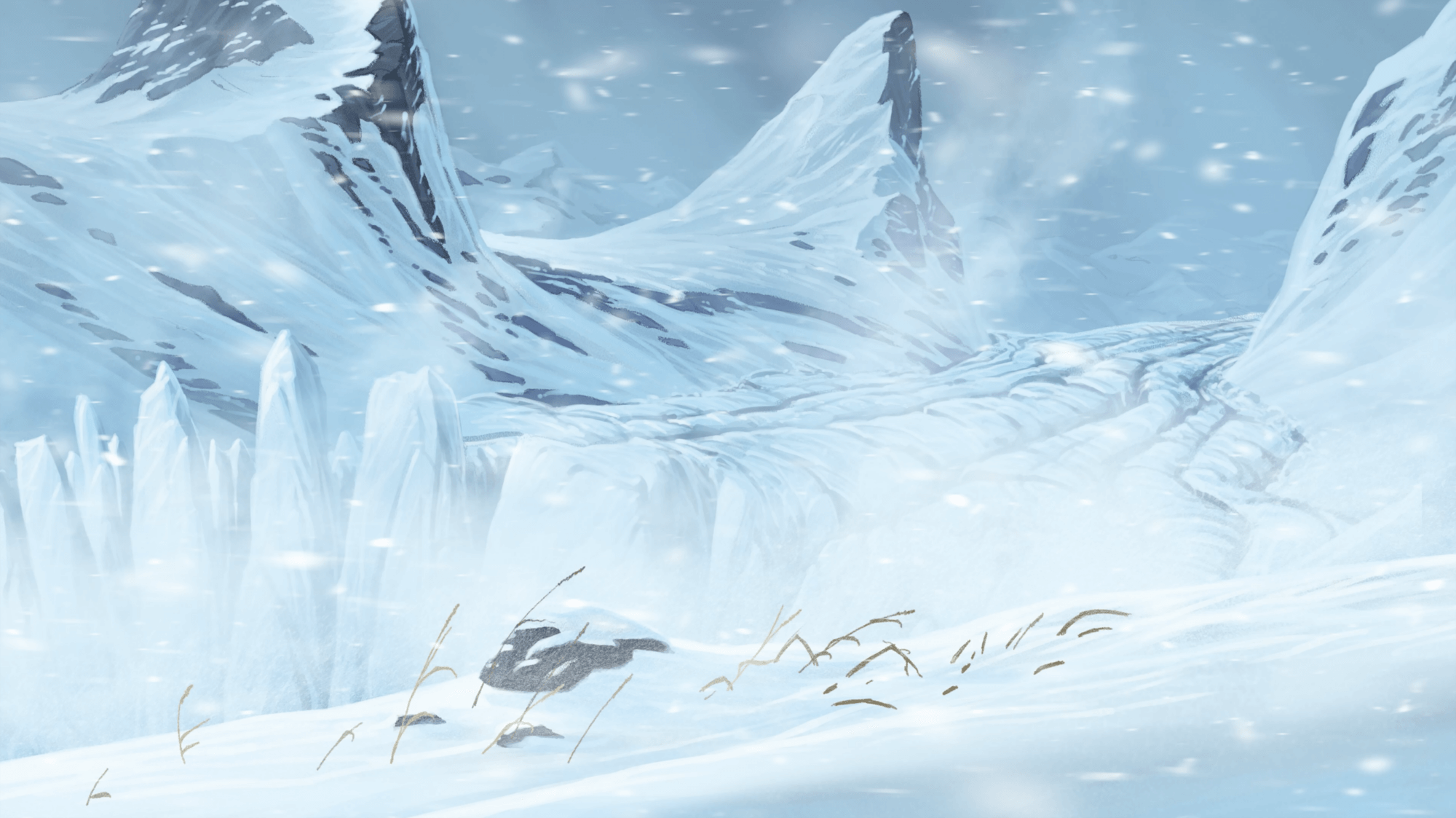
It was when I started storyboarding. I dove right in. I’ve been up to Alaska, I’ve been to the Arctic, and I was doing an idealized version of the landscape. I was just doing these big, open expanses of ice and snow, and it got really boring. So I started doing a much deeper dive into the research, and I discovered Baffin Island in northern Canada, which is just west of Greenland, and he’s got these 6000 foot tall granite cliffs, and wonderful glaciers and mountains named after Norse gods. It’s just big and dramatic. I thought ‘That’s what I want to do. I want to put it here.’ It worked out better, too, because what evolved out of the story was the environmental theme, I didn’t go in with it in mind.
You also manage to play with a good amount of colour too, there’s a lot of pinks and purples in the sky.
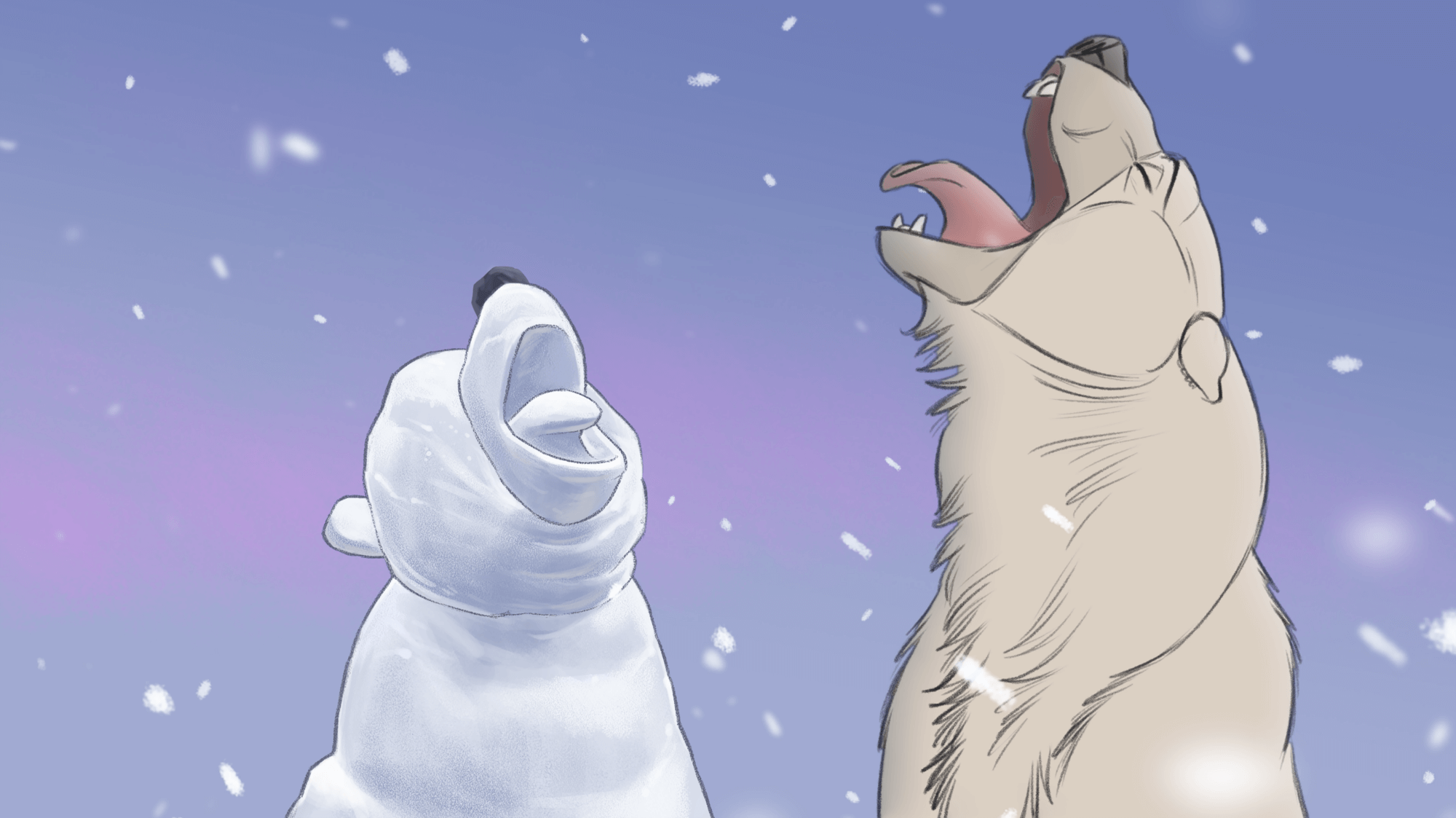
I did intend that from the beginning because I get a lot of questions from people saying, ‘What was it like to animate a white bear on white snow?’ People think it’s a lot of just white on white and it’s really not. There’s so many wonderful pastel, full spectrum colors that you find in the Arctic. Polar bears have this warm tint to them, against these blue, cold colors. When he makes the snow bear, I wanted it to have a happy, candy-like look to the film because it’s upbeat. I try to use those colours to reflect what’s happening in the story.
© Aaron Blaise
What part of the process pushed your animation skills the most?
It’s always the acting. Just backing up a little bit, I went to school not for animation, but to be an illustrator. I wanted to illustrate for National Geographic. When I went to school back in the mid 80s, during that time I got an internship with Disney and discovered animation, and I learned all my animation at Disney. All that being said, I was really looking forward to doing the background paintings and everything else, along with the animation. One of the biggest challenges was doing it all. It was both a joy and a challenge. What was really fun was once I got the storyboards done and I got the story locked down, I literally just sat down and started with shot one, painted the background, animated the shot. Shot two, painted the background, animated the shot. I literally did that linearly all the way through the film.
Do you have a favourite scene in the film?
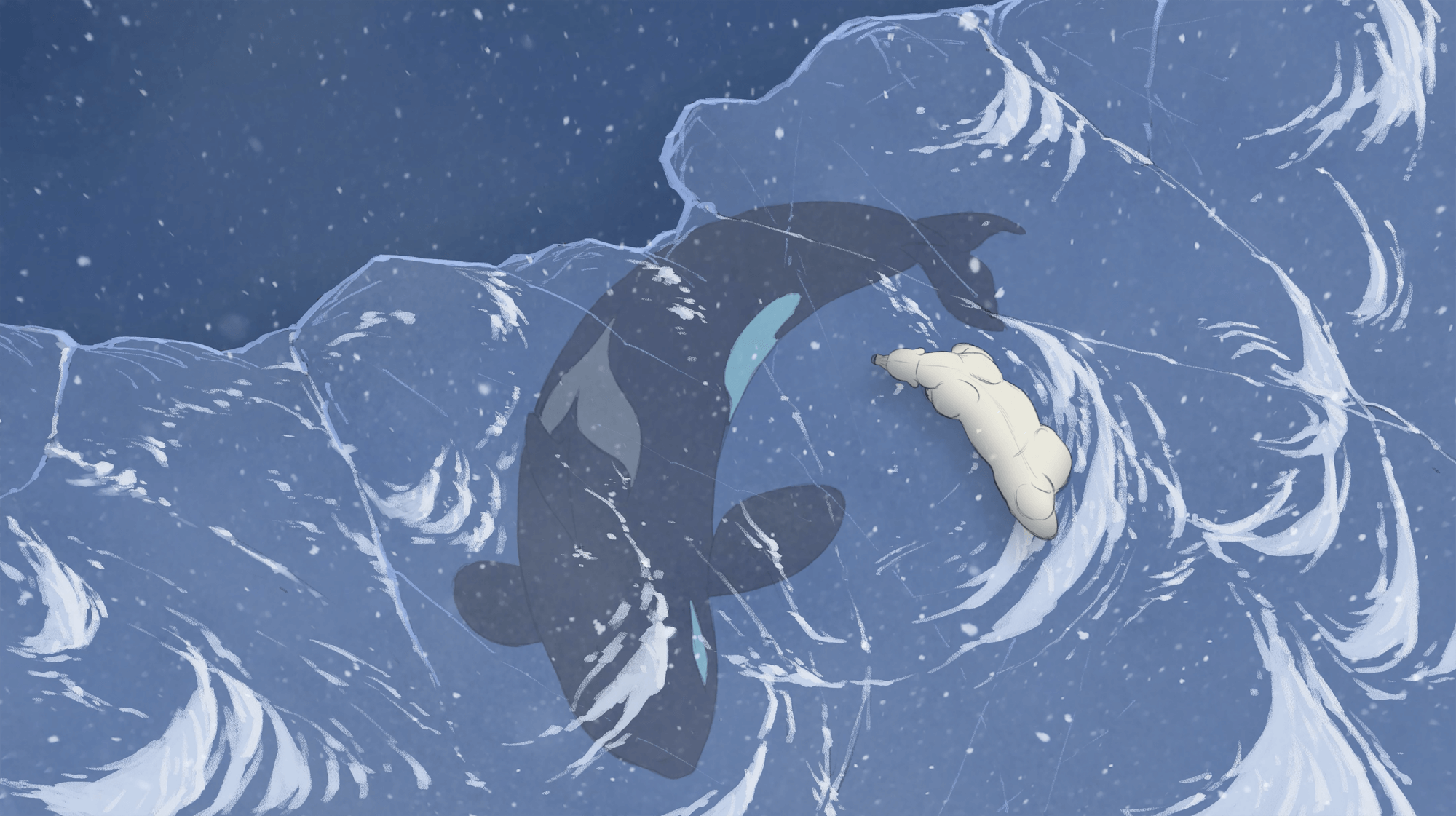
It’s that scene where he’s trying desperately to put the snow bear back together. In the middle of the shot, there’s a realisation that he can’t fix this, and it’s all internal. There’s no dialogue, but there’s this acceptance that his life is going to change forever and that feeling of, I just want to hold you. There’s a lot of deep sentimental meaning behind that for me. Then there’s one other one before that actually happens when the iceberg that he’s on breaks away from the mainland, and he’s looking forward and back and what it represents for me is saying goodbye to your old life. Of course, you’re going to stay with your partner, you’re not going to leave them. It’s trying to carry all of those emotions and that’s what this whole film is about.
© Aaron Blaise
One of the many moments in the film where I thought “I can’t believe this is all hand drawn” was any time snow was falling. How did you achieve that effect?
That was actually one of the easiest things. I animated the film in TVPaint instead of on paper. I animated a snowflake just tumbling in space in one spot, probably about a 12 frame cycle, and it cycles back in on itself. So I can grab all 12 of those frames, and I can assign that to what’s called an animation brush. So I literally take the length of the shot, let’s say it’s 100 frame shot, and I can start literally painting snowflakes onto the screen, and they’ll tumble and fall and follow the path that I’m drawing on the screen by using this animation brush. I can vary the size and then I can layer them and knock some of the layers out of focus. It. All of a sudden, what you’ve got with just this one little tumbling snowflake is a blizzard of snow. The only shot that I couldn’t do that with was the down shot where he’s walking across the ice and the whales are swimming under him. That snow is all falling in perspective and so I actually bought some snow overlay and put that over the top of it. I cheated on that.
This movie represents a three year challenge you set for yourself, is there another challenge you want to overcome going forward?
All Snow Bear did for me was light the fire again. I just want to make more. I’ve written three more shorts but I’ve also written a feature length prequel to Snow Bear. It’s called Polar and it’s a story about our polar bear character, but when he was a cub, and it starts when he first comes out of the den as a newborn with his mother, and it’s this story that takes place over years, because in the story, he ends up losing her, he gets separated from her, and he spent years trying to find her. The theme is, you can set out on this journey of trying to get someplace, but it’s the journey itself that will change you, so that by the time you get to your destination, your goal has changed. So it’s kind of the big story of how he became who he was.
The ‘Oscar winning short to animated feature’ pipeline is a well trodden path…
That’s the big goal. We don’t set out to make these so we can get an Oscar, but we definitely want to get an Oscar so that we can make the feature.