

Alex Woo, Nicola Lavender and Steve Pilcher on ‘In Your Dreams’

Taking the stage at the Annecy festival, Alex Woo, director of Netflix’s holiday title In Your Dreams, proclaimed the dream world as animation’s “white whale.” For Woo, the lack of stakes inherent to a story set in dreams makes it difficult to form a story around, but he believes to have cracked it through his latest film. Founder of Kuku Studios, Woo is a former Pixar staffer who broke off looking to tell his own stories.
Netflix © 2024
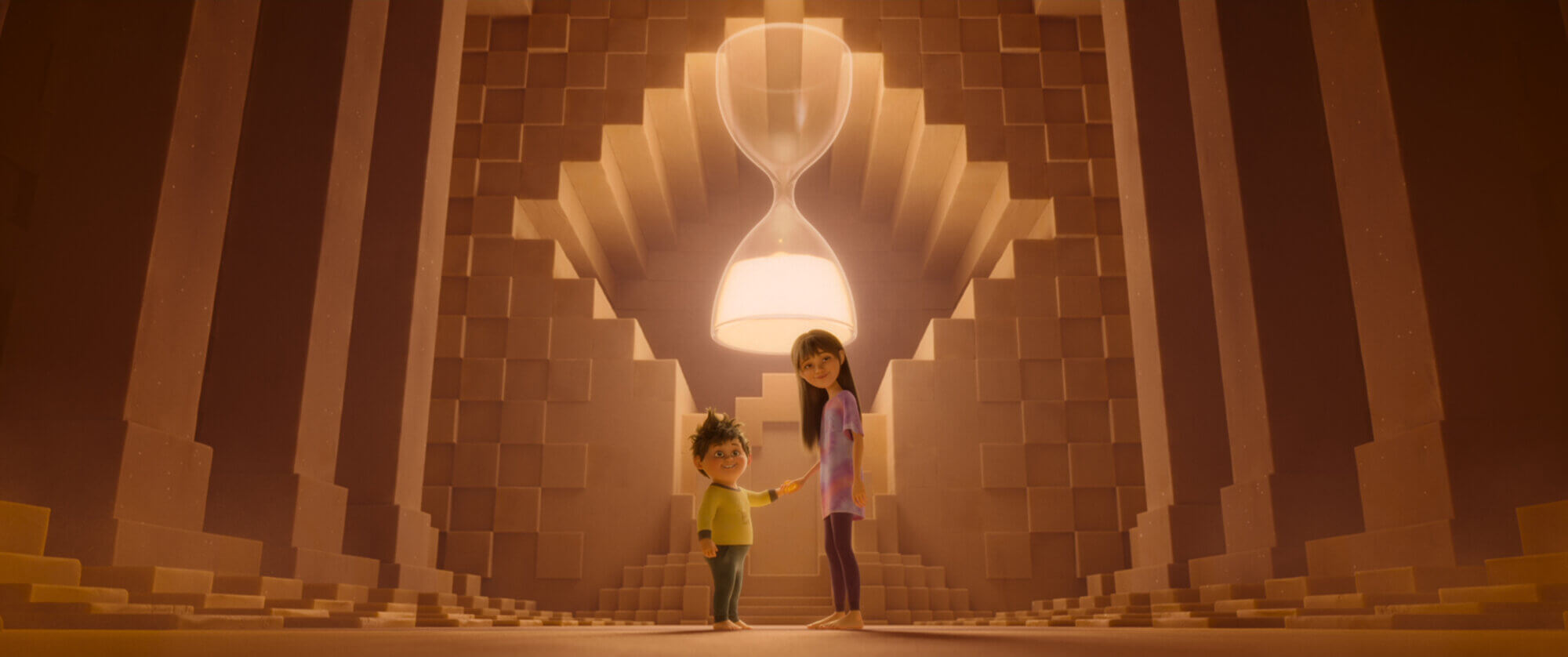
In Your Dreams follows Stevie and Elliott, siblings who uncover a way of transitioning between the real and dream world where they encounter manifestations of their past, like Elliott’s childhood plushie called Baloney Toney, and bizarre landscapes, like an entire town populated and formed by breakfast foods. Skwigly caught up with Woo, VFX supervisor Nicola Lavender and production designer Steve Pilcher to chat about constructing their film.
Alex, when did the idea of this movie first pop into your head?
Alex Woo: It was 2017, we had started the company a year ago and we were brainstorming ideas for TV shows and movies that we wanted to see that we felt like the big studios weren’t really doing and one of the ideas we stumbled upon was a movie about the world of dreams. We thought, why has nobody done that? We got really excited because it felt like a big, universal human experience that hadn’t been tapped into in the animation space. We needed to find a way to pair that big world idea with a really grounded, relatable, universal human story and that’s when I thought of this moment from my childhood [where my parents were temporarily separated]. Combining that intimate personal story with a big, universal fantasy world of dreams, felt like a great recipe for a fantastic animated movie.
What excited you two about the idea when you first heard it?
Nicola Lavender: For me, it’s the dream and real worlds. The possibilities of the dream world, the range of material that we’re going to be able to work on, characters, environments, effects, that was a huge draw and an exciting part of it.
Steven Pilcher: Because it’s an original and the concept is so broad, there’s so many possibilities that it’s really creatively exciting, creatively challenging. What could you not love about it? It also had the one thing that a lot of I think potential dream movies are missing, that being the real world aspect, to always tie it down or be a catalyst for the dream world. That’s one of the biggest secrets to cracking that concept. If the dreams emanate from your consciousness, from your real world experiences, now you’ve got something you can really go anywhere with.
At what point did you decide on the grounded, realistic art style?
Steven Pilcher: Right away. Once you have this concept in mind, you find an appealing aesthetic based on your experience and your taste level and everything else, and then you just start developing and designing. You want this to be tactile and relatable. You want to know what the surface qualities of the real world are. You want to know if something’s soft, if something’s hard, if something’s translucent. You want the beauty of real world life. So you want to translate that in a caricature way.
Alex Woo: The style always emerges from the story and the need of the story. Because this movie takes place both in the dream world and the real world, if you made the real world hyper-stylised, you don’t have anywhere to go when you go to the dream world. We needed to ground the real world aesthetic so that we had somewhere to go in the dreams.
Steven Pilcher: I don’t believe in coming up with a style and then imposing it across the story. It has to come from the story.
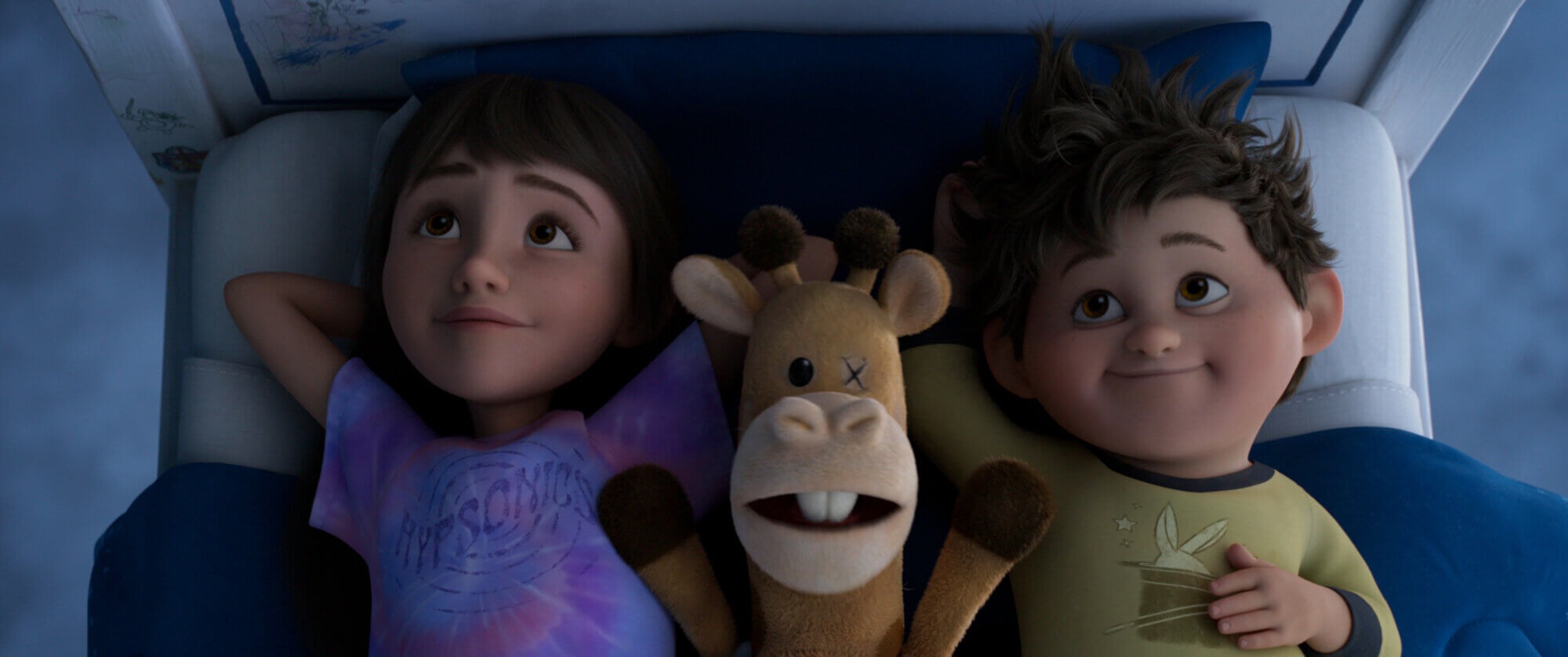
Nicola Lavender: If you look at some of the characters like Baloney Tony, there’s a lot of detail in the textures and the lighting. We add that softness and tactile surfaces that Steven was talking about.
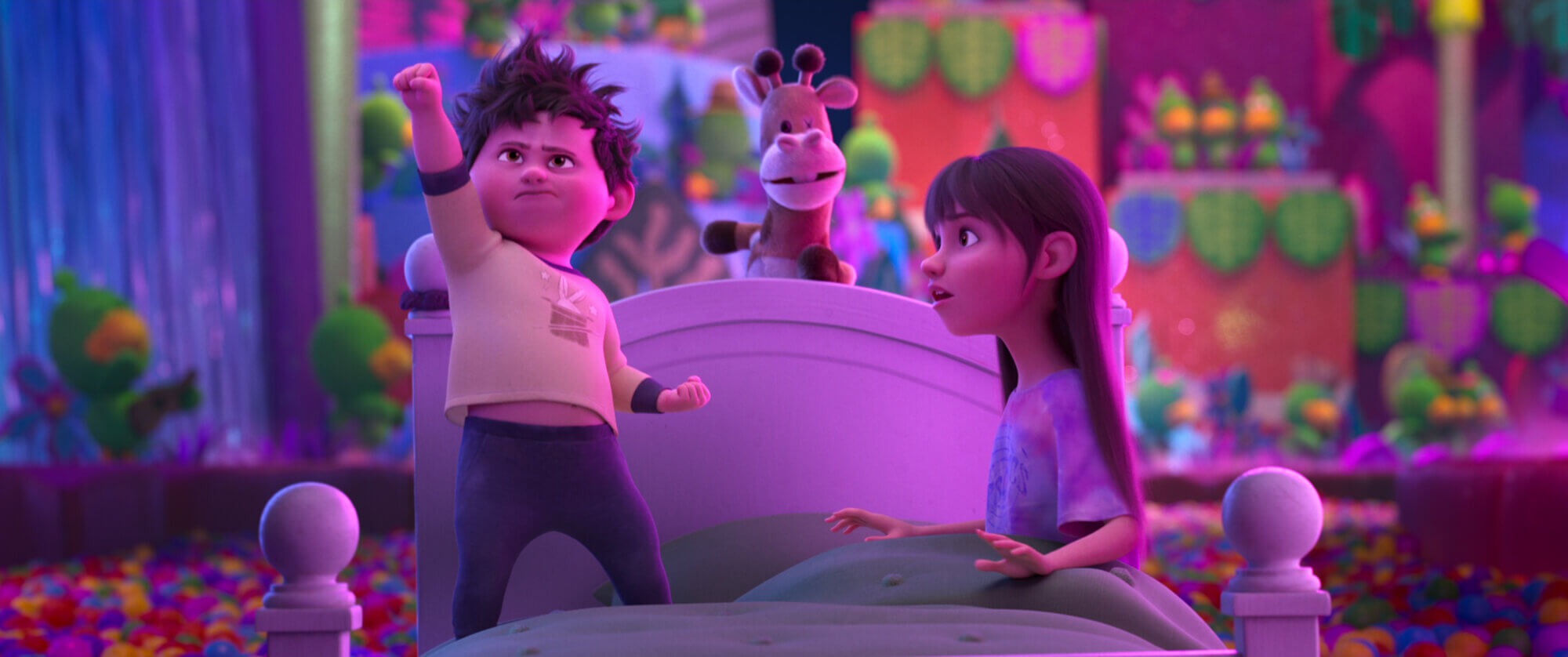
Alex Woo: Another thing that people expect is that we go really nuts in the dream world. But if you do that, you’ll know you’re always in a dream world. There’s passages in the film where you need to not know that for sure, because when we dream, we feel it’s really happening.
Netflix © 2024
Nicola and Steve, do you guys prefer to jump between different art styles, or do you prefer to focus on one particular area?
Nicola Lavender: I don’t think that comes into it for me, I really want more of the challenge. It’s about the team, working with filmmakers like Alex and Steve and bringing something to life. It’s about the whole package. I strongly believe that the visuals should never distract from the story, and it’s only there to enhance the effect of everything. So I don’t necessarily look for projects like that.
Steven Pilcher: I agree with Nikki, but at the same time, we like the richness, the variety in a film, and you look for the original areas in the film so that it’s not a one-note experience, so that when you see it, you’re being surprised, you get rest periods visually, and then you get periods that are very exciting. You want that emotional range and that visual range, and it has to be tied to the story perfectly.
Do you consider Kuku to have a house style?
Alex Woo: Definitely not. If you look at our two productions, they look very, very different. It’s that philosophy of not of not imposing a style on a story. So form always follows function for me. We don’t have a house style and I’m really proud of that because I want to tell different types of stories as an artist and as a filmmaker, and so being boxed into a house style would be really constraining.
Netflix © 2024
What was the most difficult aspect of each of your roles in the movie?
Nicola Lavender: I’ll say challenging rather than difficult. It’s one of the characters that I can’t talk about too much, because as you’ll see when the movie comes out, it’s a very effects-heavy character. Like with anything effects-heavy, you have to figure out how to control it, how to make sure Alex and Steve can visualize it and know what they’re going to get at the end product. Then also, it’s heavy to render and actually get all the shots through.
Steven Pilcher: And it’s joining lighting and effects to work together perfectly. But there’s even more than that too. There’s also the animation and the design of the animation in that particular character that’s all under the hood, and then all the values in the color, it has to work together. Some shots we did with that particular character, would take like 11 weeks and then it might get cut.
Alex Woo: My answer is a little bit boring, but the most difficult part of the movie was doing 18 months remotely in Hong Kong. I had to work the midnight shift like an owl. I’d work from midnight to 10am and sleep during the day. The good side is I never had to do laundry.
If you had to pinpoint a particular film that made you want to pursue animation, what would it be?
Alex Woo: For me, it was Back to the Future that made me want to be in movies and then The Little Mermaid made me want to be in animation.
Nicola Lavender: It was Fantasia that got me interested in the animation side, but for 3D it was the Luxo Jr short. That’s when I went to my parents like, ‘I want to do that.’
Steven Pilcher: I didn’t have an experience that was like, ‘I want to do that,’ it’s always been there. But maybe it’s when I saw the Snow Queen, the Russian version, when I was probably about eight, on the gym floor. I paid 25 cents and got mum and dad to sign the ticket. And then, Snow White and the early Disney films. They were big events. For Snow White, my mum took me to a church and I remember sitting up really high in the pews and watching that. It’s an accumulation of those moments.