
Bringing ‘Another World’ to Life: Polly Yeung & Tommy Ng Interview

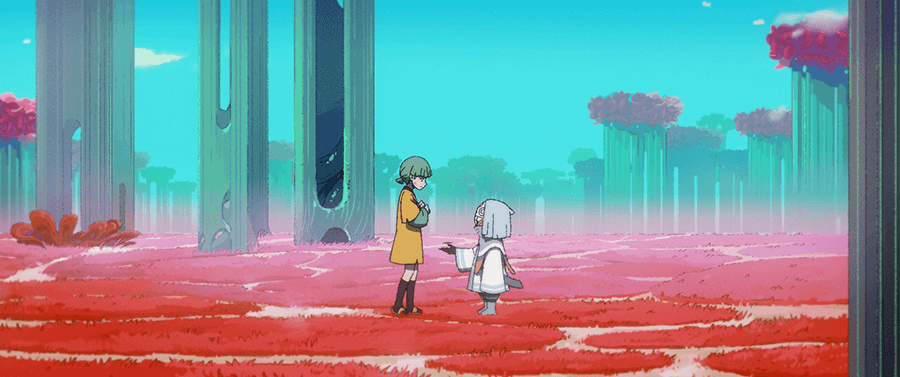
What grows in the space between one life and the next? This is the question that Point Five Creations’ first feature, Another World (2025), sets out to explore. Point Five Creations is a Hong Kong-based animation production company headed by writer-producer Polly Yeung Po-man and director Tommy Ng Kai-chung. Another World began life as a short film released in 2019, the success of which helped Point Five Creations to gain support and interest for a feature-length version. (I first watched the short animation back in 2021, and was immediately struck by the world and story that brimmed with potential, which has lived in my head rent-free ever since.) With its flowing, organic 2D animated visuals, fantastical worldbuilding and an ambitious narrative following a soul’s journey between lives, Another World marks a major milestone for Hong Kong animation.
Hong Kong’s animation dates back to the middle of the twentieth century (for example, the short animation Bell Boy in 1947 and puppet feature film Princess Hibiscus in 1957). It started to pick up from the eighties when popular comics like Old Master Q were adapted into cartoons, and independent animation communities began to flourish. Over the past three decades, Brian Tse and Alice Mak’s McDull series (following the everyday life of a cute pig and his indefatigable mother) and more recently Toe Yuen’s animated reimagining of Sherlock Holmes (in which Holmes is a dog and Watson a cat) have proved popular. Another World marks a diversification both in style and subject matter for Hong Kong animated features, blazing a trail for other animators looking to move from shorts and commercial work into feature productions.
Another World premiered at Annecy last summer, and won best animated feature at the 62nd Golden Horse Awards in Taiwan, one of the Chinese-language industry’s highest accolades. The animation was also picked up by GKIDS for US distribution, and will be arriving in UK and Ireland cinemas from 30th January 2026.
Ahead of the film’s release, Skwigly interviewed Polly Yeung and Tommy Ng about the arduous journey to bring Another World into this one, their inspirations for the project, and its reception at home in Hong Kong and internationally.
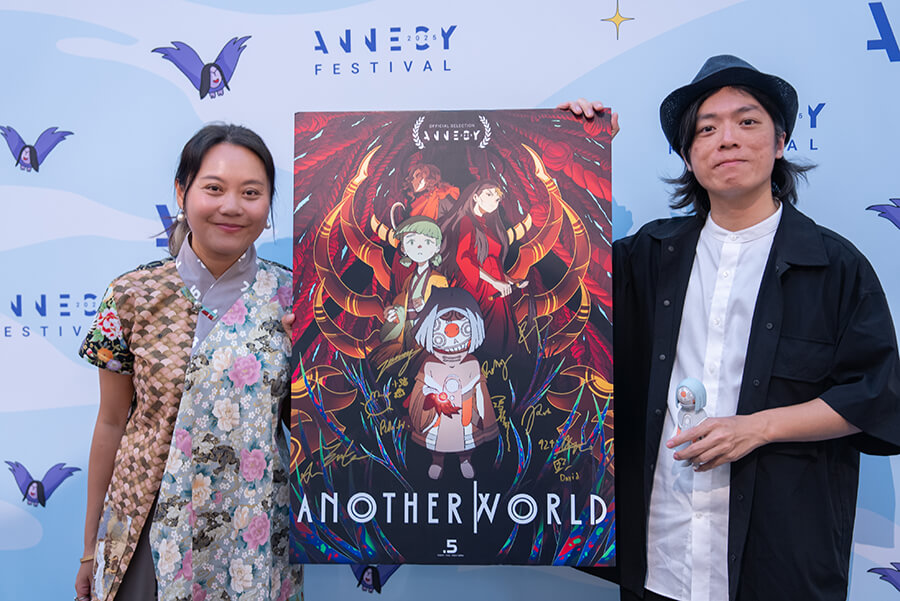
Polly Yeung & Tommy Ng at Annecy 2025
Polly, you’ve produced works across several different media including VR; what is it that drew you to animation as the right medium to tell this story?
Polly Yeung: When it comes to a story centered around a protagonist who is not easily portrayed by an actor, animation comes to mind. Also, I want the audience to approach the film with an open mind, and creating it in animation could encourage them to be more receptive to watching it…
Were there any aspects of writing the story you found particularly challenging?
Polly Yeung: Telling a story with different narrative threads that collide at certain points is challenging, as it is difficult to keep the audience engaged without making the correlations too obvious.
Another World started life as a short film. How was the process of adapting the film from a short film to a feature?
Tommy Ng: From the very beginning, we actually already had a huge world with many storylines in it. We had written many characters into the script at an early stage, but when making the short film, we tried to extract the part we felt was the most interesting and best represented the ideas of Polly and me, and used that chapter to create the short, which became the pilot for our feature film.
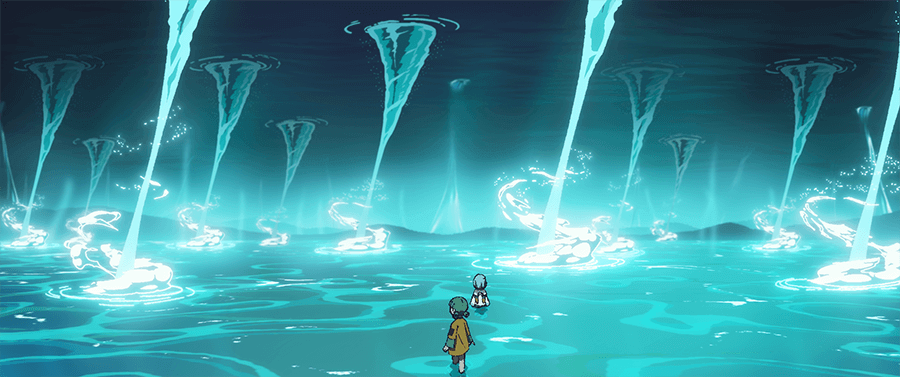
We put a lot of effort into depicting the world after death—“another world.” At that time, many of the settings had already been prepared, so when producing the feature, the team could smoothly expand on the existing worldview of the short film and develop additional details. Because, after the short was completed, many people gave us feedback on which elements of “another world” they liked, we also tried to preserve those things in the feature: for example the very fantastical landscapes.
You’ve spoken in other interviews about the challenges of convincing investors to support a Hong Kong animated feature. Where does Another World fit in the Hong Kong animation ecosystem? Do you think we’ll see more long-form animated storytelling from Hong Kong in the future?
Polly Yeung: We need to expand our vision to the global market, as the Hong Kong market is too small for recouping the investment in an animated movie. Another World seems like a showcase for this possibility. We believe that more animated features will be produced in Hong Kong, as the demand for animation has increased significantly recently.
In the history of Hong Kong film, animation and comics, are there any works which inspired you?
Tommy Ng: In recent years, the Hong Kong film that has moved me the most is director Philip Yung’s Port of Call. He portrays the Hong Kong I know so well in a very poetic way, and the editing, cinematography, and performances are all deeply affecting and touching, making me pay closer attention to the power of cinematic language in my own creative work.
When it comes to Hong Kong animation, the McDull films are essential for me, and they have had a profound influence on me [Note: My Life as McDull (dir. Toe Yuen) was the first Hong Kong animated feature to win Annecy animation festival’s grand prize in 2003]. Their storytelling is not only entertaining but also reveals the difficulties of growing up, successfully creating works that allow both children and adults to gain deep insights. This makes me really hope that audiences of different ages can see different facets of Another World and experience different feelings from it.
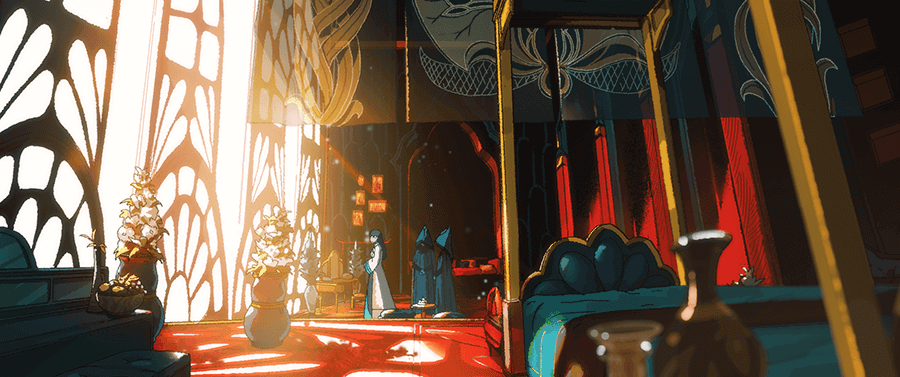
As in the first short film, the backgrounds and environments of Another World are stunning. Tommy, could you tell me a bit more about the art direction and design process?
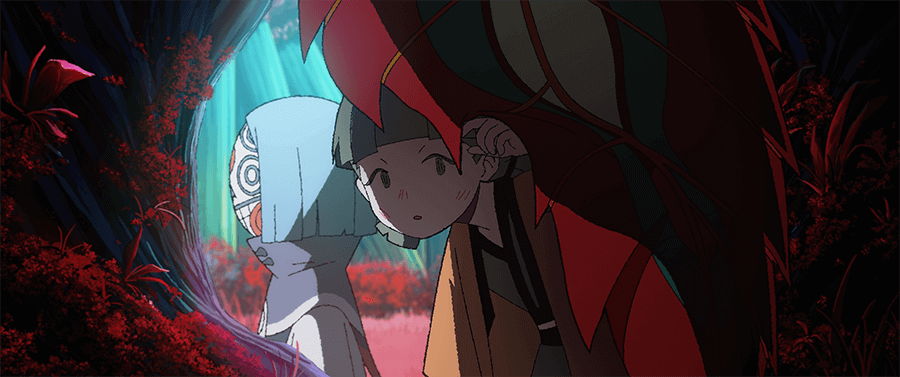
Tommy Ng: A key concept in our design was that everything should be in constant flux. You can see many different forms of water in “another world”, such as mist, rivers, and ice. This was something Polly and I wanted to achieve when designing that realm: to use the environments themselves to express the idea of impermanence, where everything changes according to its surroundings and nothing remains in a fixed state. This also applies very well to the characters’ journeys, as the situations they face are equally unpredictable.
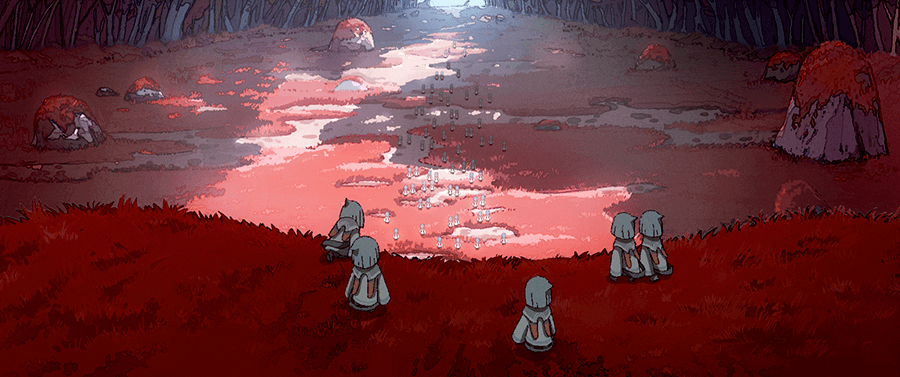
In terms of color, we wanted to create a world that would clearly stand apart from reality. For example, we chose red for the plants because it is a relatively uncommon color for vegetation, so the moment you see it, you can immediately tell whether you are in the human world or in “another world.” Moreover, “another world” is filled with plants, and that environment is both dazzling and serene, giving you a deep sense of peace.
What are some of your inspirations visually for the film?
Tommy Ng: I really like some classic experimental films from the past, such as Japanese director Shuji Terayama’s Pastoral: To Die in the Country (1974) and Alejandro Jodorowsky’s The Holy Mountain (1973). Their mise-en-scène is truly remarkable, constructing a surreal world on screen. I am very fond of their production design.
In any animated film, the voice cast is extremely important. What were you looking for when casting the voices of the spirit Gudo, the human girl Yuri and the rest of the characters? Did any of the voice cast bring something unexpected to the role?
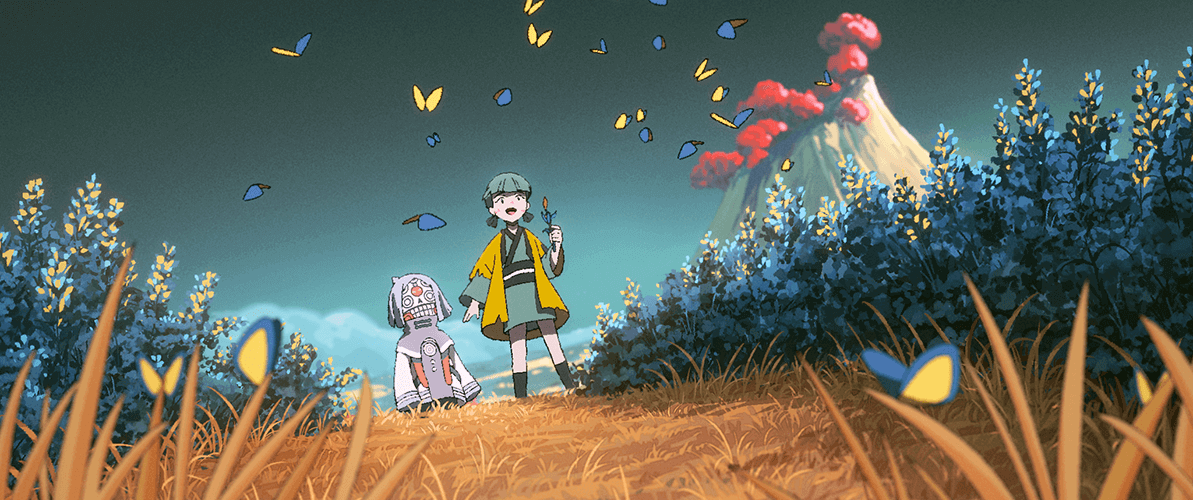
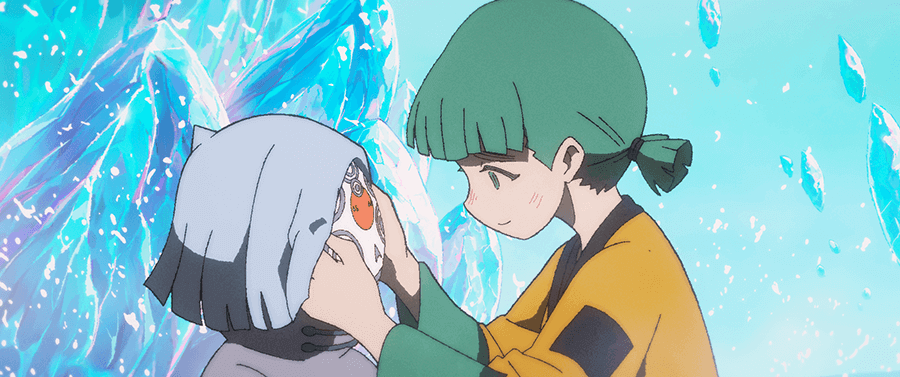
Polly Yeung: After writing this script for so many years, Tommy and I have developed an intuition about what to expect from the voices of characters like Gudo and Yuri. We definitely love the performances of our voice cast, especially Gudo. Suet, the actress voicing Gudo, has created a fascinating tone and manner that we find intriguing. Tung, the actress for Yuri, also brings a sense of toughness to her character that complements the original setting through her voice.
What’s your feeling about the film’s reception so far, both in Hong Kong and overseas at Annecy and other festivals? Do you anticipate any response in particular from the coming UK premiere and release?
The response has been better than we imagined. We can really feel that many viewers love our work; not only have they watched it several times, they have also posted a lot of fan art on social media, which has moved us deeply. We never expected that so many people would create secondary works based on my film.
We are very much looking forward to communicating with audiences in the UK and hearing their thoughts. This film will resonate differently in different places and cultural contexts, and people will interpret the story in their own ways. We sincerely hope to hear everyone’s feedback.
The film is about the afterlife, and spirituality, and making peace with mistakes. Have your ideas on these themes changed over the course of making the film?
We have not changed this belief; perhaps we’ve only slightly modified the way we tell the story, but overall, we’ve stuck to that idea. During these seven years of production, we’ve gone through different events in life, whether world events or personal matters, but these events seem to have guided us to reflect on this film we’re making—whether its message is something we truly believe in—and my answer is that I believe in it more and more.
What’s next for Point Five Creations after this colossal undertaking?
There will be more creations about Another World, not necessarily limited to animation—we will continue to expand this story through different mediums!
Another World is screening across UK & Ireland from 30th January 2026.