

Autism Awareness Month: Interview with Thomas & Friends: All Engines Go Consultant and Writer Daniel Share-Strom

Each year, I have had the honour to interview talented individuals for Autism Awareness Month, from creators to directors to writers who have worked for some of the most popular animated television shows, including Pablo, Carl the Collector, and Hero Elementary, which represent autism through their beloved characters. These talented neurodiverse and neurotypical people helped to make acclaimed stories and characters that represent autism in creative and unique ways that only animation and creative writing can achieve.
I had the honour of interviewing Daniel Share-Strom, who is one of the consultants and writers on the latest animated series of the beloved Thomas the Tank Engine franchise, Thomas & Friends: All Engines Go. This reboot follows a young Thomas as he learns and plays across the island of Sodor with his friends, including the series’ original character, Bruno the Brake Car, the first autistic character in the entire franchise. As well as discussing his challenges as an autistic writer on the show, he also talks about what it was like to collaborate with others as a consultant and how much it meant to work on such a beloved property.

Daniel Share-Strom. Image sourced from https://danielsharestrom.com
For those unfamiliar with the role, what does a consultant do on an animated series, and how did that differ from your work as a writer on Thomas & Friends: All Engines Go?
A creative consultant in the media industry is someone who has special expertise in a certain subject who works with the developers of a property to make sure they represent that area authentically. Legal dramas, for example, will often hire lawyers to consult to make sure that they’re getting the law right.
As a social worker who is autistic, I was able to work with Mattel to develop the character of Bruno so that we could ensure that he was tastefully written, non-stereotypical, and a character that those on the autism spectrum could see themselves in. My consultant work involved creating a document detailing the character’s personality, his likes, his dislikes, and his idiosyncracies, as well as his role within the team and his relationship dynamics with the other characters. I also gave notes when others wrote scripts featuring Bruno on what was working and what needed to change regarding his portrayal, and mediated when there was a dispute between different involved parties over some aspect of his character.
On the writing side, I got to be involved more directly to create stories highlighting Bruno. I wrote TV episodes and a podcast story featuring Bruno, I was one of two writers on the “Mystery of Lookout Mountain” movie that he starred in, and I contributed to developing his own series of YouTube shorts. Basically, between consulting and writing, I was able to help see this project through from the beginning to the end.
How did you become involved as a consultant and writer on the show?
I’ve always been a writer, and positive representation of autism has always been incredibly important to me. After all, in my social work practice, I can help one autistic person at a time to improve their lives and feel better about themselves. A great autistic character in a show or movie can help a million.
So when I saw a post in a writer’s group seeking an autistic writer to help a large media organization with one of their legacy properties, I had to take that chance. I sent them some samples scripts I’d written, along with my resume, and before long I found out they wanted me to work on Thomas & Friends… no pressure, right?
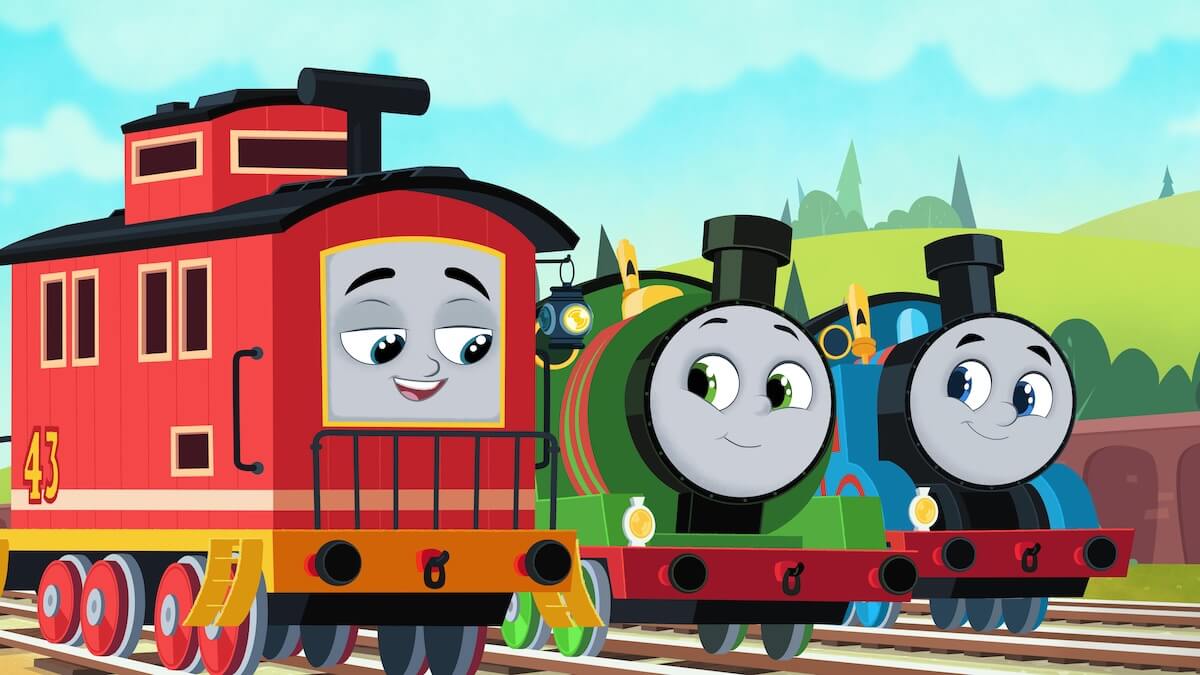
Bruno, Percy, and Thomas
What was it like to create Bruno the Brake Car, the first autistic character featured in the entire franchise?
It was the highlight of my career so far to develop Bruno. I love writing in all its forms, and I also love seeing a great autistic character on-screen. This is also a great franchise to do it in, since – and this may sound stereotypical, but it’s actually true – a lot of folks on the spectrum love trains and Thomas & Friends already.
Mattel was open-minded about what direction to take Bruno, and they basically gave me carte blanche to define who he was, outside of his name and the fact that they wanted him to be a brake car. Despite the fact that it’s a cartoon about trains for preschoolers, we were able to tell emotional stories that revealed a lot of depth to Bruno’s character. He has some of the hallmarks of being autistic, like flapping his little staircases to stim in the way some autistic folks do with their hands, but we went a lot deeper.
For instance, we had episodes dealing with how, contrary to popular belief, autistic people can be quite empathetic and care very much about how their friends are feeling, and how many on the spectrum are reluctant to ask others for help due to feeling insecure. As the brake car, Bruno had a well-defined place on the team, encouraging his often-frantic friends to slow down, think things through, and make better decisions, which is a great metaphor for what autistic people can often bring to a community.
When one of my stories finally got broadcast and I was able to see the end result, it brought a joyful tear to my eye.
What was your biggest challenge when working on the show?
The biggest challenge was making sure all parties were pleased. When developing the character, there was some back-and-forth with ASAN (The Autistic Self Advocacy Network) and Easter Seals, who also consulted on the project, where we disagreed on a few things, which is completely fine because not every autistic person is the same. We would simply talk things out, hear each other’s concerns, and figure out how we could do things in a way that satisfied each of us.
Then, once we were doing scripts, it was a matter of making it fit Mattel’s requirements and making sure the story was fun and understandable for the three- to five-year-olds who may be watching. For instance, the child characters couldn’t have more than four continuous lines of dialogue because their young voice actors would have trouble recording it. Most of the time, you had to stick to words that were one or two syllables so the audience can keep up, so if you had a character say “I apologize” in draft one, by draft two it would have to be changed to “I’m sorry.” If you absolutely needed a certain longer word for the story to work, you had to make sure that the characters take time to explain what that word meant. And on top of all that, you have to make sure there’s all the action, comedy, drama, and fun that will keep a kid entertained, because your message means nothing if they’re not watching.
I really enjoy these kinds of challenges, so it was great fun and truly rewarding.
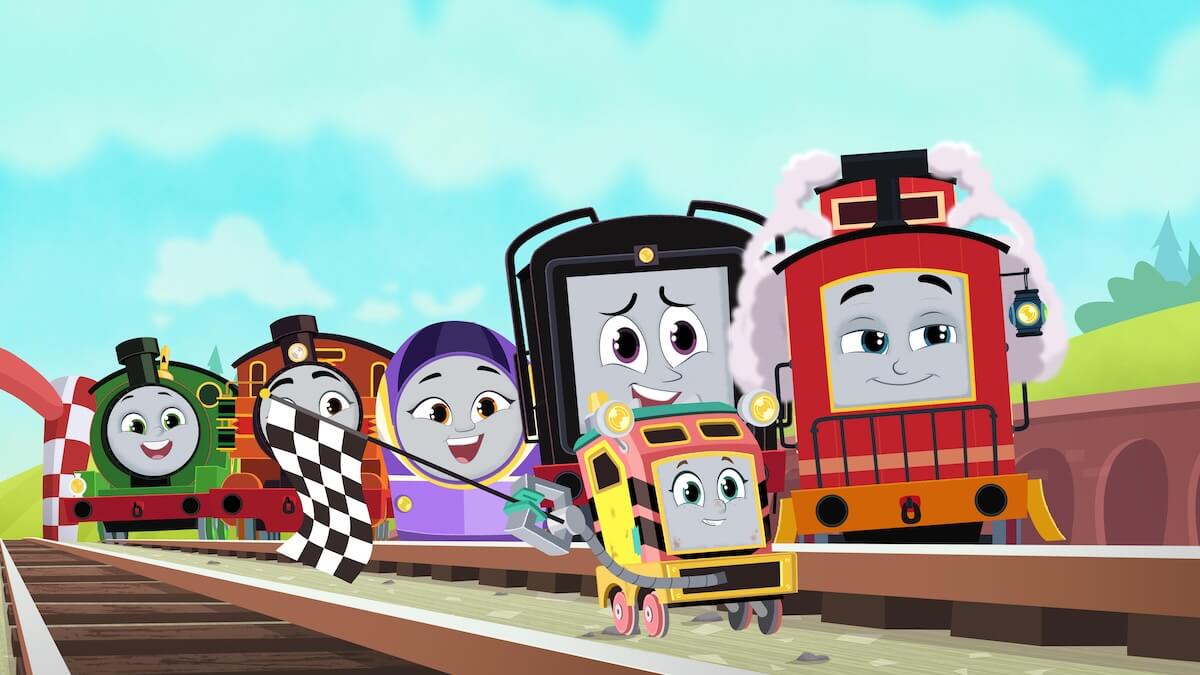
Thomas’ Friends
Since his introduction, what has reactions been like from audiences when it comes to Bruno and the episodes you’ve worked on?
We received overwhelmingly positive feedback on Bruno from fans of the show and from autistic people and their allies. People told us they were hesitant about him because other properties had handled autism poorly, but they ended up finding him highly relatable and a positive representation of someone on the spectrum. One young autistic fan who’d been bullied told me that, after seeing the first ad showing off the character, he ran into his mother’s bedroom and woke her up, crying tears of happiness because there was someone in his favourite show who was a little like him. Bruno was nominated for Italy’s Diversity Media Award, I’ve been asked to talk about him at events, and I’ve even gotten fan art, which always makes me smile.
What advice would you offer to those on the spectrum looking to become consultants or writers in animation?
Don’t be afraid to bring who you are to what you write. If you’re autistic, bring this perspective to these projects and wear it proudly. A lot of people try to mask this part of themselves in public, but if everyone hid a part of themselves when telling stories, the world would be a bland, boring place. Your experiences matter. Your feelings on important issues matter. You matter. If you understand that, and you work hard enough, someone will understand that one day.
And if they don’t, you can joke around like Bruno and say “Give me a ‘brake’!”
Thomas & Friends: All Engines Go is available to watch on Netflix, Paramount+, and Channel 5.