

Diplo: The Mighty Dinosaur – Interview with Writer/Director Wojtek Wawszczyk

Diplo The Mighty Dinosaur © Signature Entertainment
Twelve years in the making, Diplo: The Mighty Dinosaur certainly had a series of development and production hurdles ahead of it to try and create something different for animated films aimed at children. The efforts behind this small team of animators on this Polish production have finally paid off, as not only will it see its release in UK cinemas this month (19th September), but it will also be distributed across ninety-nine other territories.
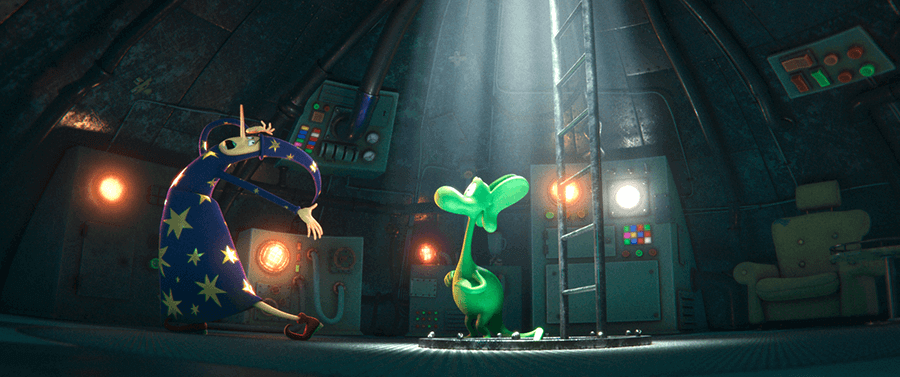
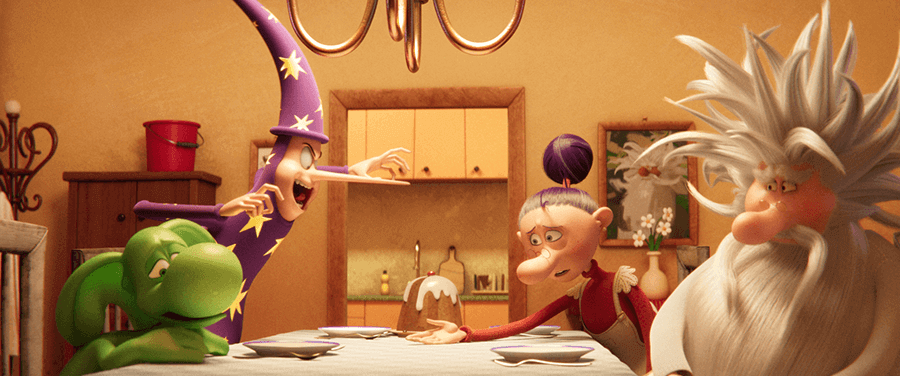
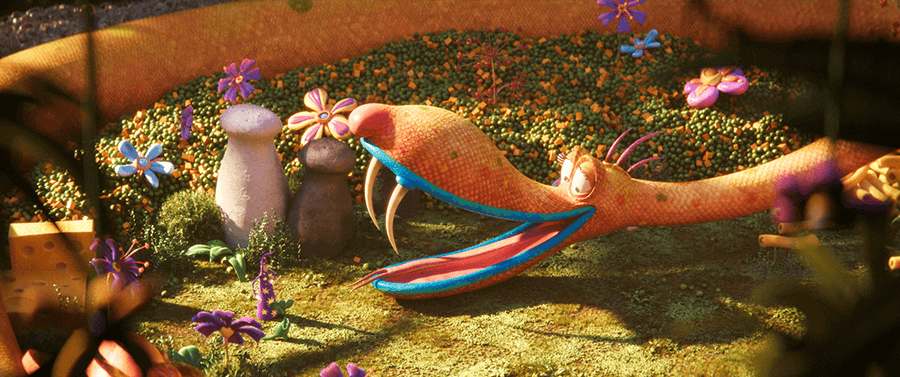
The film tells the story of Diplo, a young anthropomorphic Diplodocus with large ears and a cartoon creation from a struggling artist, who finds his world erased and magically teleports to different stories and worlds that this same artist has created over the years. Trying to find a way to restore the old pages of his story to bring his family back, he unexpectedly finds himself teaming up with a wizard, a scientist, and his assistant to find out why their worlds are being erased.
Diplo The Mighty Dinosaur © Signature Entertainment
I was fortunate to interview the film’s director and writer, Wojtek Wawszczyk, to discuss why an obscure comic book would have made a fun film, the biggest challenges for him during the lengthy development stage, and why it’s a unique animated feature compared to others made in Poland.
What was it about Tadeusz Baranowski’s Hocus Pocus and The Diplodocus comic books that inspired you to adapt them into a film?
I discovered those books when I was six or seven. It was the eighties, and Poland was quite an isolated country. I had this huge magnetism towards comic books, and there were only a couple of books being published in Poland back in the day. Poland was really grey and poor, and amongst those few books, there were a few of them that were absolutely incredible, and I think that Baranowski’s comics are the only Polish comic books from the eighties that remained extremely fresh.
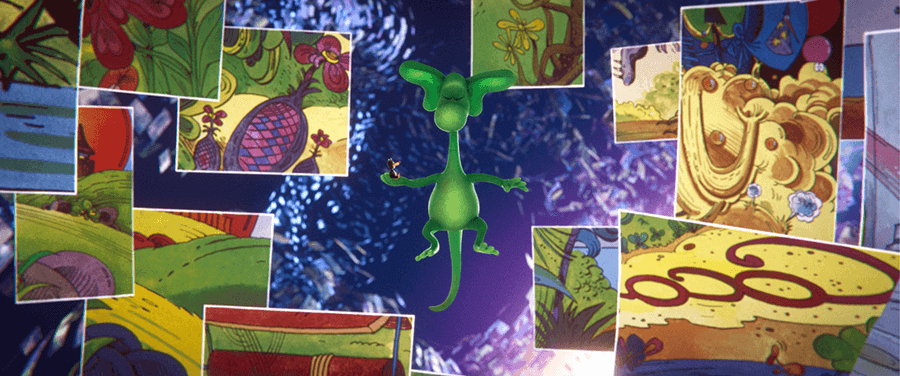
They’re super colourful and drawn with truly original artwork, and full of absurd humour. There are these characters that are aware that they’re being drawn by the artist, and they even get in a fight with the artist because they don’t like the adventures. I think this kind of humour is actually quite British in a way, because it’s very Monty Python, for kids.
I wanted to draw my own comic books, and that’s what I did. My first drawings were these copies of characters from these books, and years later, I met the author and we became friends. I told him that maybe one day, if I ever had the skills, I would love to bring his characters to the screen. That was twenty-something years ago, and now Diplo is complete.
Diplo The Mighty Dinosaur © Signature Entertainment
As the film’s writer as well as director, what was the biggest obstacle during the lengthy development stage of the film?
It was 2012, and I joined this really small animation studio in Warsaw called Human Film. I joined first as an animator, because I had experience working in the US and in India for a short period of time. I told my idea of bringing Baranowski’s comic books to the screen, and producer Maks Sikora said, “Why not?”
I was fascinated by these huge animation features by Pixar and Sony Pictures Imageworks, and I wanted to try and make a movie with such a technique in Poland, which hadn’t been done yet. Nobody had ever tried to do this, and it sounded absurd to do it without much of experience. First of all, we were trying to find some money to finance the production, and it took us so long because there was no proof that such a movie is feasible and producible in Poland. So that was one thing.
Another quite difficult thing was that these comic books don’t have a traditional story structure. They are mostly a series of jokes, and in the beginning, my friends (nine of us from different cultures and different backgrounds) started talking about it, and each of us pointed to something completely different that was interesting to them. That’s why I also thought that I couldn’t just make a simple copy of these books. I wanted to tell an original story that would capture the spirit of the books not only visually, but also in terms of the absurd atmosphere of what’s happening.
I think that’s why it took so long. The first version of the script was written after two years of talking. We had to maintain the studio and take a lot of service jobs. When we were involved in making service work, we didn’t have much time to keep working on our movie. We also knew quite early that we needed help, so that’s why we looked for a co-producer from another country. There were three attempts in building these relations until we finally found PFX, a company from the Czech Republic.
Diplo The Mighty Dinosaur © Signature Entertainment
There’s a wonderfully animated and colourful cast of characters featured across the film. Which one was your personal favourite and why?
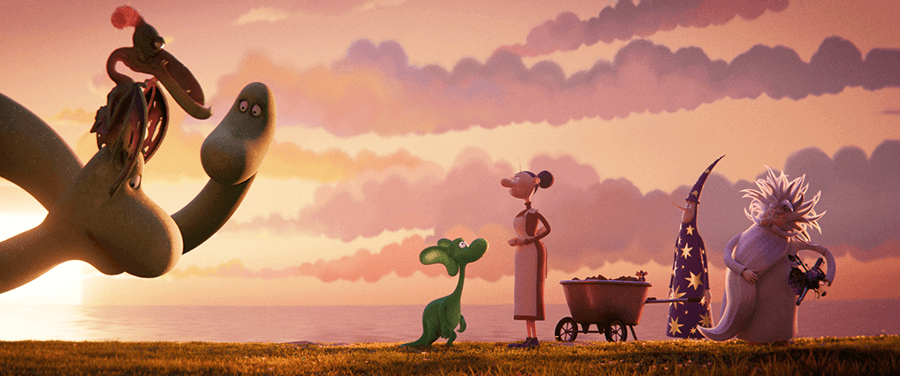
I love Hocus Pocus. He has the biggest emotional range. We really loved animating him as well. For instance, for Hocus Pocus, the more pompous he is, the more cartoony he animates.
I also love Professor Nervekowsky. My little team named me after him because that’s who I am in a way. When I get involved in something, I can behave and even move a little like him. These two characters are my favourite and reflect who I am, I think.
Diplo The Mighty Dinosaur © Signature Entertainment
What makes this production unique compared to other animated titles made in Poland?
There are plenty of unique things in the movie. Baranowski’s comic books are a strong IP in Poland, and a lot of people of my generation who grew up with this sense of humour are drawn to them.
Poland is primarily known for its artistic animation. I also come from this background. Even before making this film, I had created many artistic short films. Perhaps this is what makes Diplo a film that combines mainstream cinema with artistic and experimental cinema—for example, through the combination of animated and live-action scenes and an original, somewhat strange plot with an intelligent message.
We have a bunch of great artists, and these talents can cross over to something very unique and beautiful. Many comic book artists were involved in the production. There is also that great ’80s vibe in the camera work and soundtrack. Such an animated movie is extremely rare and unique, especially in Poland.
When audiences see the film, what is the biggest takeaway you hope audiences leave with after watching?
My first motivation of bringing these books to the screen was that I wanted to tell my original story, but I also wanted viewers to feel the same emotions and have the same thoughts that I had when I read these comics forty years ago.
I would like viewers to feel and experience something truly original, and I want children to believe that being unique and original is something cool. Both the artist and Diplodocus go through the same story and have a similar problem. They have to believe in what their hearts tell them and not listen to what everyone around them says. It’s about finding the strength not to follow the crowd, but to do your own thing. I would very much like children to do just that. And maybe after the screening, to pick up a pencil and a piece of paper, and draw their own stories, their own comics, in their very own way.
Diplo: The Mighty Dinosaur is out in UK cinemas from the 19th of September.