

Forgotten Island Review – A Call To Adventure

Forgotten Island is an invitation. DreamWorks’ latest feature barely goes five minutes without extending an arm out of the screen, trying to grab the viewer by the scruff of the neck and isekai them into the film’s rollercoaster adventure. By utilising every storytelling trick and animation technique at their disposal, directors Joel Crawford and Januel Mercado have crafted not only DreamWorks’ best film, but one of the best studio animated movies to come out in the past decade. When Forgotten Island extends that invitation, you best RSVP with a plus one.
© DreamWorks Animation
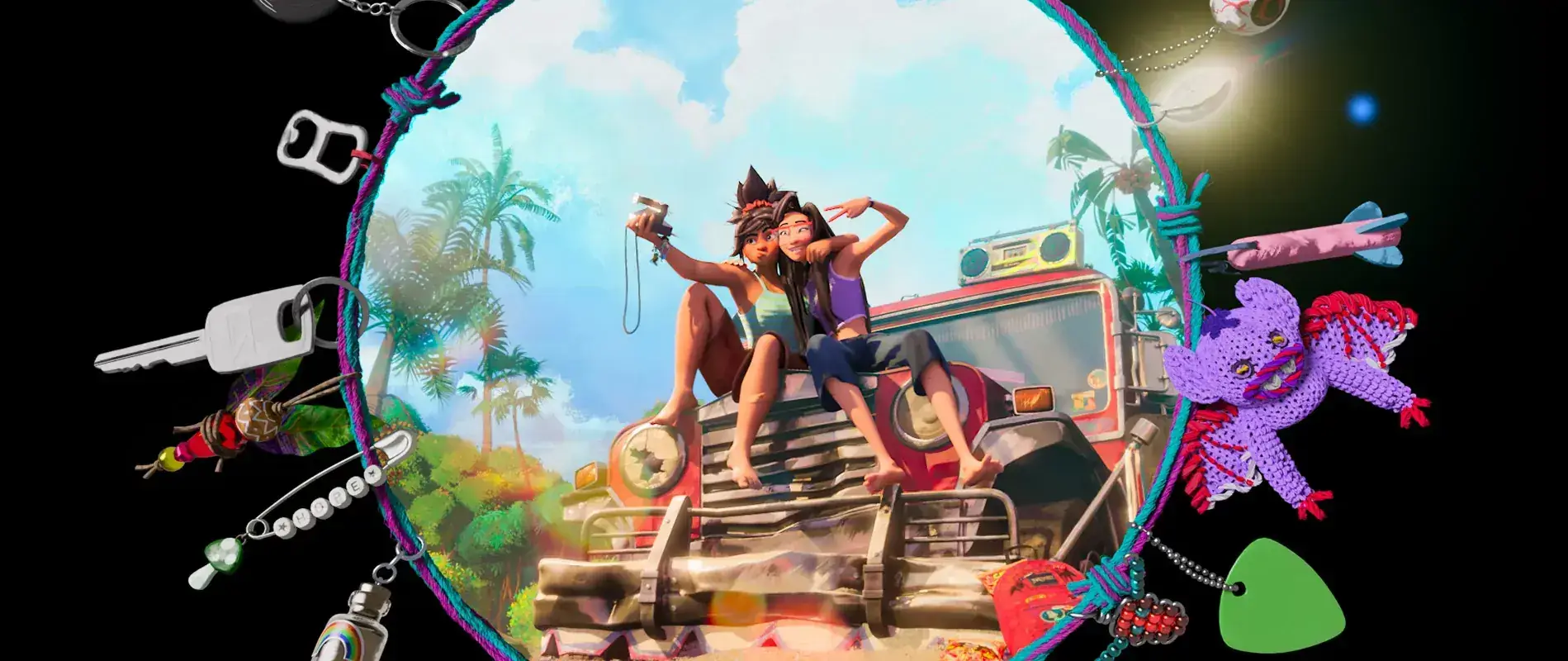
Sitting comfortably in the tradition of animated movies depicting myths from across the globe, Forgotten Island is a trek through Filipino fairy tales. Set in the Philippines, we follow two life-long friends, Jo and Raissa as they hit college age and start to contemplate life without each other. Right as that emotional rift begins to form, a literal rift opens in front of them and they decide to leap into the titular island which is full of the myths and legends they have heard about since they were kids. In a Hangover-esque plot structure, the pair have their memories of their first night on the island erased and have to retrace their steps in order to get home.
Despite existing in the same genre as past animated fairy tales, Forgotten Island doesn’t share a lot of DNA with them. In fact, Forgotten Island owes far more of its appeal to video games. Many of the techniques used to immerse players in a video game, as well as a lot of visual language, structure and general feel, are replicated and paid homage to throughout Forgotten Island. Unlike older animated myths like Aladdin and The Little Mermaid that are recreations of a specific story, Forgotten Island takes the modern approach of depicting real world people getting sucked into a mythical realm. This is just one of the many things Forgotten Island does in the name of immersion.
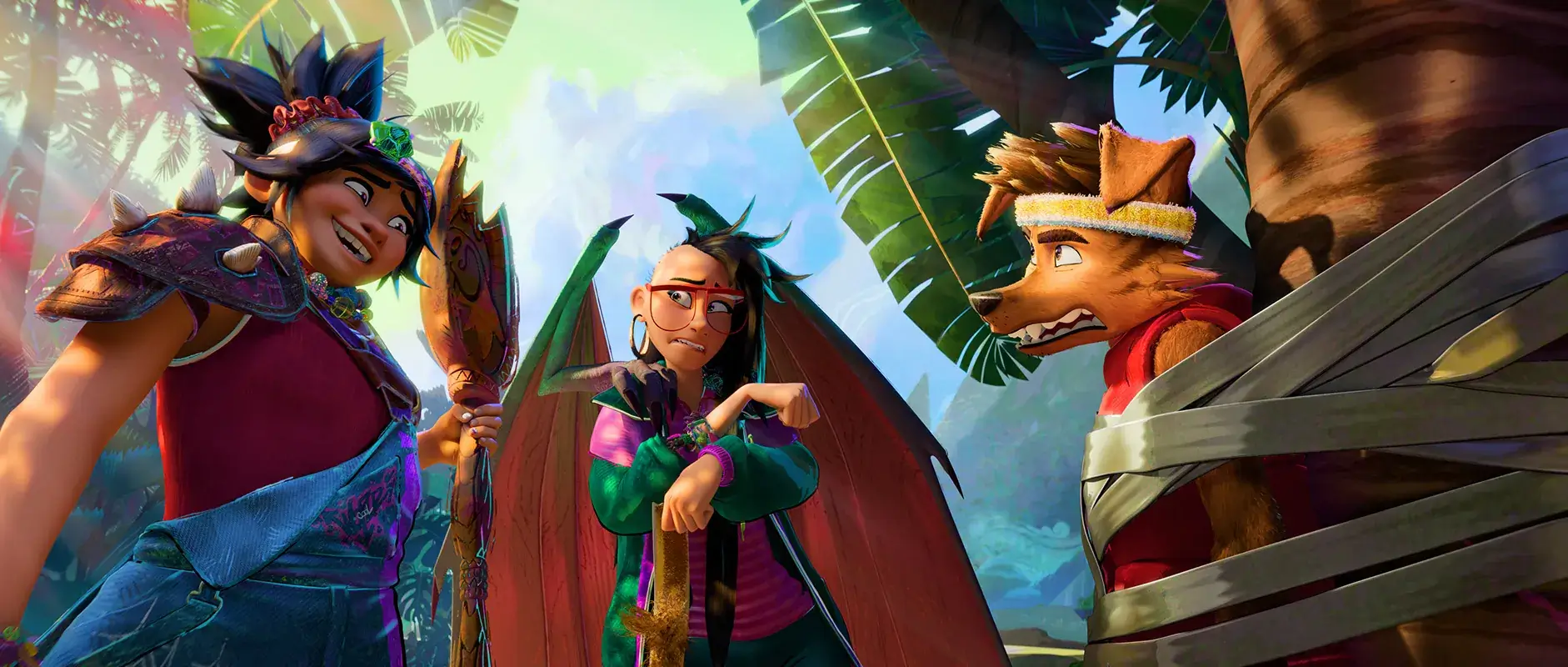
The most obvious homages come through the film’s integration of 2D animation alongside the pastel, watercoloury CG whose beauty is enough to carry you through the film alone. However, keen to constantly keep things feeling fresh and engaging, Forgotten Island sees characters’ emotions burst out, gaining physical manifestations.
If a character isn’t perfectly in frame, whether they’re in the background or obscured by the set, a miniature 2D version of their face will pop up in the form of a speech bubble. It’s similar to the art accompanying dialogue boxes from old RPGs that flash up with a facial expression and a mouth flap or two. Set in the 90s, the film is knowingly utilising these effects to evoke the era, just as they do with the needledrops throughout the film.
© DreamWorks Animation
Flashbacks in Forgotten Island also play like video game cutscenes. Fully 2D animated, they give exposition a fun treatment where the characters seem to be bouncing on the spot like characters in a fighting game waiting to be selected, and the scenes come at such a fast pace, wanting to download all the information into the audience’s brains as quickly as possible before returning to the action, evoking the quick scenes that establish Princess Peach being captured by Bowser at the start of a 2D Mario game.
These techniques are so effective and feel like a shot in the arm whenever they come up. It’s a storytelling cheat code to make the audience excited for exposition scenes to see what kinds of hand drawn animation are gonna pop up next.
The way Forgotten Island utilises its camera is also fascinating and unique. The promise of CG animation is fully realised here, using its camera in creative ways beyond what we’ve seen from CG in the past few decades. So many shots employ a wide lens that slightly distorts parts of the frame and has the audience craning their neck for a clearer look into the world. Almost every dialogue scene is shot with super deep focus, another immersive technique akin to how an open world game will show off its draw distance.
Forgotten Island’s camera embraces the looseness and relentlessness that runs through the entire film. It feels like it’s always swishing around and taking on interesting angles. There is even a scene where the characters rap to the camera directly as if they were in a music video. There are no real rules here, not in terms of camera, the animation technique or the pool of influence.
© DreamWorks Animation
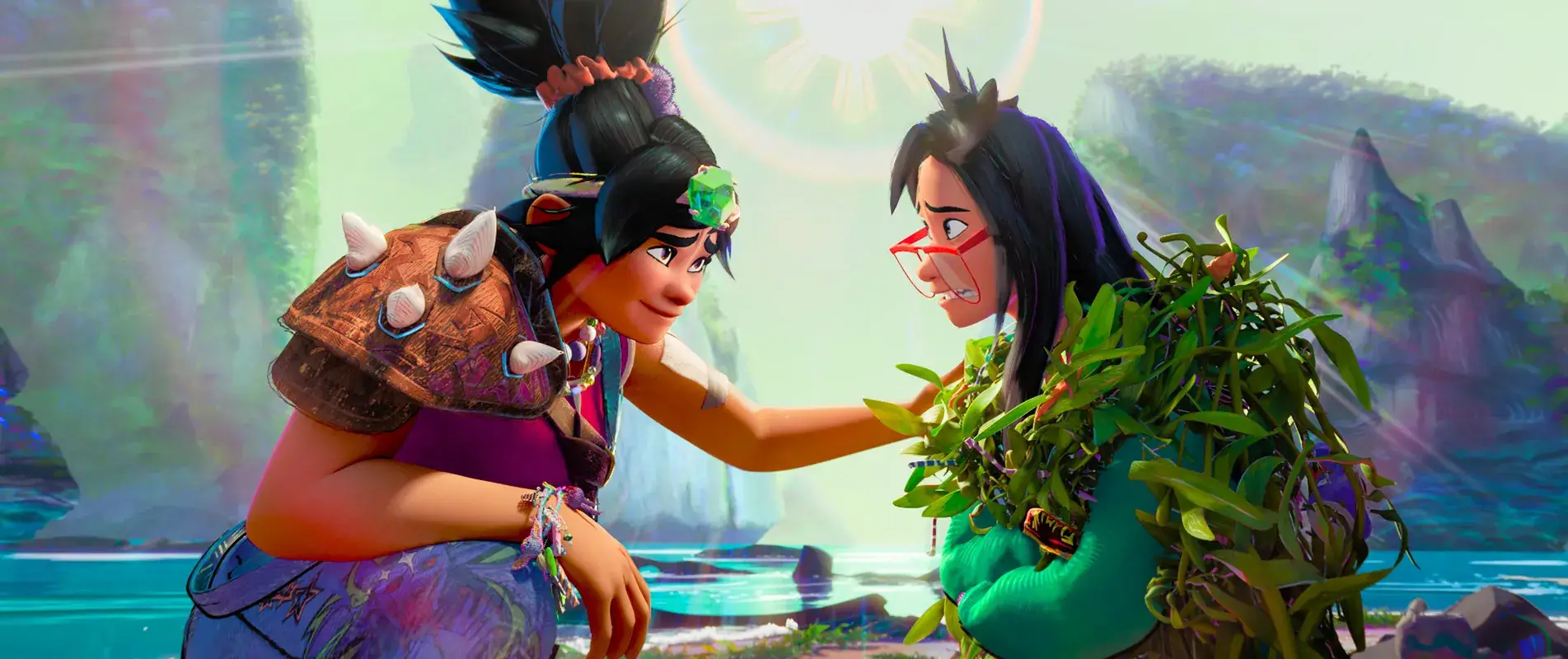
All of Forgotten Island’s in-your-face imagery and filmmaking style means that it’s a movie that lacks subtlety. In the pursuit of putting every emotion felt by every character on screen, there isn’t any subtext in Forgotten Island, but I think this helps it thrive.
The lack of subtlety is a creative choice, not an unintentional consequence of bad filmmaking. When a character is angry they levitate off the ground in rage, or their eyes will be replaced with flames. If they’re sad then goblets of tears will fall from their eyes. Crawford and Mercado knowingly traded immersion for subtlety, and it makes for a thrilling experience. Ambiguity can create a divide between an audience and a film, and that isn’t risked at all here.
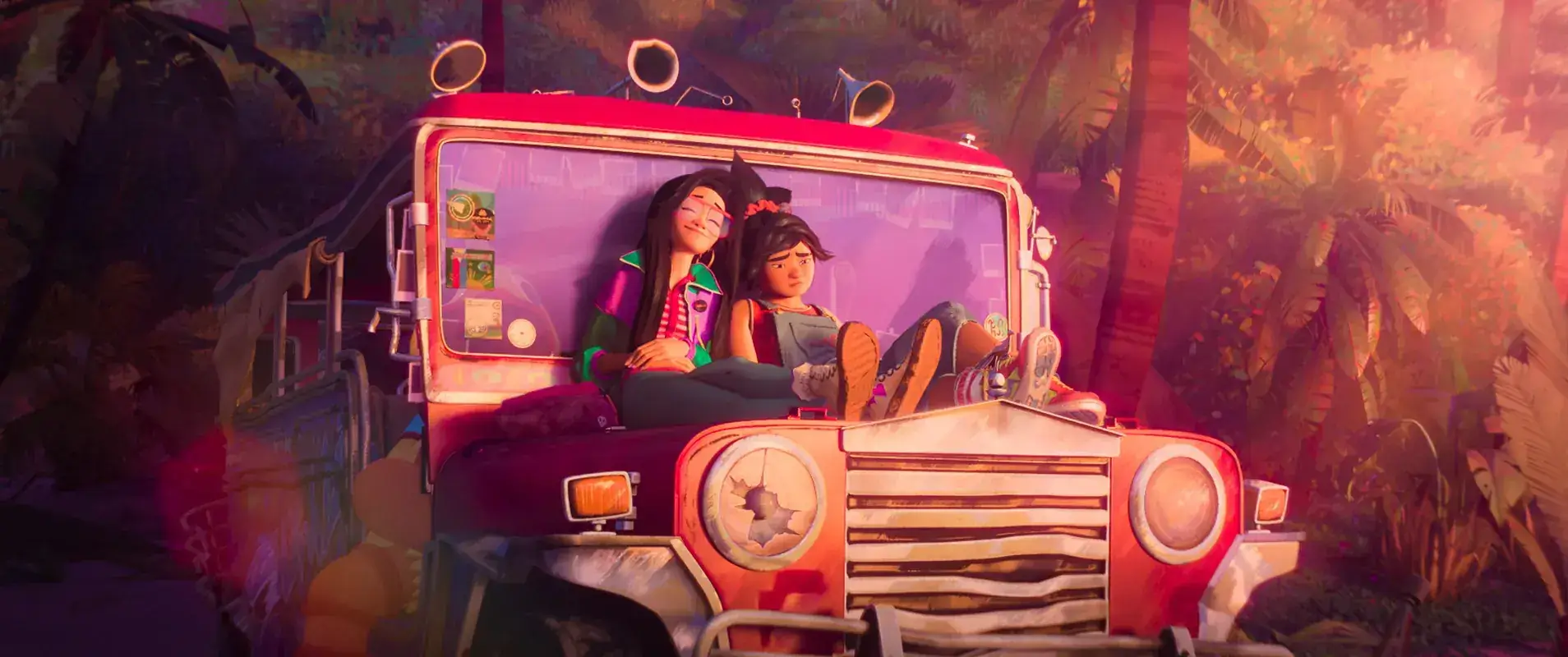
It’s easy to criticise something with the pace and humour of Forgotten Island for falling into the trap of catering towards shorter attention spans, something more righteously levelled at The Super Mario Bros. Movies. The difference is that Forgotten Island’s lack of subtlety doesn’t mean a lack of depth, and the main relationship in the film is beautifully observed.
© DreamWorks Animation
Having the movie start in the real world and seeing Jo and Raissa make their bond as kids allows us to map our own experiences onto the characters. The first act of the film plays like a straight coming-of-age movie, another immersive technique that allows us to feel every roadbump in their friendship as if it were one of our own. Nothing about the plot in Forgotten Island will surprise you, but it ensures that even the smallest emotions jump out of the screen and encase the audience, so even when expected twists take place, they’re nonetheless impactful.
This approach means that the film’s many side characters are given short shrift, even if there are attempts at giving them arcs. However, the movie moves so quickly that it’s hard to linger on those weaker points, even if they do grind against the flow of the movie in the moment.
Forgotten Island is a relentless rollercoaster of an adventure that goes down as smoothly as any of DreamWorks’ output. For all of its reckless and rule breaking visuals, its structural neatness of having sections of the movie segmented into video game levels means that you’re never lost amongst all of the shifting animation techniques and camera swings. In Forgotten Island, the style is the substance. It doesn’t need to masquerade as a slower, thoughtful movie to inspire emotion because it finds its depth by fully embracing madness and pace. And that absolutely rocks.