

A Film About Everything You’ll Do ‘One Day’ | John Kelly on Retirement Plan | Interview

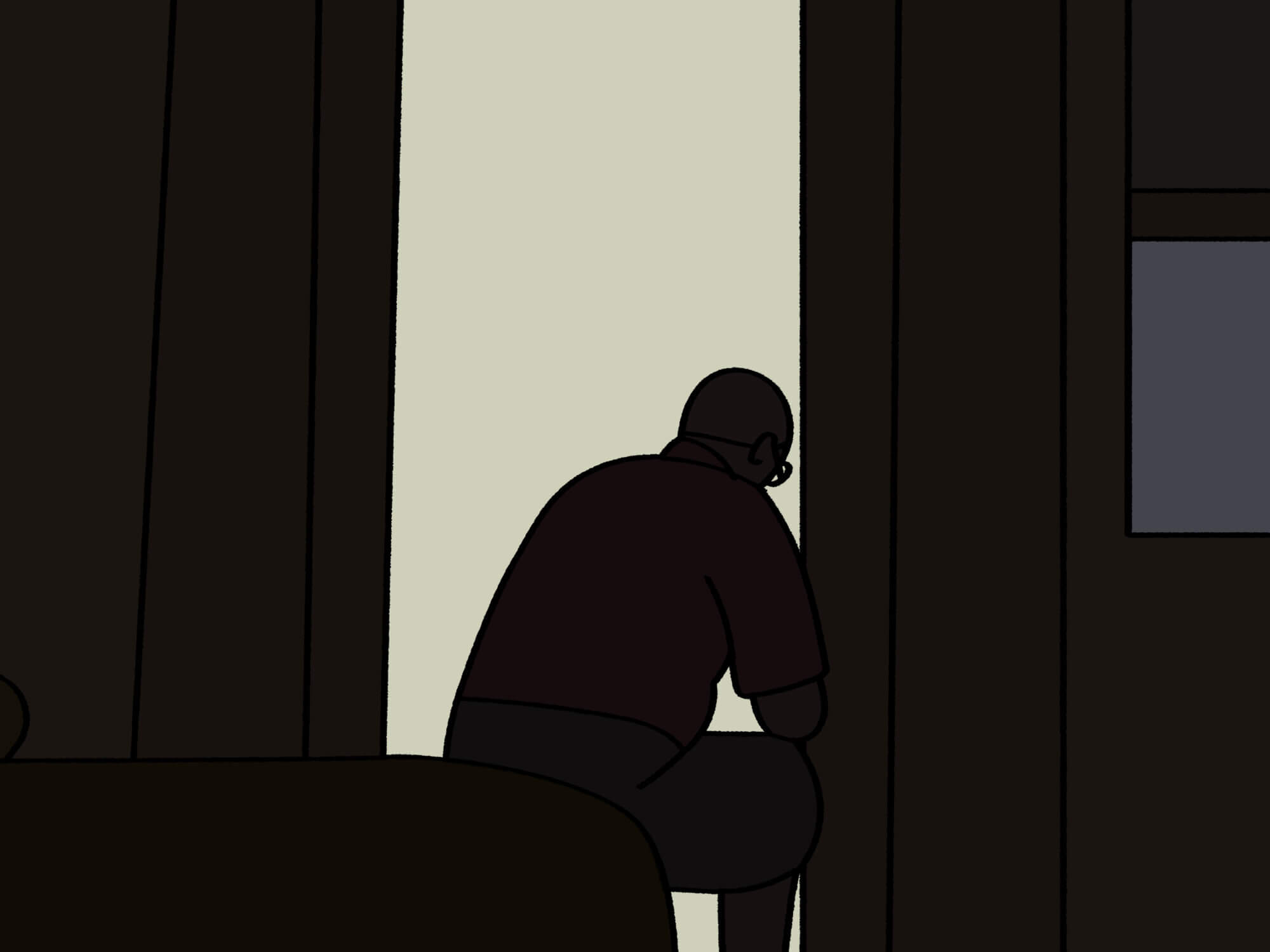
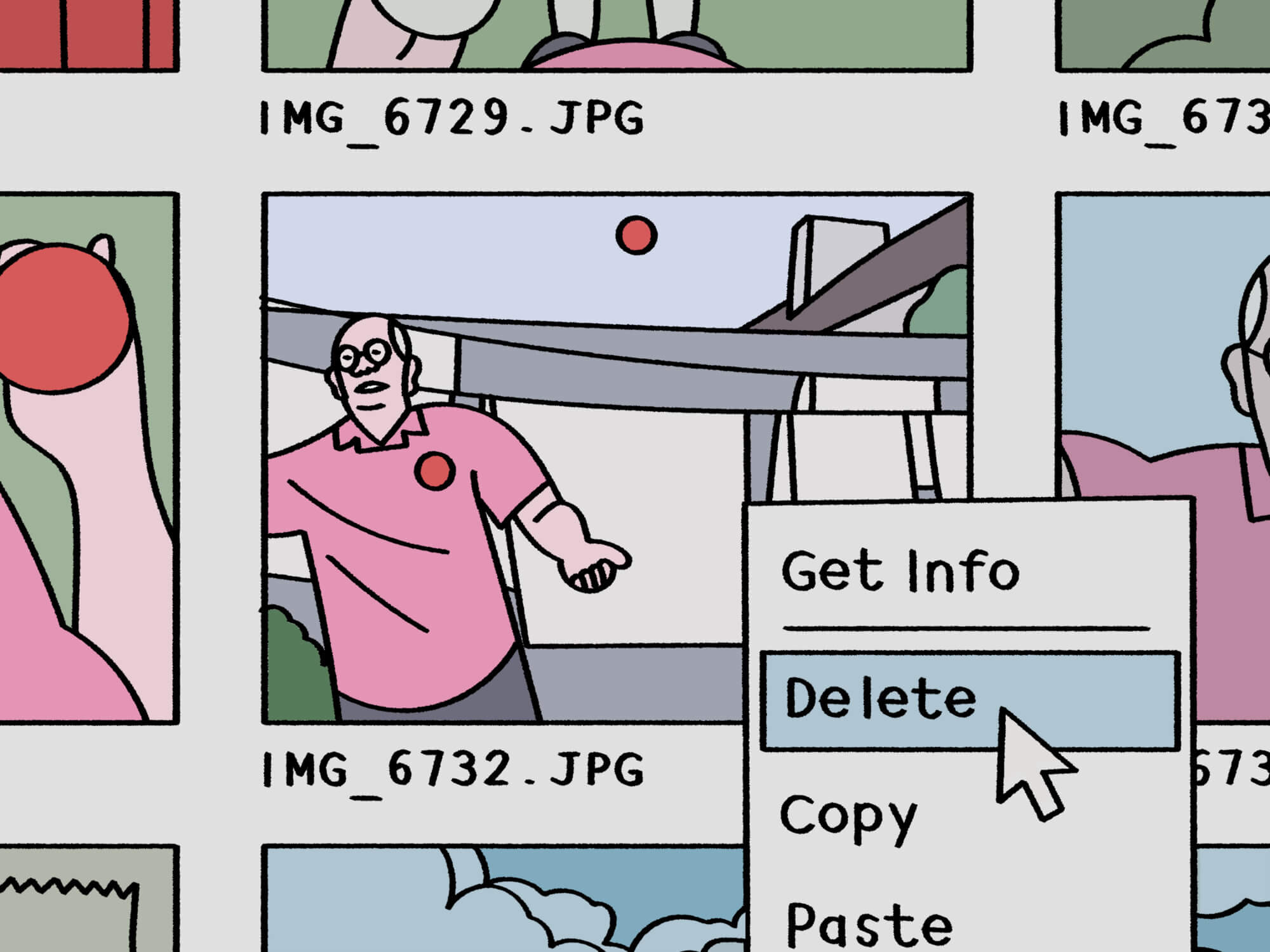
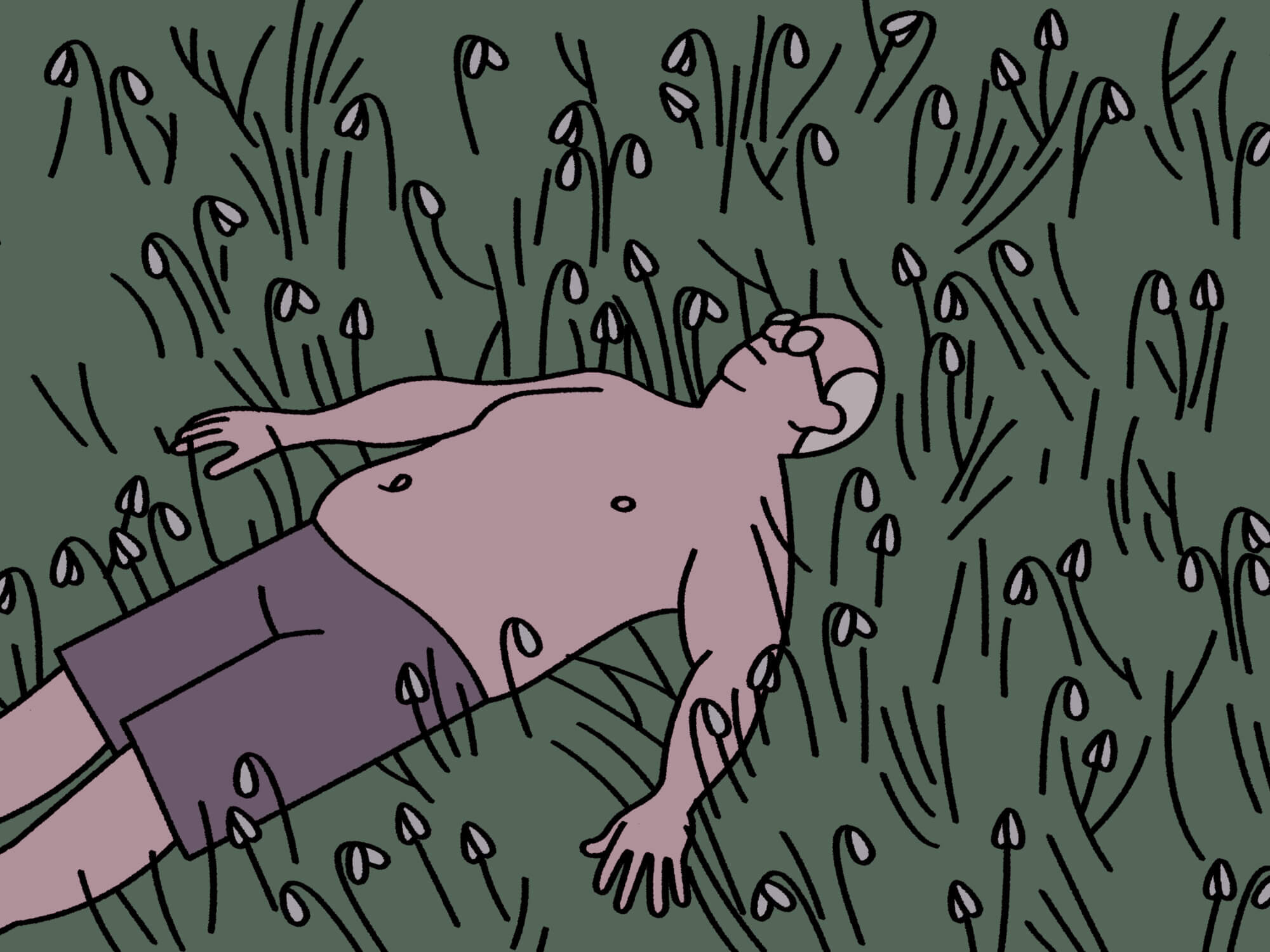 Retirement Plan is a film about how time is both our greatest enemy and closest friend. Following a man named Ray projecting into the future, listing off every little thing he’ll do when finally done with the ratrace, when finally free from the weight of accumulating wealth, Retirement Plan takes on a simultaneously hopeful and melancholic tone. We aspire to be as free and indulgent as Ray, ticking off every book, video game, hobby or phone call we’ve been putting off for years. However, we also understand that this is a fantasy, that it’s intrinsic to the human condition that time will slip through our fingers.
Skwigly caught up with the film’s director, John Kelly, to talk about balancing universal themes with personal specificity, taking influence from music and developing a more efficient animation pipeline.
Where did the idea for the film come from?
The way I talk about it is, I had a panic attack, and then I made it into a seven minute film. And that’s not an exaggeration. I was in London for an award ceremony, and I’d flown back on Ryanair early the next morning having lost the award, and I just had a bit of an existential moment where I started questioning myself. I’ve got aging relatives, my kids are shooting up, and I started thinking about time and whether I was using it the right way. That led me to think about this idea of a short film where someone prioritises their life in list form, ranking one thing against the other, until ultimately, they come to realization of what’s actually important to them. Which makes it sound incredibly depressing, and I do have to stop myself, because sometimes when I describe it like that, I think ‘No one’s going to watch this.’ And my co writer, Tara, who’s very funny, says ‘Stop talking about it being this miserable film.’ But that’s the subtext, and I think comedy is a good way to try and grasp that because it has its silliness to it.
Do you see it as a sad film or as aspirational?
I never really thought of it as a sad film until I started hearing that people were crying to it. I think we were trying to make people feel something but I never realised how hard it would hit some people, but equally, not hit other people at all. It depends on where you’re at in life. I thought, if someone’s going to be at retirement age or close to retirement age, this is really going to connect to them, but the surprising thing has been 20-somethings connecting with it a lot. They’re bombarded by choice and opportunities and possibilities, and this film is about experiences and doing things at the expense of any greater emotional reflection. I think 20-somethings are surprisingly more tuned into that.
As a 20-something, I was surprised at how much I connected with it.
When you make a short film, you have to think ‘How can this get into a festival?’ or ‘How can I make something that people will want to watch?’ I’m guilty of it in the past, making an animated film that’s really self indulgent. So when I started writing this film, I set it in America, that’s how you make it universal. I wanted to pull from all these amazing American cinema references that I have and influences of directors whose work I love, and make something that will definitely get out there. I haven’t spent that much time in America, so one scene would look a little bit like it was in Los Angeles, and then another one looked like it was in New Orleans, and I was really struggling. People kept asking at the delicate early stage, my wife, particularly was like, ‘So why is it set in America?’ And I was like, ‘It’s animation, you can set it anywhere.’
After some self reflection, I decided I needed to set it in Dublin. I needed this character to do things that I want to do and I can relate to. A lot of it is also from my co-writer and stuff that we imagine, but I went from going really broad and universal to very specific, and that forced me to be more honest in every aspect of the film. I couldn’t hide, and I think that’s what I was trying to do.
© John Kelly
What were the main cinematic influences you took from? My silly little Letterboxd review compared it to the ending of It’s Such A Beautiful Day.
I actually haven’t seen that, but I should. A few people have mentioned Don Hertzfeldt, I have seen some of his shorts and I love what I’ve seen. There’s definitely an unraveling that we share, and I do like films where you feel like the director’s taking you on a trip, and they’re very much in control tonally. We did want to make something that builds a safe space and a safe rhythm before we put the train off the track slightly. The Coen brothers are a huge influence, even if it’s not necessarily apparent in my work, but something like Fargo, so beautifully photographed by Roger Deakins, and that balance of comedy and drama. Also the Swedish director, Roy Anderson, who does a lot of comedy, but it’s all portrait photography. You’re just watching a scene in the wide and the drama just plays out with these really weird non-actor characters.
I get more inspiration from music than anything else, trying to push myself somewhere new with each project, and try and make myself uncomfortable, but also lower the stakes a little bit. It’s almost the equivalent of, rather than a big orchestra, being someone with an acoustic guitar. I’ve directed stop frame animation before, and I love it, but it just requires such a big team. [Retirement Plan] isn’t everyone’s cup of tea, but it allows a lot more flexibility.
The rhythm and momentum of the film are remarkable. What are the mechanics of achieving that effect?
Finding that rhythm and the tonal balance was really tricky, and music was a huge part of that. We use this piece by John Carroll Kirby, which he’d recorded in lockdown on our friend’s piano, you can even hear doors banging in the background and stuff. It’s got this beautiful feeling of space and atmosphere to it. When I put that on as a temp track, it immediately clicked. It has the rhythm to carry you along and make you feel comfortable and has an almost meditative feel, which is the perfect setup for then adding a fork in the road where things become less easy and the self delusion of the character kicks in.
That was a real discovery in the edit [which I did myself], because I wasn’t working with too many stakeholders and Screen Ireland were very understandable and flexible. That allowed me to be really fluid and take chunks out, put chunks in, re-record the temp VO. It was terrifying. There were moments where I walked away from the edit for weeks, thinking I have no idea what I’m doing. That track pieced things together and I had to get the rights. I wrote him an email with a little video attached, introducing myself and the film, and he was really into it.
What did Domhnall Gleeson add to the film?
When I sent it to Domhnall, I had my temp voice over it. As I said to him, I have the voice of the boring priest from Father Ted, so I wanted to leave it open to him and to see what he’d bring to it. He’s amazing. He’s a very funny person, and he’s known in Ireland for early sketch comedy so it was almost like getting another writer. Tara and I put together three columns. One was the VO, one was the alts, and then the third was all the things that the character says diagetically. We just spent an afternoon with him in a recording studio and he just went for it.
He also gave a few notes on the film, very tactfully, one of them being about the ending. Initially, I finished with a gag where the character comes back as a dog. I thought it was hilarious and we fully animated it. But I have that self reflexive thing of if I’m chatting to someone about anything emotionally deep, I’ll just throw a gag on top to deflate it. This was exactly what I was doing with the film. Domhnall wasn’t the only person to mention that, but he put it in a very, very eloquent way, and I chopped it off. It completely changed the film, it’s only one second or two seconds, but it suddenly became a film where you’re left thinking, and it leaves it on an open note. I’m very grateful to him for that.
© John Kelly
You’ve talked about how the pipeline on this film has longer form films feel more possible. How exactly does it differ from what you’ve done in the past?
We had a traditional plan which is that we would do animation, clean up, and compositing. The animators Eamon [O’ Neill] and Marah [Curran] suggested using this Moho software, which I hadn’t heard of myself. I know that Cartoon Saloon call it their secret weapon. I use Illustrator to draw in because you can apply Photoshop brushes onto the line work but if we’d animated in say Flash or Adobe Animate, we would have had to bring it into After Effects and apply a roughening thing which wouldn’t have achieved the pencil line look that I wanted to go for. I gave them my Photoshop brush that I’ve made for my artwork and they applied it. I would also give them fully coloured scenes, and then suddenly the final animation was coming out of Moho, and we didn’t need clean up or do much compositing. It became this much more efficient process.
The pipeline for me isn’t just the animation software, it’s also how I was working very fluidly with the edit at the early stages, using my own voice as a scratch VO. Also, there’s an entire version of the film, which is me acting out every scene and that was really useful for just finding out the exact amount of movements that felt right for it. We wanted to strip it back, because I think in real life, if you were to animate our conversation here, there wouldn’t be a huge amount of movement. That, for me, is another authenticity marker. The film has over 110 shots and in each one the character had to be rigged completely differently. So in a way, it wasn’t very efficient, but we were also choosing to just rig exactly what we needed in each scene, there were no repeat rigs. By the end of it, they were animating multiple shots a day, and I was struggling to keep up with supplying them with design. It had that flexibility to it that made me realise, this is so achievable.
Has making this film helped you come to terms with this part of the human condition?
It’s funny, one of the ironies of the film is that it’s done so well that I’m now spending a lot of time promoting the film, and it’s been an amazing conversation starter with people I know and people I don’t know about how to how to use the little time we have on Earth. It was sort of a bit of an emotional exorcism and a public therapy session, putting it out there. One guy who runs an animation studio in Dublin said to me ‘If you show this film to someone at the right point of their life, it could completely change their life,’ which is an amazing thing to hear. That’s what you want, to become bigger than anything we could have imagined.