

Two Black Boys in Paradise: From Manchester’s Red Bank to the BAFTA Red Carpet

Two Black Boys in Paradise is the animated short film that has been gaining a lot of traction since its festival debut almost a year ago at Anima in Brussels. The animated interpretation of Dean Atta’s poem about queer love and finding acceptance in a self made dreamscape has been winning over audiences and gathering a lot of momentum, nominated for the Iris Prize, London Critics Awards and scooping awards all over the international festival circuit, including home wins such as the Grand Prix at Encounters and best British film at Manchester Animation Festival.
And it’s to Manchester we must return to explore the origins of this film as whilst the feel of red carpet is something Director Baz Sells and Producer Ben Jackson of One6th might gradually find themselves becoming familiar with, its origins in the cold warehouses of Manchester’s Red Bank are far and away from the warm spotlight next to the step and repeat boards. Long before the festival laurels began to gather, the origins of this film present a remarkable tale of determination that could equal the story of resilience captured in the film itself.
A relatively young studio, guided by a strict code of ethics, One6th had made empathetic commercial works before such as Squib, commissioned by the Bradford Literature Festival but nothing could prepare them for making this 9 minute short. “We are very different filmmakers now than when we set out at the start,” Ben says. “The process has taught us so much about ourselves, about the value in collaboration, our own value as a studio and our place within the industry.” Recognising the valued role of the crew, Jackson continues “Lots of the people who did entry level jobs or placements with us have gone on to get full time jobs in the industry.” Short films, he argues, are not only about the finished on screen story, but also about “those early opportunities for people to get a foot in the door.”
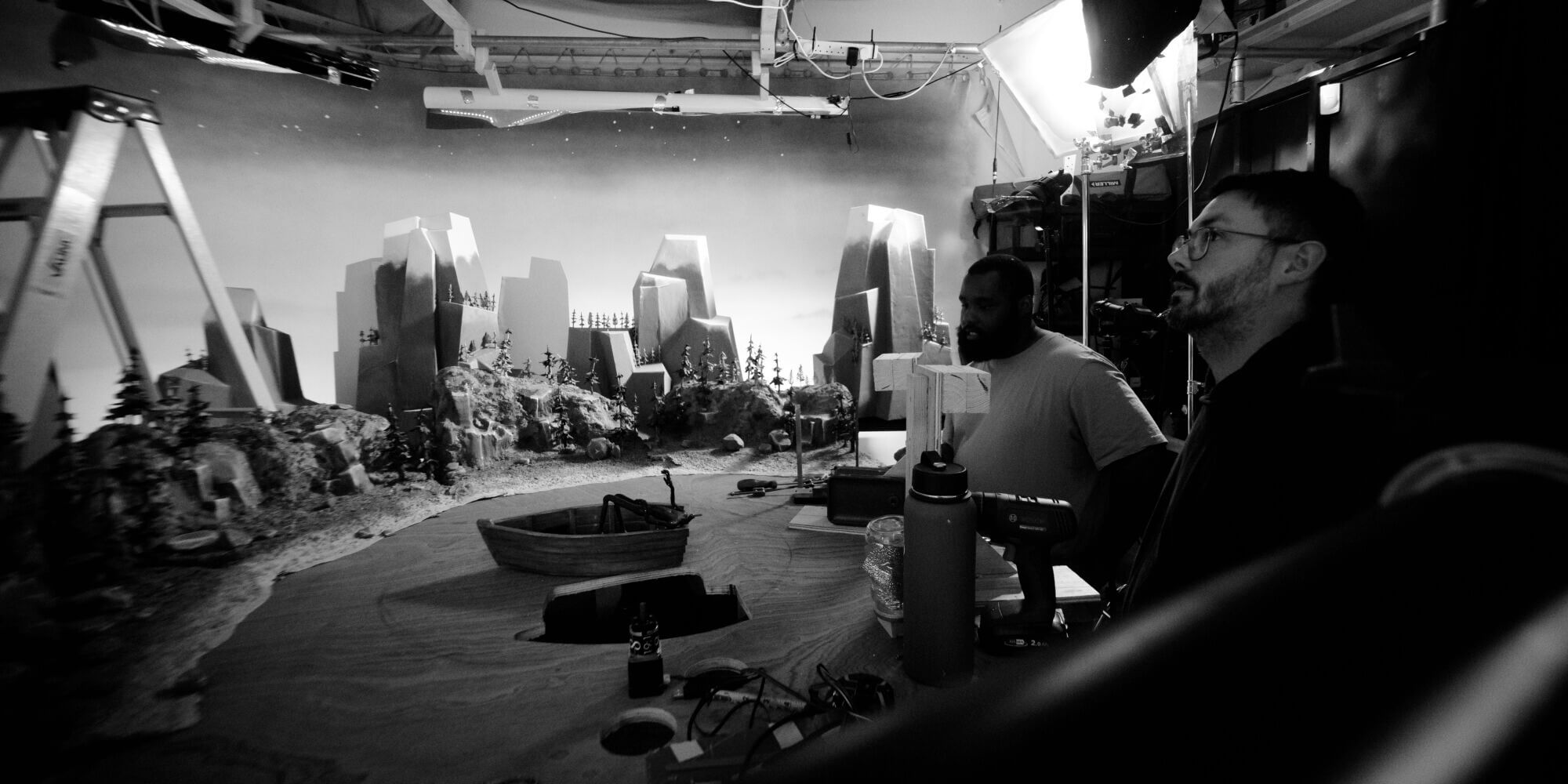
The door itself was attached to a cheap and cheerful Cheetham Hill warehouse which on reflection only managed to fulfil one of those criteria “We thought we’d grabbed a great deal,” Baz remembers. The building promised 24/7 access and electricity included. “None of this turned out to be true”. This blow was felt at a time when energy prices had doubled and heating the chilly studio couldn’t be done. “When temperatures dropped to freezing, our silicone puppets would often split — usually mid shot.”
Then came the break-in next door to the studio. Someone smashed through the wall with sledgehammers, stealing counterfeit clothing. “The police turned up the next day to seize the rest,” Baz recalls, and with landlords overseas, “it was left up to our director Baz to board up the hole in the wall.” Funny now, perhaps. “At the time the culmination of these things was incredibly stressful.”
The production ensured that, which budgets were tight crew were paid as fairly as possible. “It was up to us how we managed the budget,” they both reflect, “In the end we chose to pay ourselves the bare minimum so that we could put as much budget on screen and pay collaborators as fairly as possible.” It was “ultimately the right thing to do,” but “shouldering that economic responsibility was incredibly challenging.” They are quick to give credit to “our partners at home, our crew on set and the BFI”.
Securing funding from the BFI’s Short Form Animation Fund changed everything. “Realistically, without the support of the BFI there would have been no way to make this film,” Ben says plainly. “…the budget was considerably higher than anything we had handled before,” Baz explains. “On the surface that sounds like an advantage… but when you are attempting multiple creative and technical firsts as a studio, it becomes difficult to fully anticipate what is involved.” Complex stop-motion water, long hair, multiple sets, crew shortages — “each of those elements carries time and cost implications.” Technically, the underwater sequence was the toughest to complete. “We were averaging around 12 frames per day,” Baz says, citing flowing locs and constant puppet repairs. The 180-degree boat shot required animators to perform and execute the camera move simultaneously. They worked in shifts “to complete the shot before our tenancy ended.”
Though the pair are not Manchester natives, local artists, including collaborators based at Mackinnon and Saunders, lent their support. “There is an eco-system,” Baz says, describing the way crews move between studios. Given the size of Manchester logistically, it meant travelling across the city to fix puppets or collect props. “That inevitably adds time and cost,” he admits. “Fortunately, that flexibility and willingness to adapt is part of what defines the Manchester animation community.” Ben agrees: “The community showed up in a big way.”
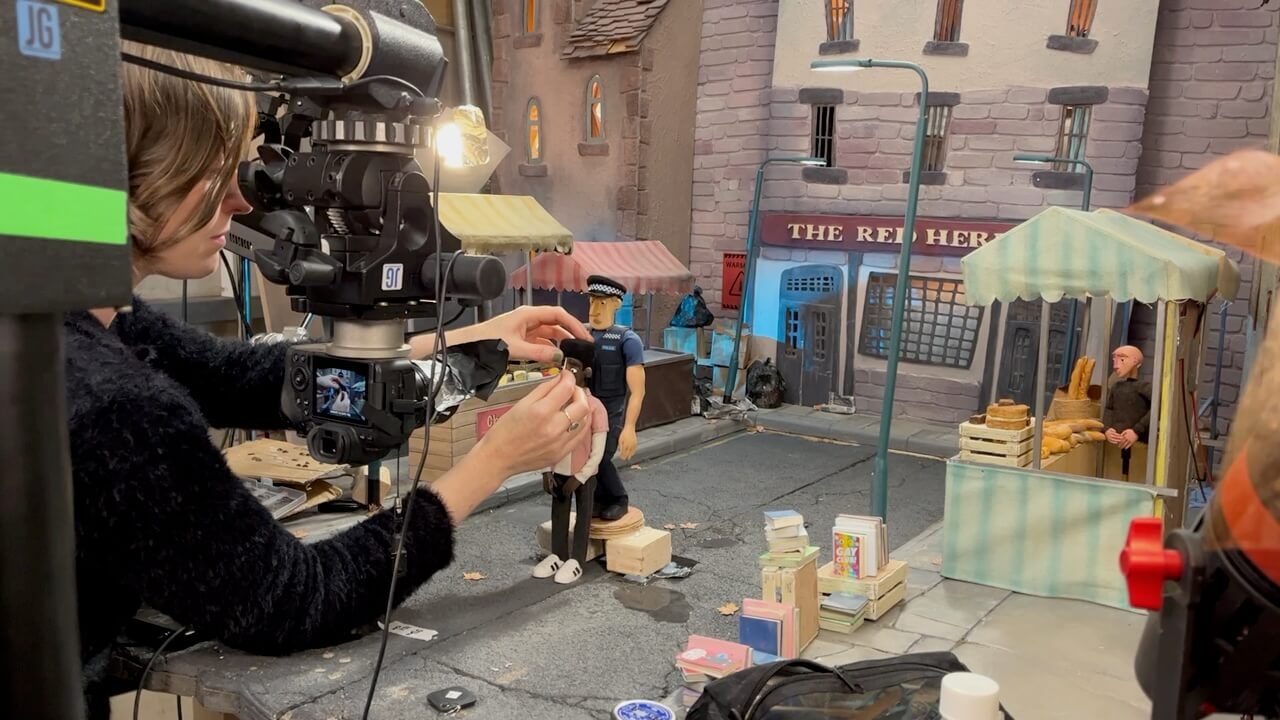
So on reflection how does the experience of making a short compare to making their more familiar commercial projects? “It’s harder by a long way,” Ben says without hesitation. “Commercial work is often intense, but it’s intense in short bursts. This film required sustained focus and resilience over five years.” Baz nods. “Like many independent animated shorts in the UK, it involved a long period of unfunded development (a year in our case) multiple funding rejections, and a long path to completion.” Even once the BFI stepped in, that balancing act continued. “Making a film at this scale as an indie studio meant constantly balancing ambition with limited resources.”
There is a sense that the responsibility weighed as heavily as the logistics. “The story and its themes are deeply important to all of us,” Baz explains. “We felt a responsibility not only to finish the film, but to navigate it well; both on screen and behind the scenes.” Behind the scenes meant ethics as much as aesthetics. “That meant paying our crew as fairly as we could across a year of production,” Ben says. “Fostering a supportive working environment, offering paid work placements to people from underrepresented communities, and running the production as sustainably as possible.”
So why persist?
“When creating a project as deeply personal as this, you carry a responsibility to do it justice,” Baz says. “To Dean, to the team, and to the audiences who rarely see stories like this told in this way.” For Ben, the motivation was intimate. “I grew up at a time when marriage wasn’t legal for gay people in the UK… I didn’t come out until the age of 30.” Making a queer film centred on tenderness and joy “felt important on a very personal level.” Before the BFI greenlight, their studio had come close to closure. So by the time the funding arrived, it felt “such a rare and special opportunity to truly showcase what we can do with the right backing.” As Ben puts it, “just finishing a short film is a small miracle.” To see it now streaming on Channel 4 and now nominated for a BAFTA validates the enormous group effort gone into making this film.
“Finishing the film wasn’t just about completion of a project,” they say together. “It was about honouring that collective belief in a story.”
Now signed with Strange Beast Baz and Ben look set for great things and their studio seems ready to take on the world. Looking back at the trials and troubles met along the way and the personal and professional growth the team have undergone in the process of completing their film, it’s clear that the making of Two Black Boys in Paradise has been the making of One6th.