

Yasuhiro Aoki on ChaO


© Studio 4ºC, Anime LTD
Animation’s history with mermaids is a daunting one to add to. Hayao Miyazaki’s Ponyo is one of many films from Japan’s most celebrated animation studio, and The Little Mermaid kicked off the Disney renaissance, while also being one of the first major western works to incorporate computer animation. ChaO, one of two features coming from the famed Studio 4ºC in 2026, avoids having to live up to that standard of trailblazing through its unconventional approach to the mermaid-human love story.
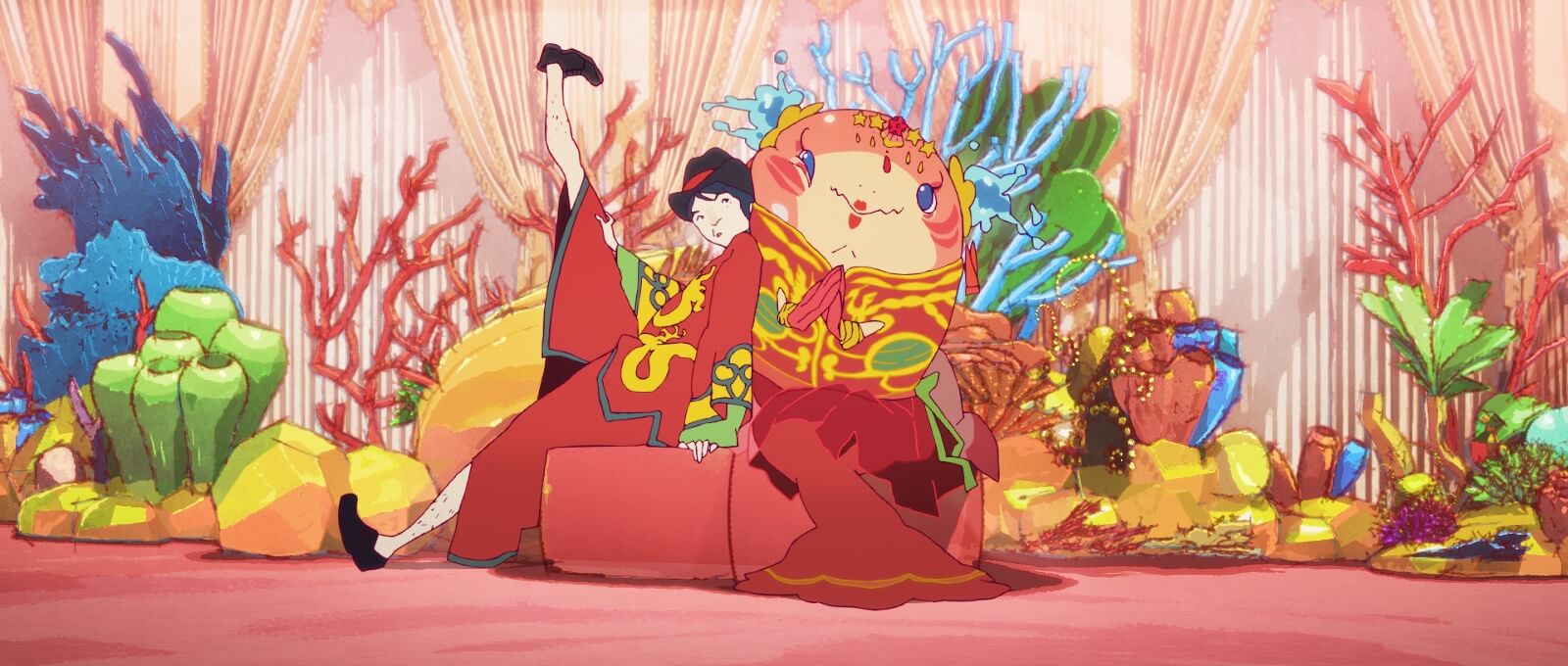
The bones of a princess mermaid (ChaO herself) falling in love with a human (an average Joe named Stephan) are intact in ChaO. The story is slightly subverted through ChaO’s sudden insistence on marrying this random human, the reasons for which are unclear to the audience until the final stages of the film. ChaO also greets its audience with a staggeringly surreal but fully realised fantasy world, one more distinctly alien than that of Ponyo or the Little Mermaid. Set in Shanghai, the film blends land and sea aesthetics, creating architecture, transport and fauna all its own. It’s a massive boon for any film to be able to show the audience something they haven’t seen before.
In the director’s chair on ChaO is Yasuhiro Aoki who has worked as an animator in the Japanese industry for over 30 years. On his resumé are genre-defining works like Mind Game, Neon Genesis Evangelion, The Animatrix and Sailor Moon, but his love for the medium started with a 1970s series from Tokyo Movie. “There’s an animation called Gutsy frog where the action is really well done,” Aoki tells Skwigly. “That’s what got me interested in animation.”
Gutsy Frog propelled Aoki to pursue animation school, but he found it left him unprepared for actually working in the industry, “I did go to animation school, but I can’t say that it really helped me that much. I think I learned more once I started work from butting heads with people and getting told off and and just growing that way. But I guess you can’t grow without skill.”
In the mid 90s Aoki began working at Studio Live, a service studio that allowed him to gain credits on some of the aforementioned iconic anime of the decade. Aoki believes this period taught him invaluable lessons he’d take forward in his career, “I learned a lot. I learned the importance of layout which was particularly important on ChaO, because normally you have characters who fit in the frame and they’re all the same sort of size, but in ChaO,the characters are all different sizes, and that means you have to change the layout to fit the characters, but that, in turn, gives the world of ChaO its breadth and its depth.” The clash between the land and sea is most apparent in the character design across ChaO, with humans often dwarfed by gigantic sea creatures.
© Studio 4ºC, Anime LTD
Crafting the idea for ChaO meant looking into 4ºC’s history and expanding a small section of Aoki’s past work, “Obviously the story of A Little Mermaid really exists, but ChaO itself goes back 19 years to something Studio 4ºC made called Amazing nuts! There was one episode which I directed, it was called ‘Even If You Become The Enemy of the World,’ [also known as ‘Kung-Fu Love’] and that was like a pilot for ChaO.”
With experience and cache at 4ºC in the bag, Aoki set to work on developing the fundamental pillars of ChaO. The film’s setting is what provides its most unique flavour, a hybrid world equally influenced by land and sea. For Aoki, this design was guided by the ideas of co-existence he was keen to stress, “The theme of the film is how different cultures can come together, and how you go about accepting other cultures, in this case, it’s humans and merpeople. Part of that is asking how to bring together the sea and this futuristic city of Shanghai, and one way I did that was with the merpeople’s roads which are water pipes that flow through the city of Shanghai. That’s one way of tying this whole city into this theme. It’s not an easy theme to draw, but that’s what I’ve tried to do.”
As it turns out, the city is drawn immaculately, each environment and background a sensory pleasure for the audience. Aoki found that the backgrounds had to be juxtaposed to the film’s foregrounded action, “The style of the background was developed to to complement the style of the character designs. And as I said before, you can’t ignore the layout with something like this. But to contrast with the manga-like, cartoonish characters, the background art has more reality, and it was something that the art director [Hiroshi Takiguchi] put a lot of work into.”
© Studio 4ºC, Anime LTD
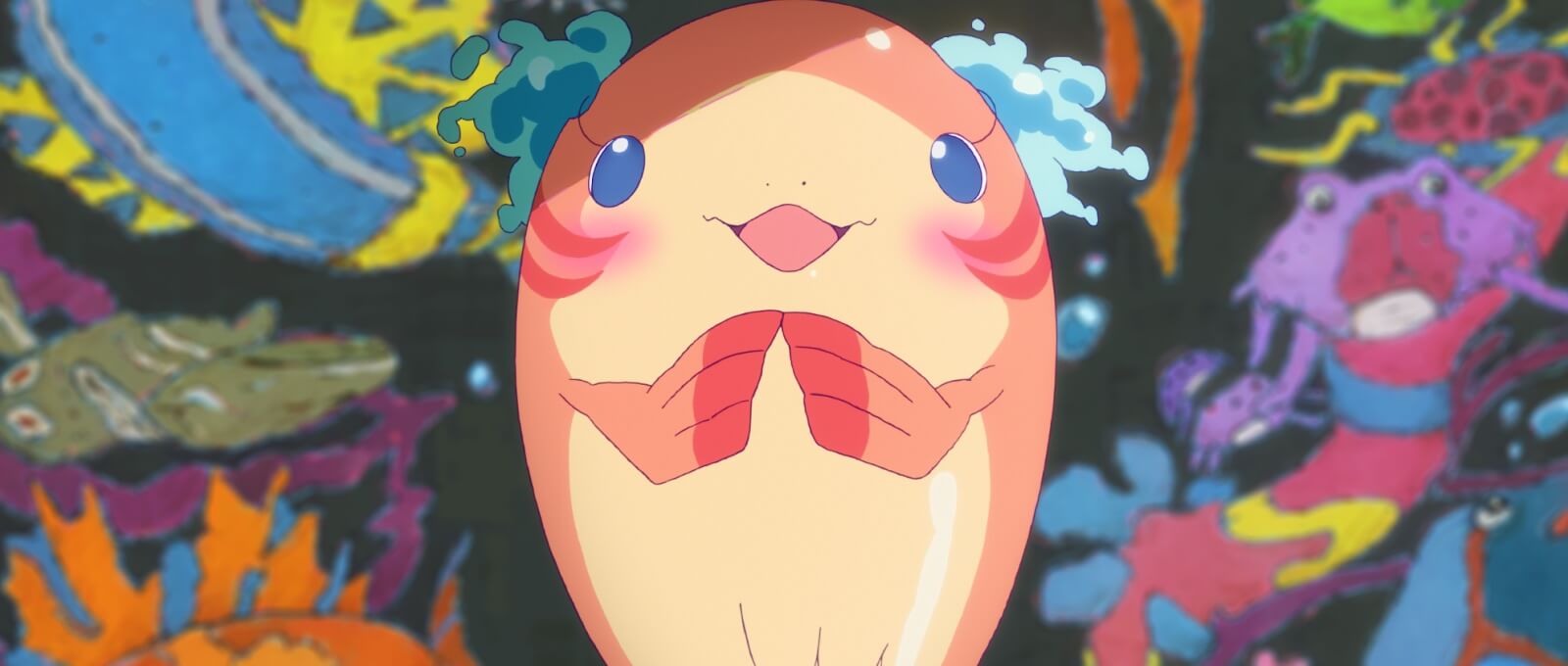
Along with establishing an aquatic version of Shanghai, the other big challenge was ChaO herself. She spends the majority of the movie as a big old fish that waddles around on land, until she begins to feel more comfortable around her reluctant Prince Eric analogue Stephen, at which point she takes on a more humanoid shape.
“She has very tiny legs,” says Aoki. “She can’t really walk. Her steps are very small. She sways as she walks. This was the idea of the character designer Hirokazu Kojima, he loves cute things, and he came up with this rough concept of how she should move and walk. You could see straight away, this was such a cute design. Just from watching her walk, you get an idea of how cute, awkward and clumsy she is.”
Since the film’s premiere at the 2025 Annecy Festival, ChaO has received some criticism for its main character. Many critics and fans have seen her as one dimensional, unable to express motivation beyond making the male lead of the story happy by serving him any way she can.
Aoki believes this perception comes from ChaO’s character design, “If people think she’s a superficial character, that means that they just saw her and immediately thought she was cute. But actually, the intention was that we would be more attracted to her as the film goes on, that we should find her that way in the end. But maybe some people do see her and immediately think, ‘Oh, she’s cute,’ in which case it’s probably down to the skill of the character designer.”
Whether due to weaponized cuteness or some underwritten dialogue, ChaO definitely has its critics. However, the film’s visual splendour and technical craft is undeniable, making for a debate that has bubbled around the western film festival circuit for a few months. In 2026, that debate will extend to the public who can pick apart the flaws and fantasy of ChaO.