

Jared Bush and Yvett Merino on Zootropolis 2

© Walt Disney Animation Studios
After a nine year wait and the entire world forgetting that Judy Hopps and Nick Wilde aren’t actually a couple, Walt Disney Animation Studios have reopened the gates to Zootropolis. Over a month after its theatrical release, the second film in the franchise has made over a billion dollars, gaining critical acclaim beyond the recent, middling instalments from the historic studio. Deepening the city’s lore and offering more prolonged looks between Nick and Judy for the fans to read way too much into, Zootropolis 2 makes good on the promise of a sequel.
Once again heavily involved in the creative process are Jared Bush and Byron Howard, with the latter maintaining his role as director and Bush now sharing that title, having been a screenwriter on the 2016 effort. Entering the world of Zootropolis for the first time is producer Yvett Merino, whose Disney credits include Moana 2 and Encanto.
Skwigly caught up with Bush and Merino to discuss the technical challenges of the second film, expanding on the world built by the first and executing top tier character animation.
How does it feel to have a movie that’s the biggest thing on the planet?
Jared Bush: It’s so great, but it’s also surreal. It takes about five years to make one of our films, and for those years, no one knows anything about what the movie is going to be and you’re hoping that all this work is going to resonate with people. So when it finally goes out into the world and people react to it’s really gratifying.
Yvett Merino: I always think of it as our little secret for a while, and then we release it out to the world and we hope that people connect with it and see it in the same way that we do. When that happens, surreal is probably the best word to describe it.
Have any of the reactions to the film surprised you?
YM: I love that they’re finding so many different avenues to go down with our characters and what their backstory is. I love looking online and finding out how people have connected new characters to either the first film or how they’re connected to other Disney animation films. That always amazes me.
JB: Something that I’m really excited about is people really unpacking the layers. I’d say 700 people worked on this movie, and we wanted to tell a story that could resonate for people of all ages around the world. There are different story lines that appeal to different folks, and I’ve been really excited to see people find those and understand that. At the core, it’s a story of Judy and Nick and their relationship, and the difficulty of overcoming the differences that you find in a relationship, and it’s really wonderful to see how many people are really engaged with them and really care about them. For us, they’re real living beings, and we really try to approach them that way. But obviously we’re trying to say something with this film, where we want to get people to talk and to think.
With the first film having such strong social commentary, did you come into this one with a specific issue you wanted to sink your teeth into?
JB: On the first film we talked about bias and stereotypes and that continues to be really important. I think the reason it resonates is because it’s not a subject of a specific time, this is an evergreen pattern that we as human beings fall into, and we didn’t want to ignore that in this second film. We didn’t want to retread, but we also didn’t want to take a left turn, and suddenly this is a story about something different, and honestly, I think audiences wanted to continue the discussion. It was about figuring out the next logical emotional evolution of that story of bias and stereotype and then knowing that we wanted to bring reptiles into this movie, that gave us a mystery that also talked about othering. It was really nice to parallel that with Nick and Judy’s differing worldviews.
There’s a lot of different types of snow in this movie, how much of a challenge was it to pull off?
YM: We are blessed with having the most amazing animation artists and effects team in the world who dove in and did so much research on snow and on sand and on water, there’s so much in this film. I love sitting there and listening to conversations about how quickly the snow falls, what happens when it hits when it hits the ground, what happens when it hits a hedge, what happens when characters walk on it. And then you have the beautiful hedge maze we’d built at the end of the film, and then the director says, ‘Okay, let’s destroy it, what happens to the snow now?’ What I love about working here is everyone is so passionate and they love what they do, it’s so inspiring for me.
JB: Something that people may not think about is that all these effects are designed to create an emotional response. A really good example is the battle at the top of the weather wall between Nick and Pawbert, the amount of work that went into the size of the particulate of that snow, how it dissipates, what you can see through that snow. We wanted to make sure that you could feel the scale of being on the top of this wall with this precipitous drop. It takes a long time to figure those things out, but it’s always through the lens of an emotional reaction that we’re trying to find and elicit for ourselves.
© Walt Disney Animation Studios
The character animation across both of these movies is astounding, how do you know when to take advantage of the characters’ animal features while still making their emotions recognisable to the audience?
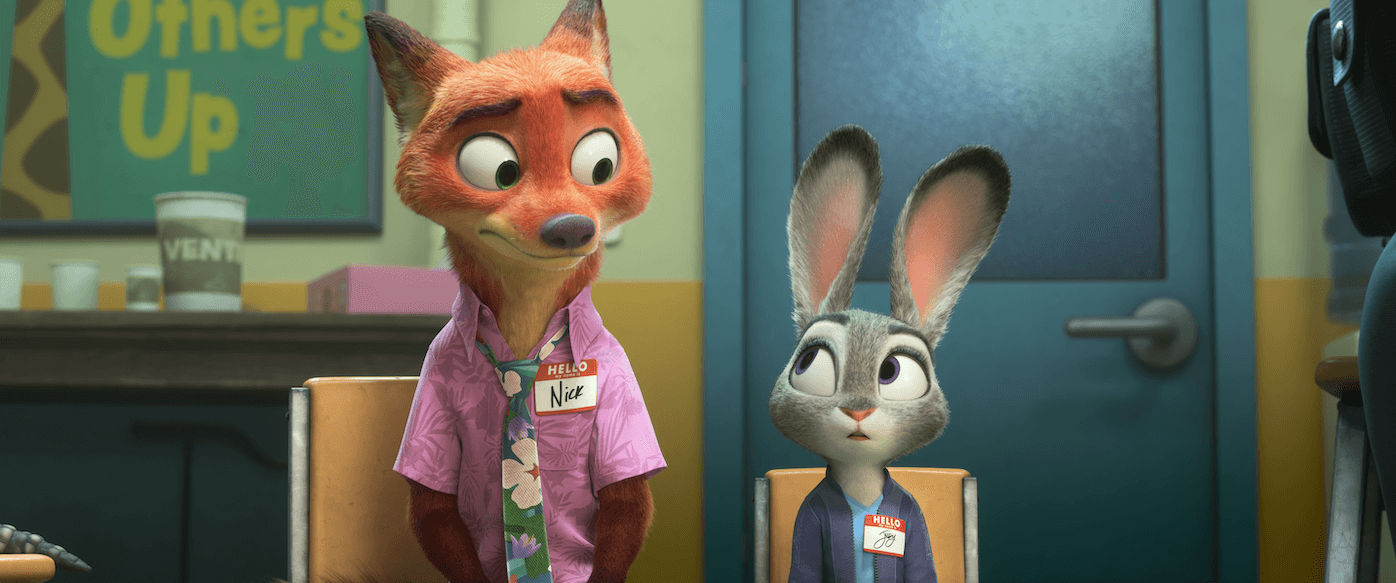
JB: I gotta give a huge, huge shout out to Kira Lehtomaki and Chad Sellers, our heads of animation. It starts from their leadership approach. We actually did try to do something different on this film. We spent way more time talking about the characters’ subconscious emotions and we actually then had fewer cycles of an animator showing us a pass and then making adjustments. So what you’re seeing, I think more than other films that we’ve worked on before, is actually the animators approach to those things, it’s less hands-on directorially, and you’re just seeing people really getting into these characters.
Because of that, they were able to bring their own emotions throughout. And to your point, this is incredibly subtle character acting, it is stunning. I think a lot of people look at the big action sequences, which are also tremendous, but just the tiniest detail, the tiniest flick of an eyelash that says ‘I’m feeling something underneath’ there, or the pixel difference in the corner of a mouth here. It’s what makes that moment when Judy and Nick are finally talking about their real feelings for each other so special. It’s easily my favorite scene in the movie because it is so restrained and real.
The first film builds such an intricate reality, was it a Jenga tower situation where if you add too much, it can make the whole thing tumble down?
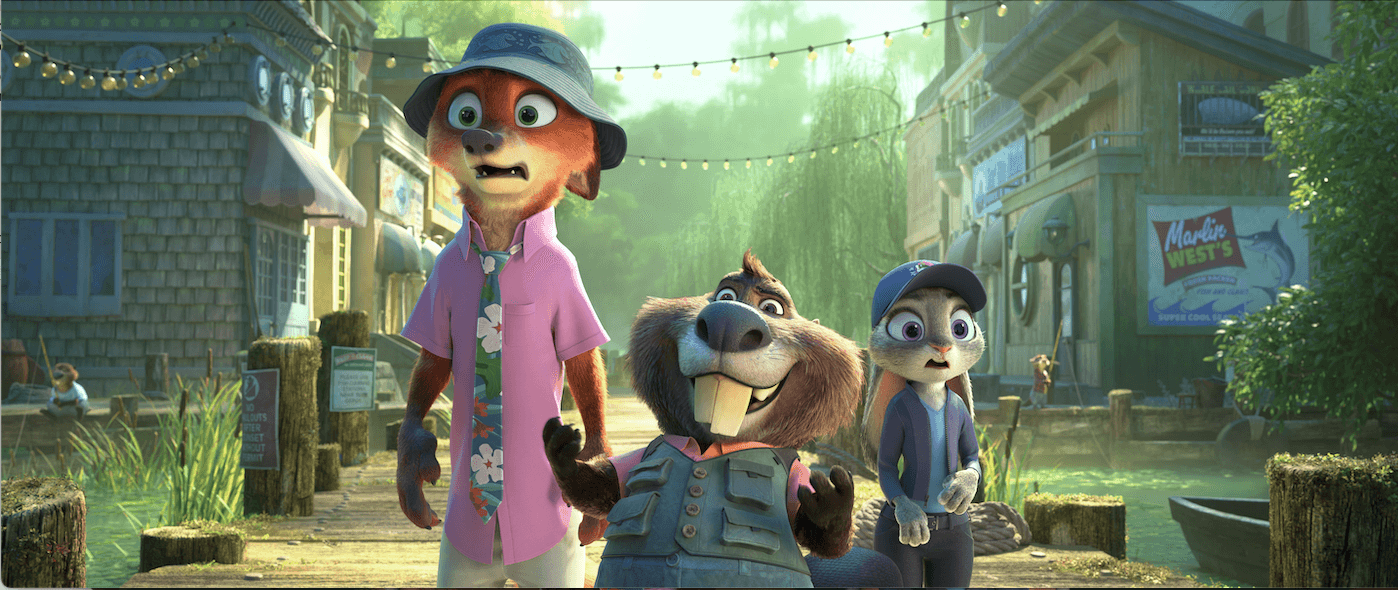
YM: Jared and Byron, when they created this world, they always talked about Zootropolis as this one area on a continent. So when I think of it that way, I understand that there are parts of the world that I haven’t seen yet. Creating a world like the Marsh Market, we want to make sure it feels as lived in and as thought through as everything that was built in the first film. We build it by imagining it always existed and it’s always been there.
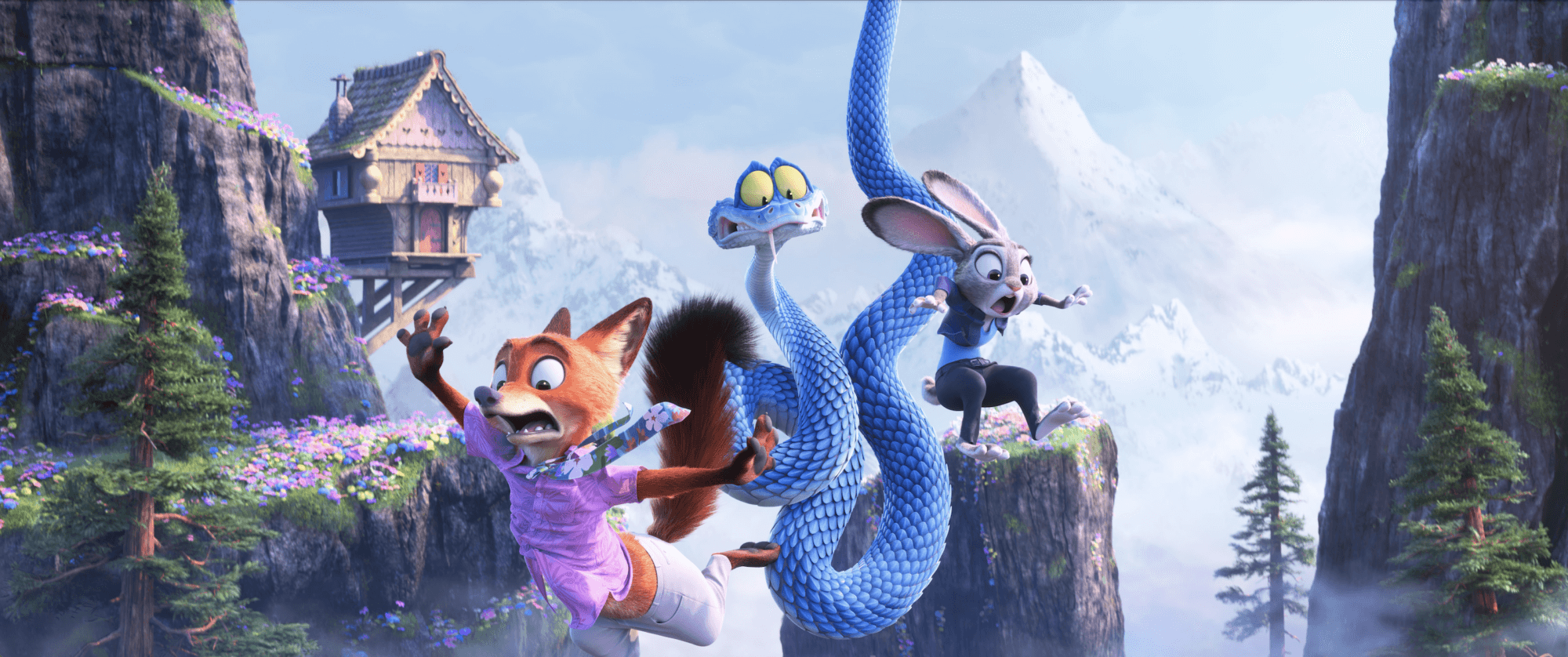
JB: This is a world where there’s eye candy everywhere. In the first movie, there were so many neighborhoods that we thought of that we didn’t get to go to, likewise in this film, like I can’t wait to go to the nocturnal district, I’ve had this dream of going to Outback island where you get all the Australian animals hanging out. But I think the defining principle of this movie is everywhere we went had to have an effect on our main characters and had to push Nick and Judy’s relationship. Everywhere they go, whether that’s Marsh market or the tubes or this insanely high cliff or the inside of a very dangerous weather wall or out in the snow, these are all locations that are not good for them, that’s very much by design. Going through and figuring out why that would make sense and what’s the best way to make them uncomfortable was a really fun challenge.
© Walt Disney Animation Studios
My favourite scene in the movie is with the mouse who works inside the vending machine. How do you find those smaller opportunities to add more to the world?
JB: That vending machine was in the script because I love gadgets and the really fun thing about this world is the idea that, because of these different scales of animals, you could have something like an ornery little mouse working inside a soda vending machine to pry a soda loose if something went wrong. But that is one idea among 1000s that are in this movie. Marsh market is a great example of that where, if you look at the background, there’s jokes everywhere that are not written into the script. The idea of even going to a Burning Mammal Festival, not my idea. One of our official development artists, Kevin Lee, came up with it and it was immediately amazing. Something that Byron and I talk about a lot as directors is trying to define a real fun sandbox, and then anyone can bring their toys into that sandbox and have a good time.
What scene in the movie stressed you out the most?
YM: Can I say all of it? This is the most ambitious film that we’ve ever made here at Disney Animation and that is true in the amount of environments that we’ve built and gone to, in the amount of characters that we’ve created and had to animate and bring into this world to make it feel like a living city. But it’s also true in the story that we’re telling with continuing the story of Judy and Nick, and trying to feel as if it’s a continuation of their story, but it’s still something new and surprising. Overall, there were many, many sleepless nights. I have a tendency to wake up at 3am in the morning be like, ‘Oh, we’ve got to worry about this!’ For me, because I didn’t work on the first film, I felt such a responsibility to keep up with the first film in terms of quality.
JB: I have a very specific one, but first I’ll say that the first act is always the hardest, because that sets everything in motion, but also we animate out of sequence and typically we do a lot of work in the first act just as we’re finishing the movie and it’s getting ready to go to go to theaters to make sure all of the setups that you need are clear and you’re setting a tone right out of the gate. I will say that right after the midpoint, going into the backstory of how Tundratown came to be was a really interesting journey. There’s so much happening at that moment. Pawbert is the character who’s taking us through that back story and he’s also a character that changes quite a bit as the story progresses beyond that. So you actually have to be true to his real psychology and make sure that, more than anything, it’s not just exposition and an information dump. It needs to hook you emotionally, and knowing the difference of a word here or there can really send you into what we call Plot Land, as opposed to deepening the emotions, which is critical, and then making sure that we could get from that to the next action.

© Walt Disney Animation Studios
Was there a hesitation to go with a twist villain again after doing it in the first film?
JB: It was very intentional. Doing a twist villain after we just did a twist villain was the twist. I actually thought that people would go, ‘They’re not going to do it again,’ and that actually helped us. The way we kept that as a surprise is we tell you who the villains are right in act one, the Lynxley family. They’re bad, they literally want to take our characters out. We know that snakes are good, these guys are bad, and somehow you have a character like Pawbert who is helping the snake that we care about the most and seems deeply emotionally invested. That’s all true. None of that’s an act because he really does want to help Gary. Why it matters to him is actually the twist. This is a movie where we are hoping that people want to see it again and again and so we wanted to create characters that you’d like to spend time with. The idea of a big twist being what the whole movie is about is actually less important to us than Pawbert being a really fun, interesting character. We didn’t try to build the whole story so that the twist moment was the most pivotal. The most pivotal moment is the fact that Nick, a character who has such a hard time being vulnerable, tells Judy his feelings.
The number one thing I’ve seen fans want from these movies is for Nick and Judy to get together, did that enter your mind at any point?
JB: It feels great that people care about these characters so much and 700 people worked so hard to build that relationship, to build that chemistry. It takes a lot of people at that very highest level of their craft to make that believable. And so hearing that audiences really want that is fantastic. You know, I think that they do love each other and they are getting closer, but I also think they’re understanding themselves and their own issues as well, and that makes them better partners. I would say there can never be a Zootropolis film without them being at the centre.
YM: If we look at it in the first film, they spent, what, 48 hours together. This film is no different. So they’re just still getting to know each other. Who knows where it’ll go from there.
Zootropolis 2 is out in UK cinemas now