
ANIMA 2026: Julien Chheng talks Studio La Cachette and Mu Yi

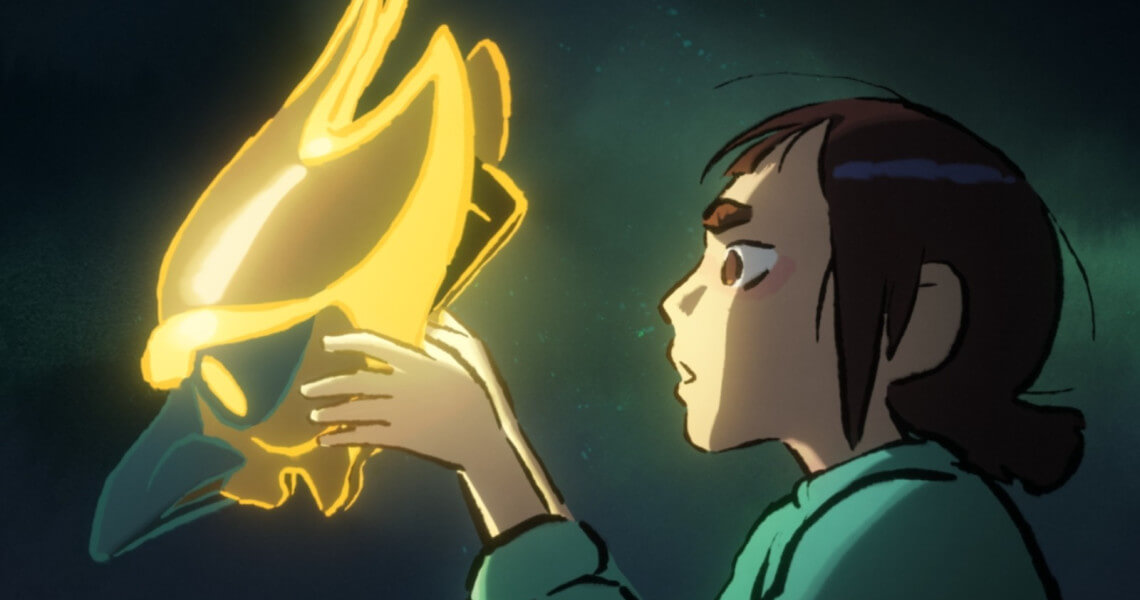
© Studio La Cachette
One of the most anticipated events of this year’s Anima Festival was the Work In Progress screening for the new feature film to come from Studio La Cachette. With one of the most unique looks and voices in the modern animation landscape, La Cachette’s work has popped up on Adult Swim through Genndy Tartakovsky’s Primal and in the Star Wars universe through a short film in the second season of Visions. Their style rests on 2D animation with thick, bold, inky outlines and scratchy, unpolished textures that feel inextricable from the human hand that drew them.
Their newest, fully self-financed project is Mu Yi (also known as Mu Yi and the Handsome General, they’re still landing on the final name for all territories), a story based on a Chinese legend about an army general so beautiful that he had to wear a helmet during battle, as to not distract his fellow soldiers. The charming premise is expanded upon by director and La Cachette founder Julien Chheng who brings an element of time travel into the story, drawing exciting visual parallels between the present and the past.
After presenting the Work In Progress, Chheng lended some time to Skwigly to chat about founding La Cachette, rooting the film in Chinese culture and keeping the budget of the film down to €3 million.v
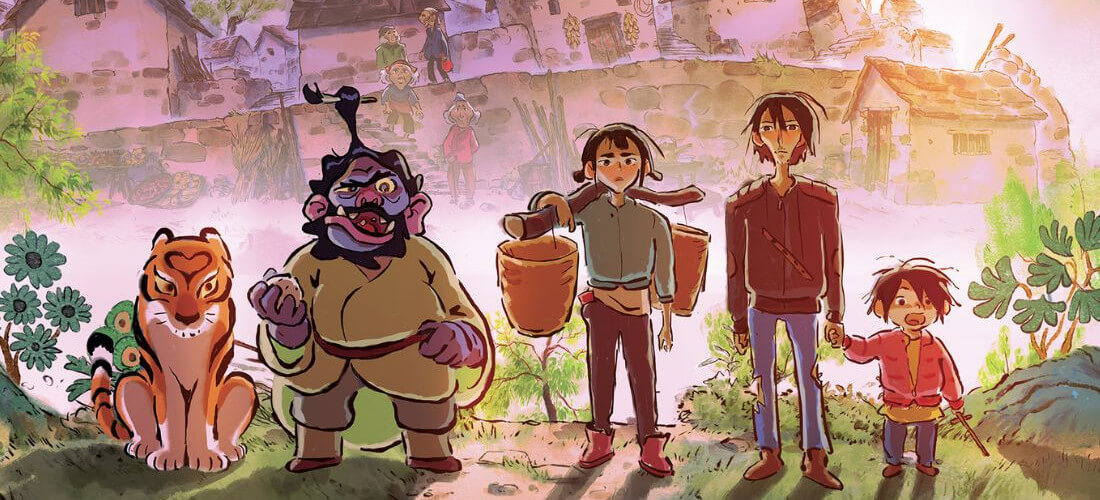
Mu Yi © Studio La Cachette
What first got you into animation and how did that lead you to founding La Cachette?
When I was young, I was doing well at school, so I didn’t envision myself doing artistic studies at first, but the drive to draw was too strong. I applied for art school in secret, because my family wanted me to go into engineering or more classic studies. So I had this drive to prove that I was doing the right thing. I entered Goeblins and directly went to work for Disney in LA in a very selective training program. I worked on production of a couple features that were in development and were eventually killed.
As a Frenchman I would say that the culture in the studio was different from what I expected in the industry. Grinding up the ladder was slow, and I understand that that’s a big company, but I really wanted to have an impact on stories right away. I decided to leave and to go back to France. I missed the country, and I really wanted to open my own studio because if American studios are picking up French talents, why wouldn’t we make stuff at home? It was so difficult setting up a studio with no experience in business or managing a team. That’s something that I had to learn the hard way. Now I’m very well surrounded by a team of producers and production managers who are great and I’m very proud now to be almost finishing up my first feature.
What’s it like to have projects cancelled like that?
As an artist, that’s two years of your life. I can’t understand how it’s sustainable mentally. I didn’t want to experience that myself. I remember when I left Disney, for some mentors of mine, it was very silly to go back. But everyone has their own drive and call, and that was my call.
How did you end up developing the signature La Cachette art style?
I think it goes back to the rawness of animation. At its core, it’s a line moving. One drawing after another, giving you a sense of movement or emotion. Our first experience as animators was on Ernest and Celestine where our job as animators was just making a line move. Just through her two ears, and you can feel that Celestine is super sad, or she needs to get back to her nest. And so the magic of this line moving became fundamental to the style of La Cachette, we just expanded this philosophy into more action packed work. Also in terms of business, I would say it helped a lot, because we don’t need cleanup, so it saves a lot of time and budget but you’re still delivering something that’s moving well.
A lot of studios try to not have a house style to get a broader range of work. Did you have to take that into consideration?
Yeah, but that’s part of the journey. I let go of a safe position in a big studio, why would I compromise? If you come to us, it means you know what we can bring. That happened with Genndy and with Love, Death and Robots, you need trust.
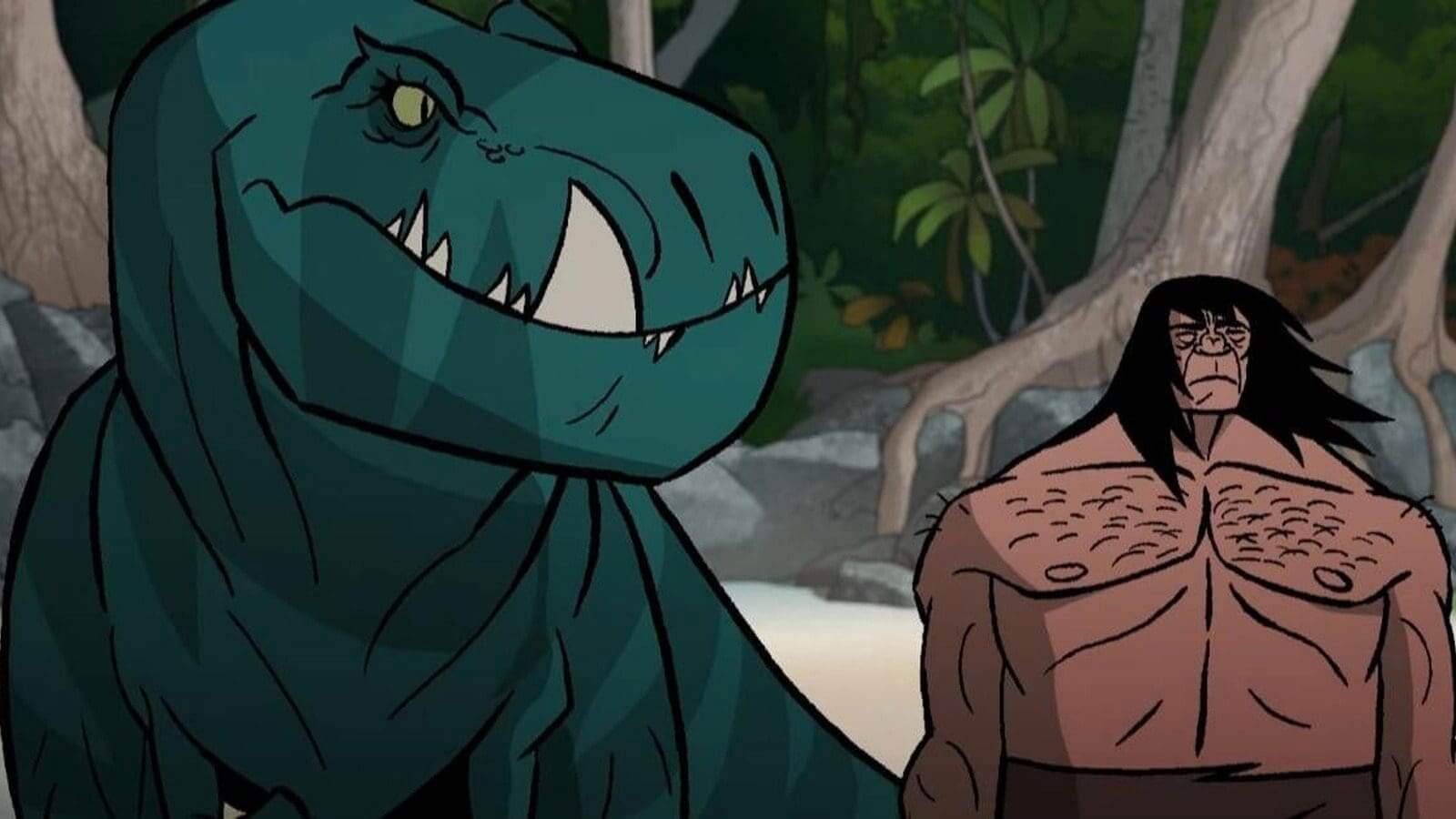
Genndy Tartakovsky’s Primal © Adult Swim
To shift gears to Mu Yi, was it important for your first feature to be so rooted in Chinese culture?
I think it was. For the pitch to be as strong as possible, I needed it to be personal, to be like something I really believe in. And so that’s why I went back to a story set in Asia with a culture that I know that can really push in some ways that I know are respectful, especially in design. I knew it was a playground that was very broad, and for me as a designer, was fantastic to explore.
Your research journey from the film is a fascinating one…
I was traveling a lot to see family in villages and that’s where I heard all those stories and about how boys are preferred to girls and how that’s translated in some customs throughout the years, which is true in a lot of countries all across the world. So we started to build around that and brought in mythology and legends of beautiful men hidden in frightening helmets. That’s something as a contrast that was fun to play with.
How did this end up as an independently financed feature and what tricks did you use to keep the budget down to €3 million?
From my original pitch I had a few platforms interested. At the time, I was asking for €8 million as a budget and they were like ‘That’s not enough, you should make it €15 million and have this in your story and that.’ You’re always tempted by these big partners but then you reflect on it, and it’s not your story anymore. So we made the decision to pursue the core story that I really want to craft. I would design, storyboard, look dev, do all the research and direct. So when the team of animators comes in and the cost explodes, for 10 months, they only do what you prepared as a layout artist. Otherwise, it would have taken maybe 15 years. I really wanted these characters to exist, and it’s almost as if they pushed me to tell their story, so I didn’t want it to let them down.
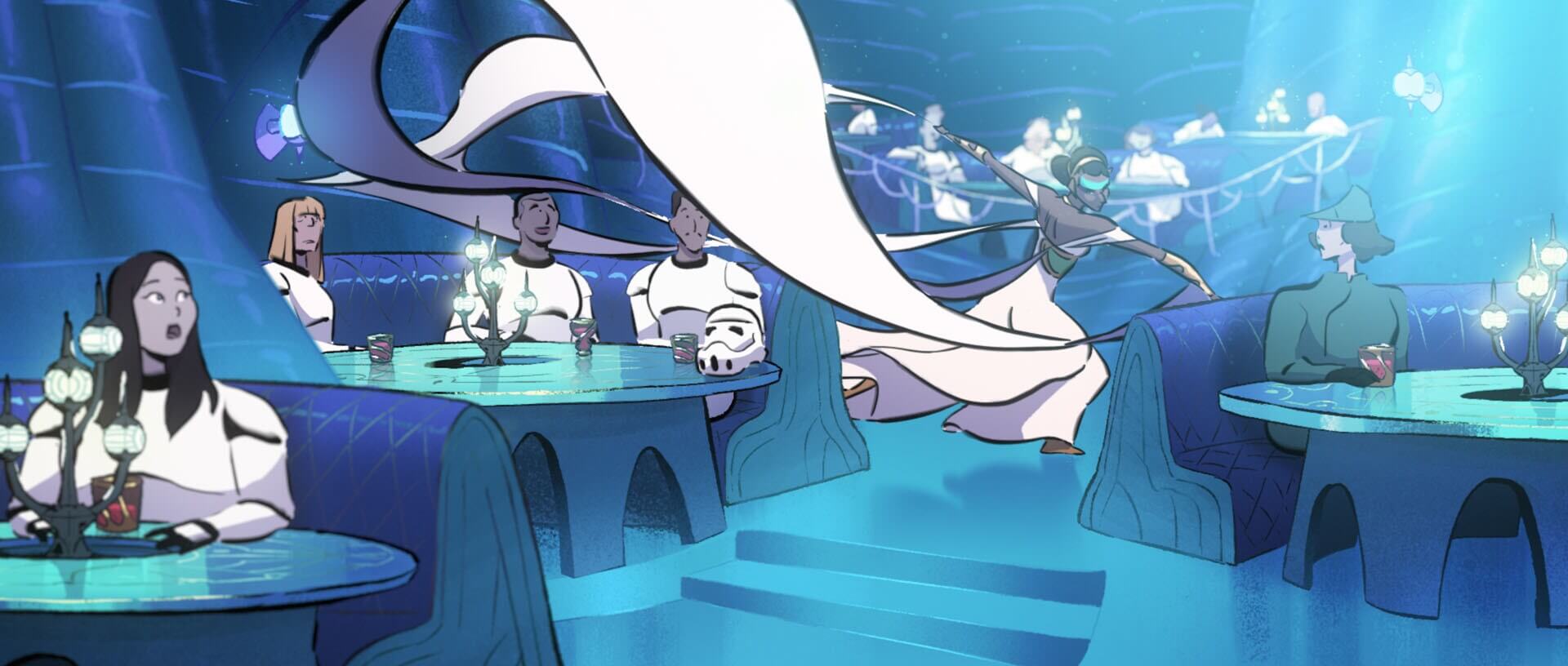
Star Wars Visions short ‘The Spy Dancer’ © Disney / Lucasfilm
From first writing the script, how long has it been in development?
10 years ago, but that was an ongoing process, ideas after ideas bouncing back, it wasn’t a full screenplay. I needed to get confidence on working on the feature first, so Ernest and Celestine came in, and then Star Wars Visions. While doing that, I was still working on ideas and scripts every night along the way, because I loved the movie’s characters, and it was really great because by the time I finished those projects, I felt ready, and as a studio, we were ready, especially financially. I did the animatic by myself but when we’re done, we start the animation, even if we’re not fully financed, because the studio can advance them. That was the kind of confidence we had to have.
When films are made at bigger studios, it becomes the collective creation of so many different people, rather than the director’s vision being present in every frame. When I think about the way you’ve made this film or the way Gints Zilbalodis made Flow, it might be that low-budget animation and auteurism go hand-in-hand.
I think you’re right. When you get back to the basics of having no budget and having to do everything yourself, you’re very much responsible for the outcome. Every choice you make will have an effect on the feasibility of the film existing. Whereas in big studios, you can design whatever you like, with whatever complexity you like and it will be done by a talented team. I really think it’s great and I would love to have such resources. But then so many people put their own money on the film and they expect something from the film, and so you need to be the person that delivers the way they want the film to be. This movie is the film that I really want to see, so even if it goes wrong, I’m really happy for the journey. I’m very proud of the team. It’s not all about money, I think you can do something great when you really believe and you really want to see it. If the public buy tickets for it, that’s great. If they don’t, you can still be proud of yourself. I think it’s good, even if you’re applying for a job in animation or texture render position, to have author work in your demo reel. We can see who you are, so it’s never lost to do something on your own terms.