

Marc du Pontavice & Olivier Clert on ‘Lucy Lost’ | Adapting Michael Morpurgo’s Listen to the Moon for the Screen

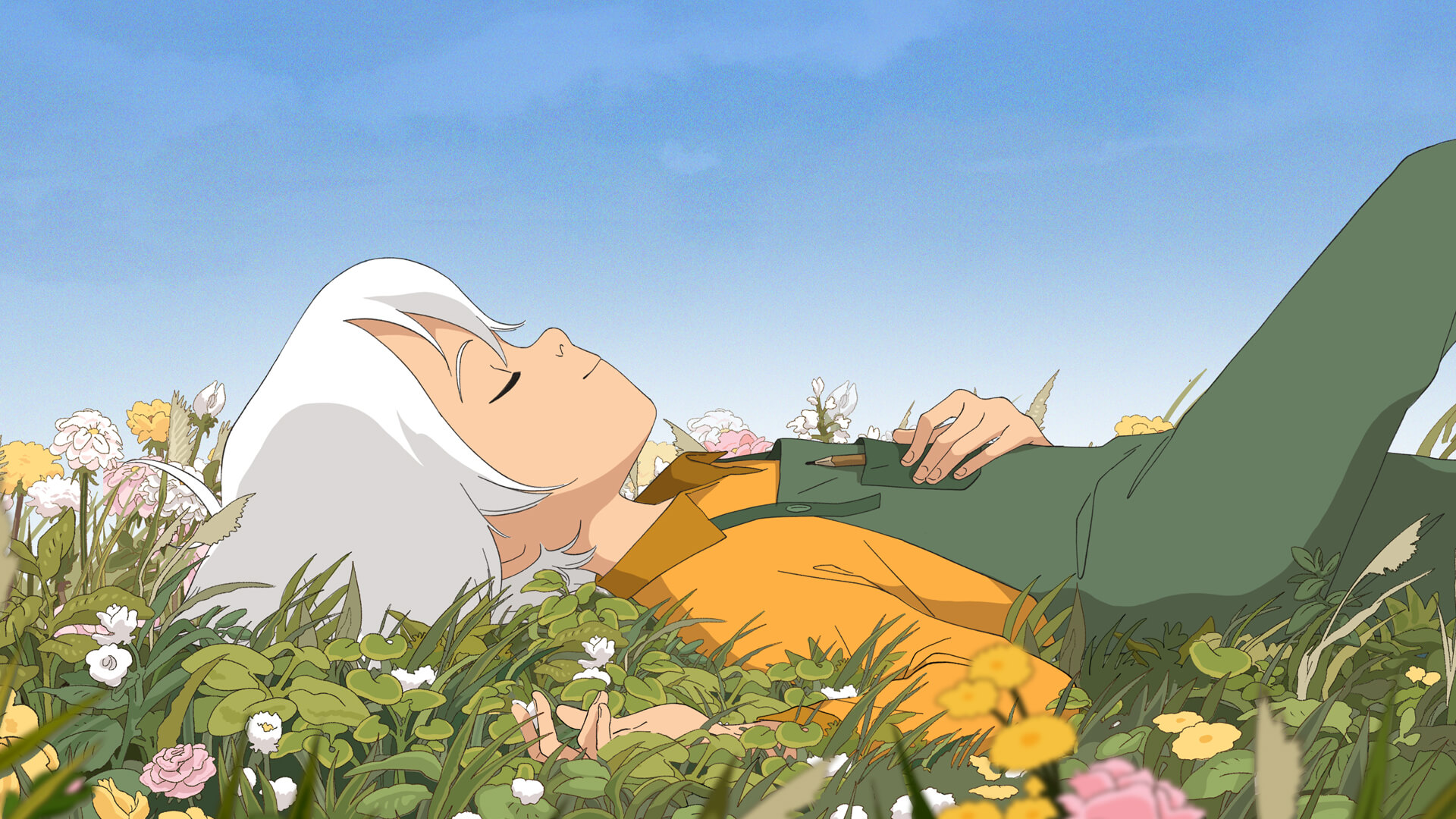
In 2024, Lucy Lost was named as one of our favourite pitches from Cartoon Movie. In 2026, the film is complete, playing at both Cannes this past month, and at Annecy in June. Adapted from Michael Morpurgo’s Listen to the Moon, the film follows Lucy, a mysterious girl living with a family on the coast of England who are hiding the supposedly dark secret behind her origins. Lucy Lost is a visual wonder as much as it is a compelling story. Morpurgo has always found a lovely balance between innocence and sophistication, and that philosophy applies to the animation here. While being undeniably beautiful, it never pulls out too many tricks for the sake of it.
© Xilam Animation
Heading up production is Xilam Animation, the studio responsible for an array of acclaimed French flicks, most notably I Lost My Body. Lucy Lost is directed by Olivier Clert, making his feature debut after working in various roles in the animation department on films like Klaus and The Lorax.
We caught up with Clert and Xilam’s Marc du Pontavice to chat about how the movie came to be, it’s visual inspirations and its political undercurrent.
Xilam was involved with this film even before pitching at Cartoon Movie, what attracted you to the project?
du Pontavice: It’s a book that I read in 2017 and bought the rights to because there are several elements that I loved. One thing that fascinates me, which I think a lot of people, including adults, can relate to, is how limited our memory is from childhood. We are constantly looking to fill the gaps. The other one is that, in a world that is evolving very much into groups fearing other groups, it was important from a kid’s perspective to tell that story. Even kids sometimes can mirror their adults’ anxiety about others. Along the way of telling that story, unfortunately, the world got worse, so I think it’s more relevant now than when I bought the book.
Actually, the book is written very differently from the movie, because the two stories are completely parallel, they never cross one another, and the Lucy story was told from her adult point of view. I struggled many years before meeting Olivier with different directors and writers without finding the solution, and then when Olivier came, I was a bit desperate to tell that story I loved. I knew the story that I wanted to tell and Olivier really came with this brilliant idea of telling the story from Lucy’s point of view and crossing Millie and Lucy’s paths. That changed everything and we went very quickly into making it.
Clert: I first saw some visuals that they made before I arrived, and it felt different from the kind of movie I’m used to working on. I wanted to explore this part of childhood and this kind of tone. What was so cool about it is that everyone was so tired of trying to crack the story, they gave me this new toy and let me play with the story. I really managed to push it to something that I wanted to tell, and they were responding to it.
What was the pipeline like? Is it fully 2D?
Clert: Mostly 2D, from the beginning we wanted to make it in 2D. Because there are some very epic moments that needed a bigger scale to communicate the stakes of the movie, we had some visual challenges. Some we could solve with drawing and others we managed to use a little bit of CG, but not that much. We realised that there was a lot of water in the movie, we thought we would animate it in 2D, but it was way too much, and to tell the story the best way, we developed a CG effect with mapping some 2D animation on top. so we really wanted to keep that style and visual to the to the so every time we were using three CG.
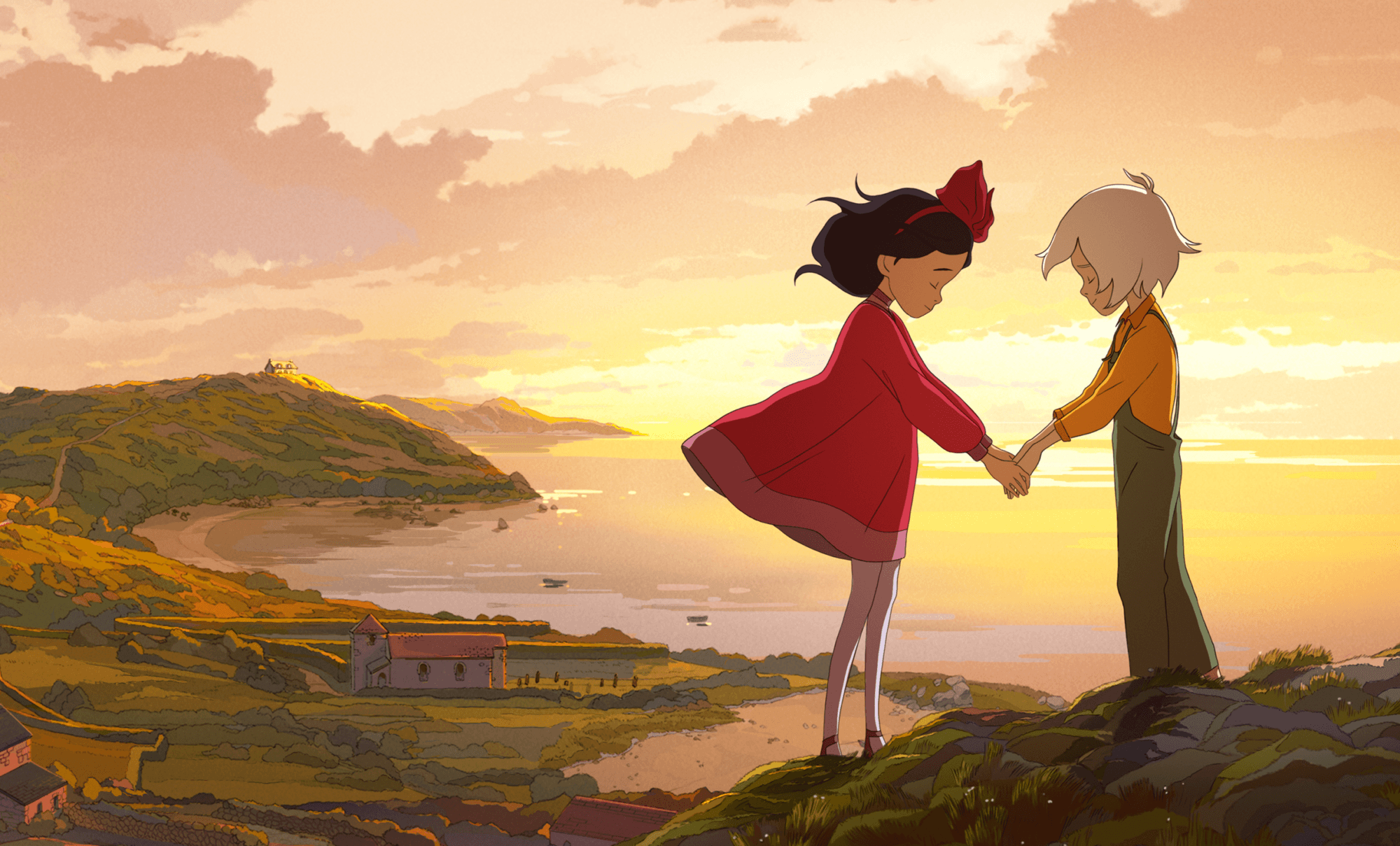
du Pontavice: It’s very difficult to control the light, the color, the texture, and all of this in CG. And as you’ve seen, the lighting is so important in this film, and so we found a way to control all of those things. We can have very vibrant colours, literally vibrant. In CG, it’s very difficult to make vibrant colors.
© Xilam Animation
The film shows a clear influence from Miyazaki, but still manages to feel like its own thing. How do you balance that homage with originality?
Clert: He was a big influence, of course, we all make animation and we all love his movies. I was very inspired by the early Miyazaki movies, like Kiki’s Delivery Service and Totoro, those that are almost less realistic and have some charm and innocence, and that’s something we wanted to keep and to communicate with our characters.
du Pontavice: We started originally in 2022 right before Olivier came in, with a French illustrator named Jade Khoo who is very influenced by Japanese animation. And then slowly as we went further through production, we leaned further away from that. You can see that there are certain influences, but not a single Japanese person is going to tell you that it’s a Japanese movie.
There are a lot of surreal sequences in the film like the characters running through a pop-up book and some trippy dream sequences. What were the most challenging scenes to pull off?
Clert: All the sequences that are really dream-like, we wanted to explore a unique style so we had to build a separate pipeline for them. The most difficult thing for me was the characters. There are some sequences that needed a lot of characters and lots of animation. I remember when everyone was watching the storyboard that I did, they were like, ‘we can’t do this,’ because there were too many things. But we needed it to communicate the tension of the sequence, and it would have not been the same without this chaos.
du Pontavice: Another challenge that we did not anticipate in the beginning, and we faced real difficulty with, was the layout posing. When it comes to comedy, you can go with extreme posing and exaggerate everything. But as the story is so psychological, finding that fragile, very unsettled posing was an incredible amount of work, and I must say that Juliette Laurent, who was the head of posing, did an incredible job, but it took a hell of a lot of time to get this right. It is part of what makes the film quite unique, and the sensibility of the film being conveyed to the audience is that work on the posing, because then the animation became easier.
Clert: We loved the posing so much that everyone wanted to do the best animation to support the posing and to do it justice.
Was it a challenge to make the children characters sound authentically childlike?
Clert: I have a co-writer, Helen Blakeman, and we wrote the dialogue together, and then with my editor we used an app that changed our vocal pitch so we could make temporary voices for all of our characters. That helped us find the most natural way to talk as kids. And then, when you record like the real actors, there are some accidents and some stuff in their voices that give a charm that you can’t replicate.
© Xilam Animation
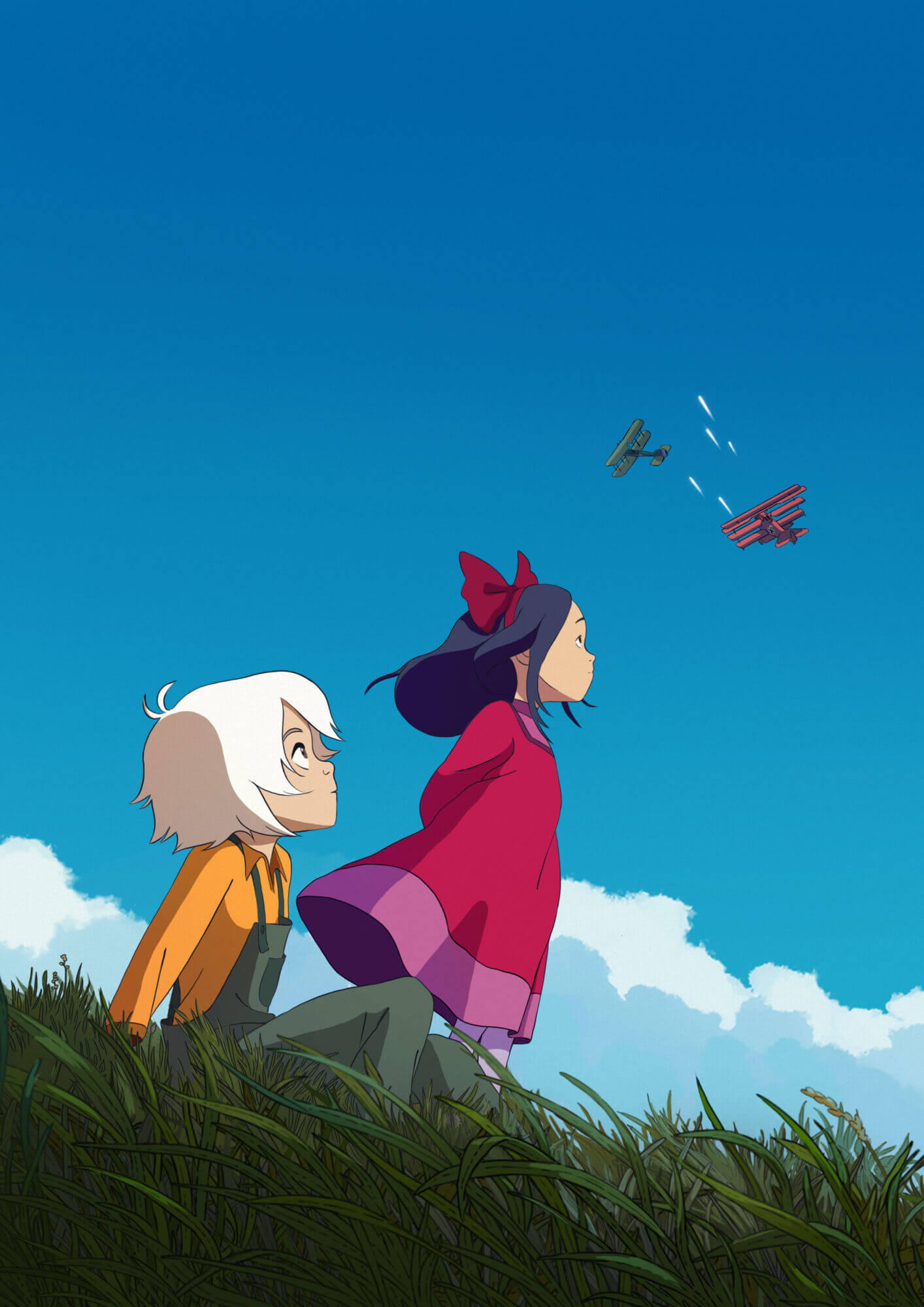
du Pontavice: I think also it has to do with the peculiar age of the characters. When you’re 11 or 12 you’re not exactly a kid, but you’re not an adult, you’re just beginning to be a teenager. There is something serious in the way that the story is told but there is this naivety also. It’s a very beautiful blend.
I didn’t expect the film to end up as a commentary on refugees and immigration. How important was that theme for you both?
Clert: The fear of the stranger and those kinds of themes were already in the book, and that’s also why we love the book. We don’t ever say which war we’re talking about. We never say which countries are fighting. I like the idea that it can be seen in whatever country and they will respond to it. While we were making the movie, the world changed so much and we realised that it was resonating with the news and everything that was happening in the world.