

Monster House at 20: Looking Back at the Animated Horror Classic

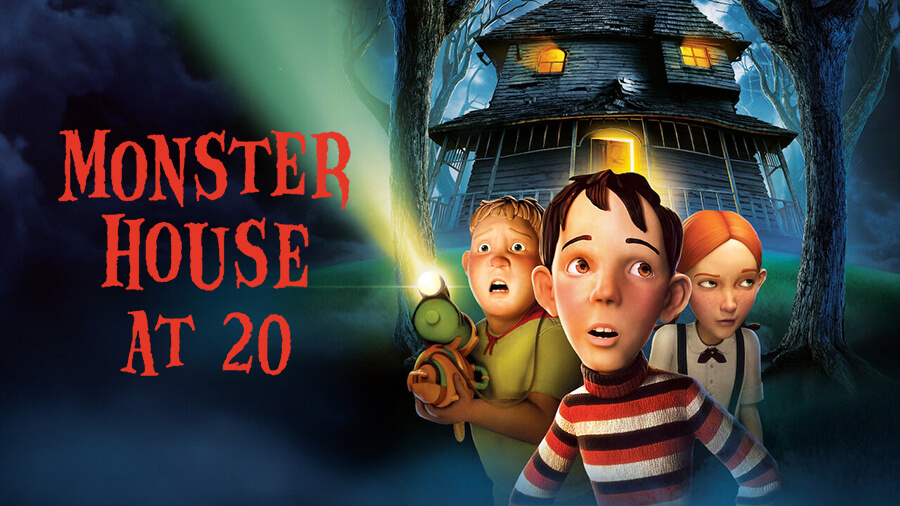
Released domestically in cinemas across the US on the 21st of July in 2006, before making its UK debut the following month on the 11th of August, Monster House introduced many young cinemagoers and families to their first horror film. The animated film features three pre-teens, D.J., Chowder, and Jenny, as they try to convince everyone that the unfriendly and hostile Nebbercracker’s house is haunted. Being the only witnesses to people being eaten by the haunted house, they take it upon themselves to stop the possessed property and save the neighborhood before Halloween dawns.
This July marks 20 years since Monster House first arrived in cinemas, and it is still praised highly by animation fans to this day for its original and fun story and implementations of many elements of horror in creative ways in the animation and cinematography. While Robert Zemeckis and Steven Spielberg supported the film as it’s big named executive producers, the film should be celebrated as well for becoming a stepping stone for two of the writers involved, as well as it’s then first time director, who all created their own paths in Hollywood and in the animation industry.
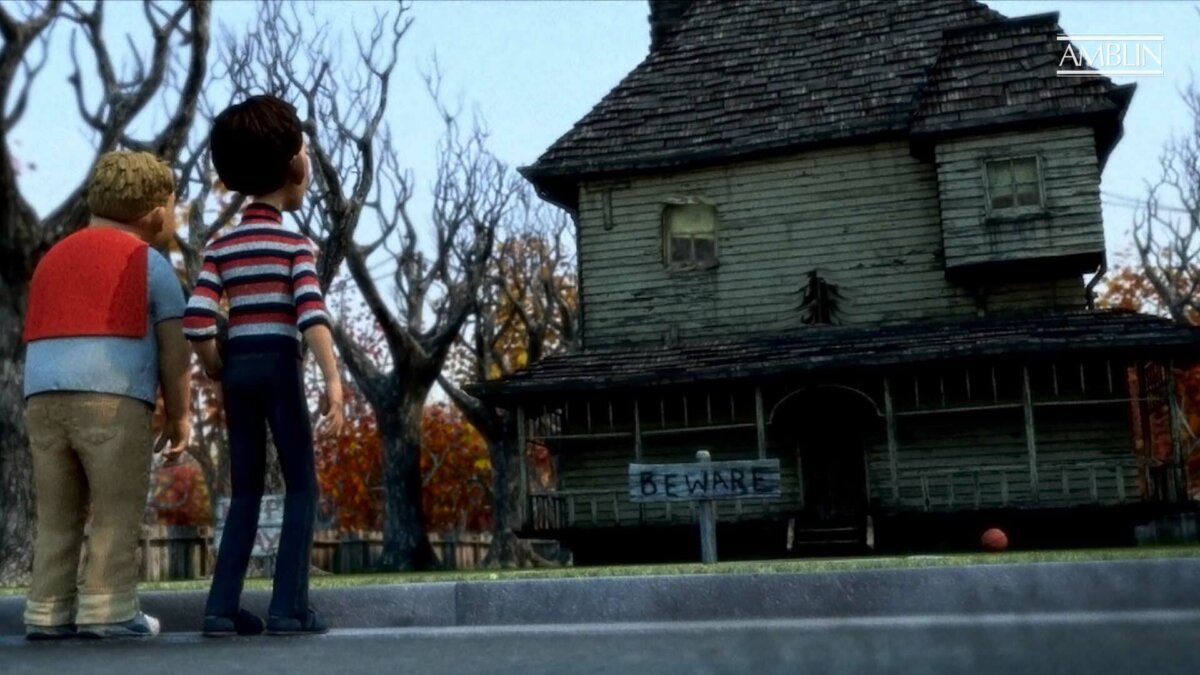
D.J and Chowder from Monster House © Columbia Pictures / Sony Pictures Entertainment
While many relate to their works today for more mature and adult audiences, writing duo Dan Harmon and Rob Schrab were trying to break into the film industry as scriptwriters. Shrab and Harmon had already created and written their own comic book series, Scud: The Disposable Assassin, and with their creation, they both wrote a series of script drafts and ideas for different films to get them recognised and hired for their big break in the film industry. Among them was Monster House, which they were able to pitch to Robert Zemeckis’ production company, ImageMovers, which picked up the project. While the duo continued to develop the script, Pamela Pettler was hired to contibute towards the script after working as one of the writers on The Corpse Bride, adding her flair and expertise of horror for kids to revise Harmon and Shrab’s script.
ImageMovers decided to adapt the script into a motion-capture animated film after their success with their 2004 Christmas film, The Polar Express, wanting to both continue pushing the technology and explore this type of computer animation while telling a very different story compared to the feel-good tale of their successful festive film. With such an ambitious production, they partnered up with Amblin Entertainment from a deal that they struck with Dreamworks, and because of this, not only was Robert Zemeckis on board as an executive producer, but so was Steven Spielberg.
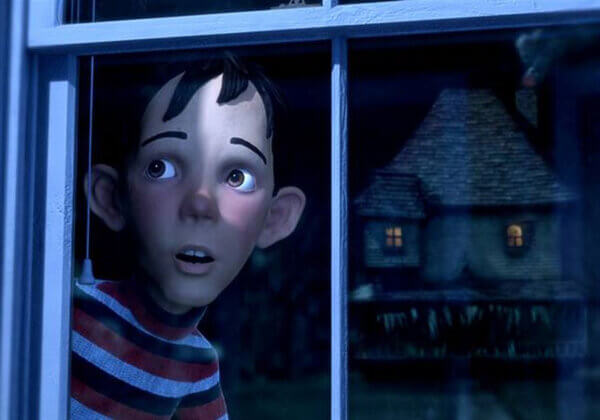
Still from Monster House © Columbia Pictures / Sony Pictures Entertainment
While many cite this film as the turning point in Dan Harmon and Rob Schrab’s writing careers in comedy and animation, it was not only they who had their careers start on this particular production. Despite having two powerhouse and iconic auteur directors as producers who could have taken the lead as directors, they decided to give this creative role for an ambitious project to a film graduate. A student of film at UCLA (The University of California, Los Angeles), Gil Kenan’s 2002 short film, The Lark, demonstrated his love for classic horror films and thrillers like Psycho and Eraserhead while being keen on experimenting with animation techniques. It was seen by a talent agent who sent a copy of it to their boss, who then sent it to ImageMovers and eventually made its way to Robert Zemeckis. Seeing the film, he decided to hire Kenan as the film’s director and give the young director his big break.
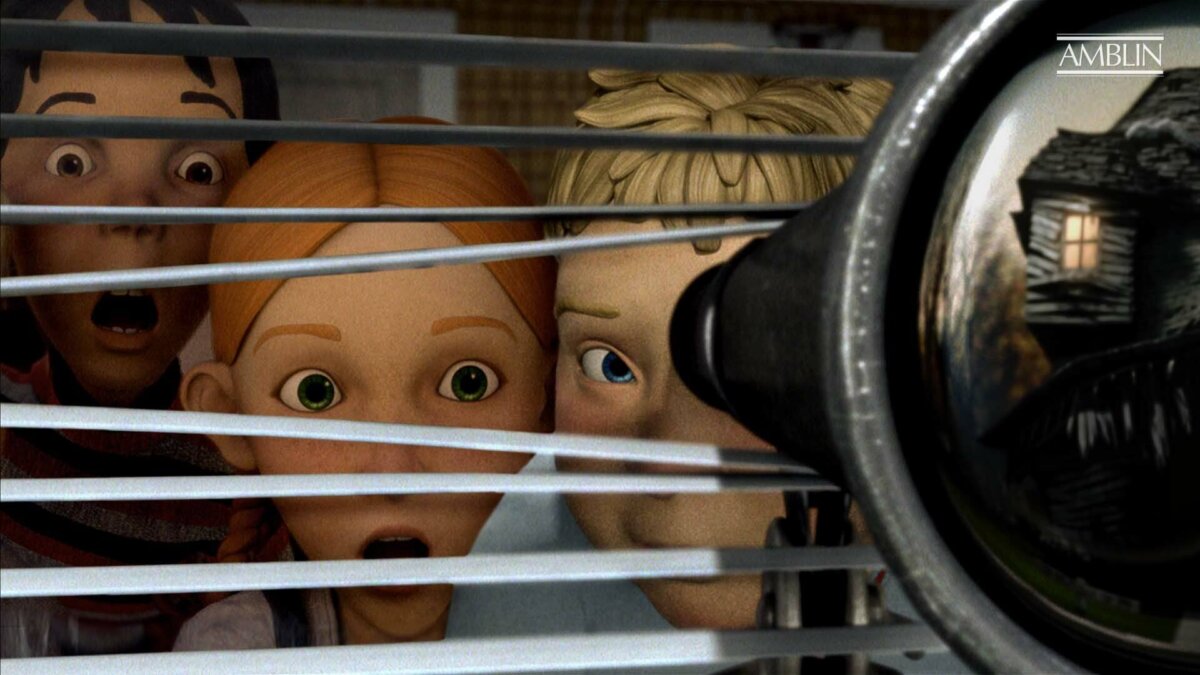
D.J, Chowder, and Jenny spying on the haunted house © Columbia Pictures / Sony Pictures Entertainment
With the final draft handed in by the writers and a young director signed up, production finally began, and throughout, the cast and crew faced multiple challenges. Two hundred cameras were set around the production stage where the motions were captured from the actors’ performances to make sure that all the dots aligned on the bodies and faces of the cast could be tracked and used ready for the animators. However, in order for as much detail to be captured, all the props, such as cars, the staircase in D.J.’s house and waterguns, were all made from wire framing. This lack of detail caused some issues for some of the actors, including Steve Buscemi and Jon Heder, who had to adapt to such a new environment in which to act. On the DVD making-of featurette, Buscemi, who plays the intimidating neighbor Nebbercracker, explains:
It was a little disconcerting doing it because you’re just not used to working that way, and I think so much of what I do as an actor, I get so much from wardrobe, props, and here everyone wore the same thing. There were no real sets. There were skeleton sets and skeleton props.
While some of the cast and production staff may have had their own challenges, the unique set and props helped to capture all the footage and movements needed to transform them into animation. Using several animation software and packages such as Maya, Photoshop, and Houdini to create individual effects and elements of the film, the team was able to create a dark and surreal atmosphere that not many animated films aimed for family audiences would have been used to, then and definitely now. Taking the performances from the actors and Kenan’s idea for the designs and look of the film, the animators were able to make an aesthetic that would stand out compared to the safer animated films from Disney and Pixar that a majority of audiences would have been used to. Furthermore, with more exaggerated designs for the characters compared to The Polar Express‘s more realistic human animation cast, the film would also avoid the same uncanny valley feelings that some audiences experienced for ImageMovers’ previous festive favourite.
After a short production cycle of just two years, Monster House was finally released in the summer of 2006 around the world and with only a budget of $75 million, the film was just shy of earning it’s budget back domestically in the US, despite the intrigue from cinemas and productions opting in for 3D for some of their films and Sony deciding to release it on the digital format REAL D Cinema. However, that was a different story with its worldwide box office, as it eventually earned just over $141 million.
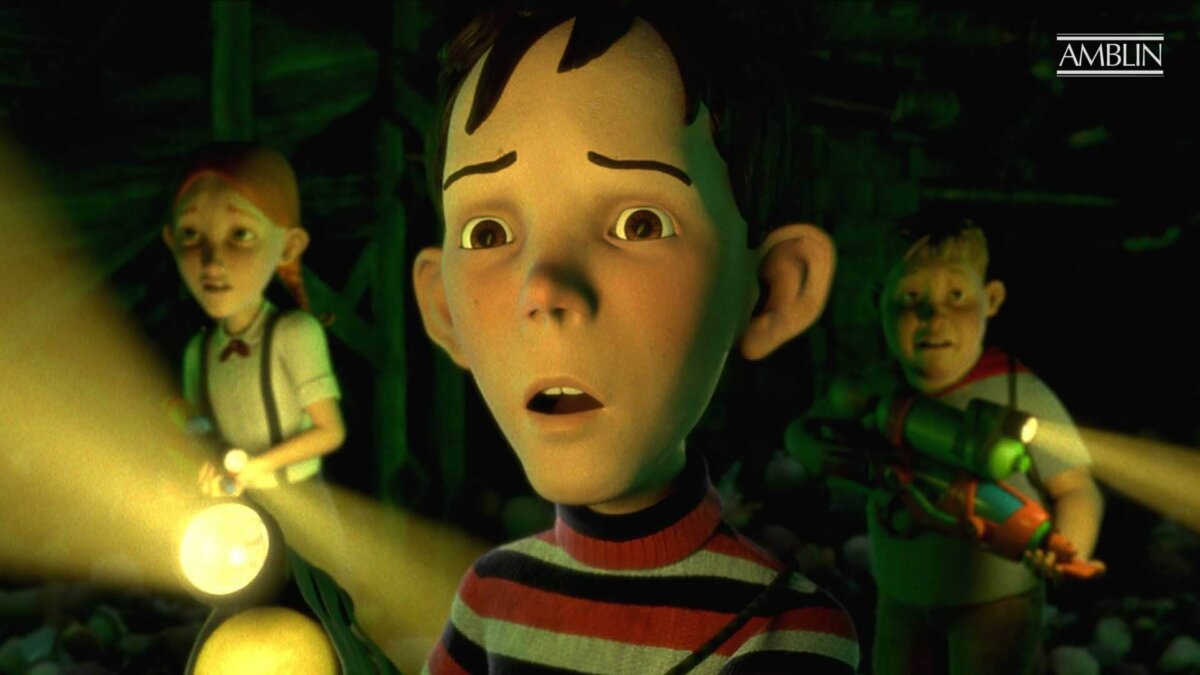
D.J, Chowder, and Jenny from Monster House © Columbia Pictures / Sony Pictures Entertainment
Twenty years after the release of the film, the experience impacted all those involved in major ways, most of whom contributed to or experimented with animation. Stephen Speilberg would eventually direct his first animated film, The Adventures of Tintin, which incorporated motion capture and was the first film that Weta FX fully animated. Meanwhile, Zemeckis continued to direct animated films with his studio’s motion capture technology, having made Beowulf and Disney’s A Christmas Carol while continuing to direct live-action films like Here and the 2022 remake of Disney’s animated classic, Pinocchio.
But the worldwide box office success of Monster House would prove to be the launchpad for writing duo Dan Harmon and Rob Schrab, and helped Pamela Pettler’s own career. Pettler would continue penning scripts for animated horror and comedy films for families and included 9 and The Addams Family (2019). Shrab would go on to create The Sarah Silverman Program with Dan Harmon and comedian Sarah Silverman. Harmon would go on to create several popular comedy shows, with the biggest being Community, as well as helping to create popular animated comedies for adults such as Rick and Morty and Krappopolis.
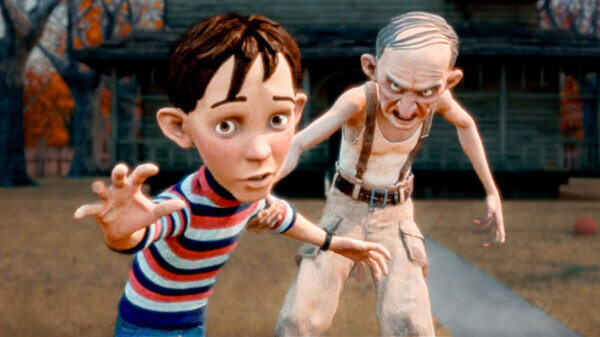
Still from Monster House © Columbia Pictures / Sony Pictures Entertainment
As for Gil Kenan, he unfortunately never returned to another animated project. However, he did take his experience from his debut towards his future projects as a director. Despite their initial criticism from cinemagoers and film critics on their initial release, the remake of The Poltergeist in 2015 and Ghostbusters: Frozen Empire in 2024 were box office successes, earning more than their respective budgets and helping to cement Kenan’s position as a profitable and accomplished director.
Monster House is celebrated by fans today as a fun film for all ages for Halloween or wanting to introduce a young generation of film enthusiasts to a spooky animated comedy that anyone can enjoy, but it should be treated as more than just a fun time in front of the television during an autumn holiday. It should be celebrated as a great pool of talented individuals who came together to try and create a fun and entertaining animated film that helped to cement the young writers and directors to springboard their careers.
The film is available to rent online through Amazon Prime Video and stream on Sony Pictures Core.