

Paprika at 20 – the Inescapable March of Progress


© Sony Pictures Classics
Paprika is a harrowing film. Amongst its gorgeous animation, startlingly fluid opening credits sequence and surrealist set pieces is an unshakable angst that dances on my nerves whenever I watch it. Whenever Paprika ends, I feel like I’ve escaped something, not realising that my fight or flight response had been activated until the credits rolled. It’s a movie that’s paced like a comet, throwing intricate, complex paintings at the screen that barely give you time to process them fully. Paprika wants you to surrender yourself to its flow, but presents a world that you’re too scared to fully embrace. In this sense, Paprika is very much like real life.
Being the parting gift from the late master director Satoshi Kon, Paprika reads as his thesis on humanity. Paprika boasts the biggest scope out of Kon’s work. As much as that scope is used for things like the film’s signature epic parade and wobbly hallways, Kon made sure to weave a sense of claustrophobia into every frame. This dichotomy means that I’m never sat in awe of Paprika’s scale. Instead, that scale weighs on my shoulders. I feel scared to breathe lest I add to the pile of ideas on screen.
A lot of people interpret Paprika as a movie about the internet. The plot revolves around a group of scientists uncovering a mysterious virus infecting people’s dreams which causes them to go mad and commit suicide. Atsuko, a scientist working with a new device called the DC Mini that allows access to people’s dreams, uses her dream-world alter ego Paprika to investigate the issue.
The theory that Paprika acts as Kon’s commentary on the internet makes sense. Paprika is an avatar Atsuko uses in a space removed from the real world, there is a virus causing havoc and Paprika directly references the internet, calling it a dream-like space where suppressed emotions run free. Kon undeniably has a perspective on the internet, with it being a key device in the mental anguish depicted in Perfect Blue. However, I think that the internet is just a sidenote in what Kon is contemplating with Paprika – he is overwhelmed by the sheer amount of things humans have invented, by the path left by the march of progress, and the internet is another truckload of stuff planted on top of humanity’s landfill.
© Sony Pictures Classics
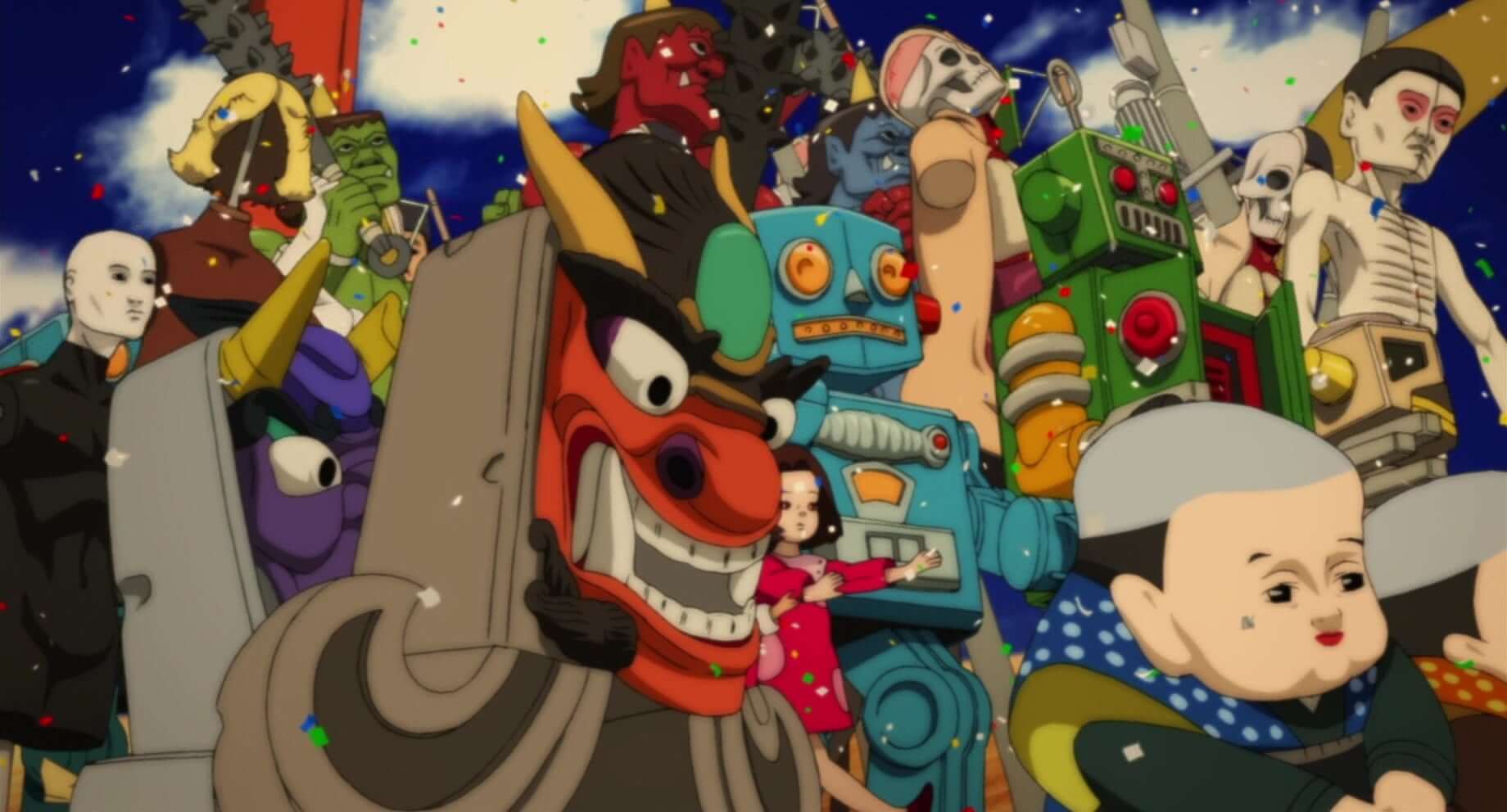
Peering inside the dreams animated in Paprika lends a look into overstuffed, claustrophobic nightmares. The main scene we often return to is the parade, a marching line, not made of people, but of things. We see the Statue of Liberty walking alongside a bowling pin-looking duck and a whole manner of vaguely human-ish bodies that never quite take on a recognisable form, all while big band music blares and confetti dots the frame in endless supply. Kon seemingly invented a space for all of humanity’s ideas, inventions, history and thoughts to coexist, and it’s like being in hell.
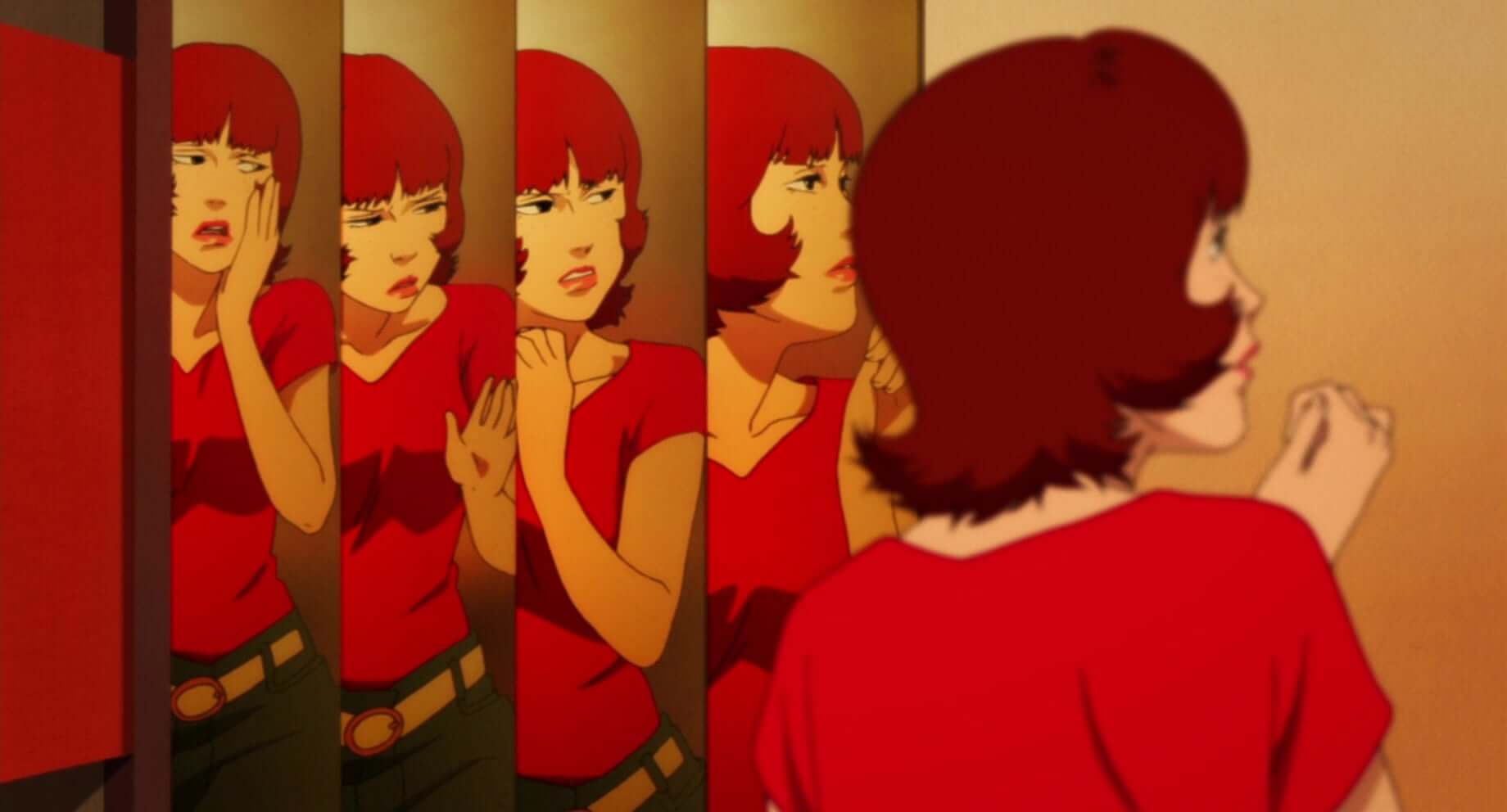
Kon doesn’t gaze at the achievements of thousands of years of human civilization with awe and wonder, but with anxiety. Paprika reaches a singularity where the difference between the real world and dreams becomes unclear, as if Kon is wondering if there’s a real world under all of the rubble humanity has made. This can be interpreted as a personal conflict too, wondering if there’s a true self to be found underneath all of our personal reinventions. Kon even frames Paprika herself in multiple mirrors to reflect that divergence in personality. With the film, Kon seems to question whether or not it was a mistake to build on top of the foundations we’re born with, because maybe that’s where the ‘real’ world lies.
© Sony Pictures Classics
Paprika isn’t a film where Kon wags his finger or stares in horror at the inventions of others, but one where he implicates himself in the cultural claustrophobia we’re all living through. The final scene sees Toshimi, a detective working the case, go to the cinema to see a movie. As he arrives at the cinema, the camera passes over posters for Perfect Blue, Millennium Actress and Tokyo Godfathers, Kon’s other movies.
If Paprika is a film about the noise humanity has brought upon the world, and that noise becoming so loud over thousands of years that a person can no longer sit with their own thoughts, then Kon’s movies are part of the problem. The ending isn’t a hopeful one about escaping the noise, it’s deeply pessimistic, concluding that there is no other option. There is nowhere to go that is untainted by human ideas, there is no thought you can have, park you can lie in, dream you can get lost in, that isn’t affected by a human invention. With no hope of escaping the inevitable march of progress, you might as well go and watch a good movie.