

Tyree Dillihay & Michelle Ramio Kouyate on Sony’s Goat

© Sony Pictures Animation
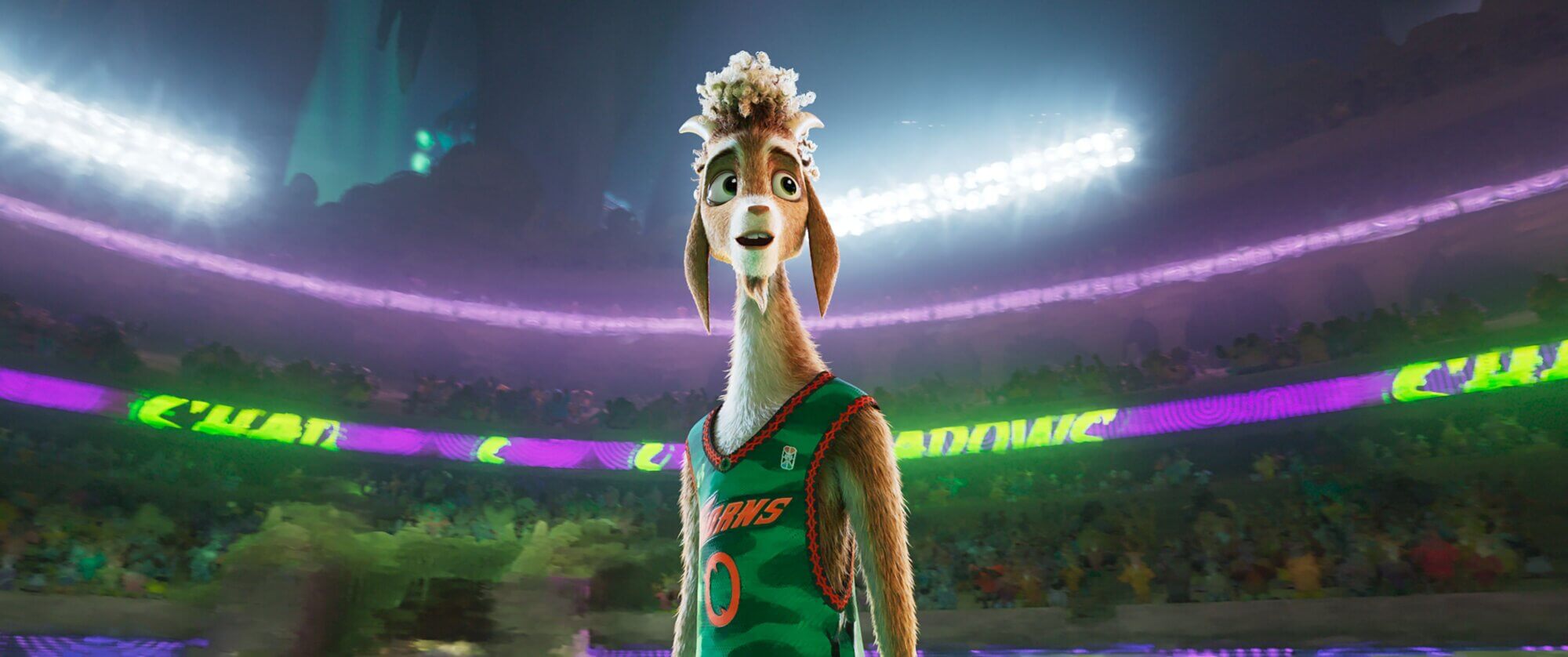
One of the standout presentations at the 2025 Annecy festival was for the next Sony Pictures Animation feature, Goat. Since the first Spider-Verse movie, Sony have had animation fans hanging on to their every project, and Goat promises to satiate fans of the animation style which the studio has become synonymous with. Goat, a coming of age story set in a version of New York populated by anthropomorphic animals, is full of 2D and 3D meshing, variable frame rates and distinct character designs; typical of Sony at this point.
Skwigly caught up with the film’s director, Tyree Dillihay, and producer, Michelle Ramio Kouyate, to chat about what Goat has in store.
During your presentation you talked about Sony being rulebreakers in animation. Does that mean you have an extra burden to break rules again?
TD: No burden at all. Spider-verse is a great franchise, but we wanted to separate ourselves from the pack and do something that’s unique in all its own. The beautiful thing about Sony Imageworks is they absolutely love challenges. So when you see the film come out in February, you’ll see that we’ve done things that truly separate it, not only just from Spider-Verse, but from all animated films.
MRK: Sony animation does like its films to have a unique voice and something different about it. But to Tyree’s point, it’s not a burden, it’s exciting.
TD: I would say Sony’s probably the only studio that’s style agnostic. Their films do not look the same from film to film.
What were the new techniques that you were excited to play with on this film?
TD: The one I can speak to right now is changing frame rates. Some films are animated completely on twos but we’ve played with all kinds of frame rates.
Why was it important to use that technique?
TD: It gives you a different feel. Images hold on the screen a lot longer, so they’ll have a different impact on the screen. We’ve got animals playing basketball, certain animals bounce the ball in a certain way. If it was at a certain frame rate, it might feel differently, or how they run, how they walk, even just the acting performances, just across the board, is just a different feel.
How has your experience in the industry helped with this project? What were the main challenges?
MRK: My experience is pretty unique. I’ve been an executive, I’ve been a producer, I’ve worked in live action, I’ve worked in animation, and that all comes together. It helps you in every aspect of the storytelling and it helps me be able to work with the studio, work with the filmmakers and be able to bridge between both things. In terms of the challenges, this is probably the first time I worked with Unreal Engine and worked with previs and learned how that could work in our favor, especially with the challenges of the action in the movie, and having the opportunity to do that. So that was a really great learning experience. I think the other thing was needing to have a single character model. We couldn’t have a different model for the animals on all fours and one for when they’re upright.
TD: For me, it’s having more time and more personnel to execute a very large proposition that’s been not necessarily a challenge, but an exciting opportunity to answer questions to hard problems. And by hard problems, I mean things that we need to accomplish. Like Michelle said, one of those big technical challenges was getting these animals from upright to all fours, but then we have some stylistic things that weren’t really revealed in the presentation. I think the other experience is just the time to craft a really great story. That takes a lot of time. In my experience, having worked in television animation, you don’t have a lot of time, but we’ve been working on this thing for years behind the scenes, and it’s all paying off now.
© Sony Pictures Animation
What made you gravitate towards Caleb McLaughlin for the main role?
TD: Best Actor for the job. He embodies who Will is as a character. He’s a little older than Will, but he still fits in that same age bracket. His voice sounds like the right age. He’s got heart, he’s got charm, he’s got…
MRK: … Exuberance, he’s got an attitude,he’s got all of it. We wanted a great quality to his voice. When you’re casting for animation and you’re listening to voices of some great actors, they don’t always have the voice quality that feels like it cuts through, and Caleb had a real empathy in him. It really sounded great.
What was it like to direct Steph Curry?
TD: Amazing. I think I actually hold that title. I think I am the first director to actually direct Stephen Curry for voiceover. So yay. But Stephan, when we did our session, he said it himself, he’s coachable, not just on the court, but off the court, and probably just in life. So very willing and really good. He’s going to surprise a lot of people, because he’s just as great in the booth as he is on the court.
One thing Sony has never been afraid of is putting people of colour in leadership positions on their films. Does it feel like a safer environment for people of colour when compared to the rest of the industry?
TD: Safer is an interesting word. I will say, from my personal experience, it’s number one to me. Sony Animation is the best studio on the planet, just because of the stories they tell, the diverse level of stories that they tell, and the fact that I’ve been welcome since day one in terms of who they put in front of or behind the screen. That’s never really registered for me. It’s always just been the best person for the project, best person for the role. And then I’m just glad they see the vision.
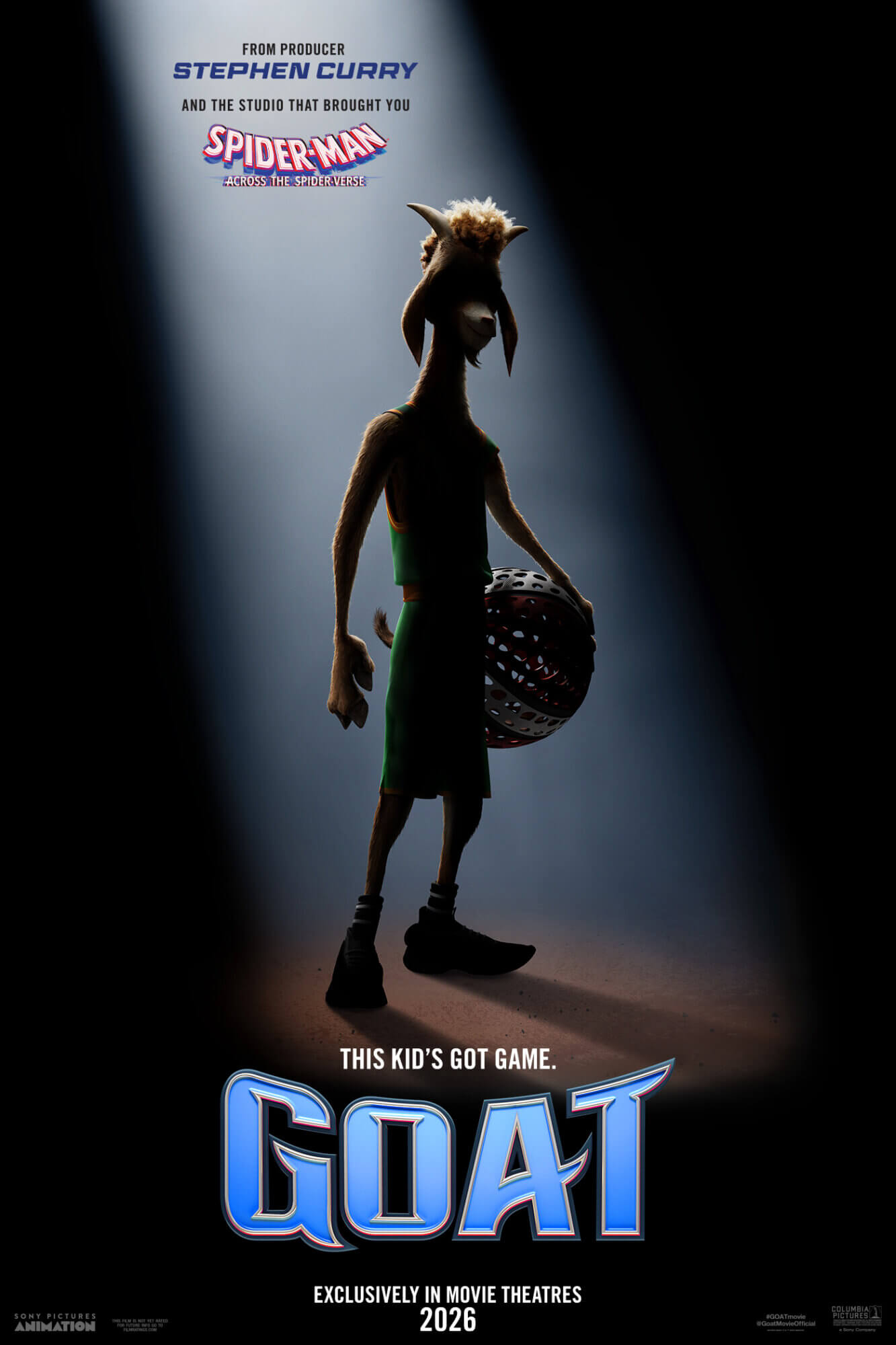
Sony Pictures Animation’s “Goat” is scheduled for theatrical release in the UK on 13th February 2026