

‘What is Dyslexia?’: Art&Graft’s Animated Film Challenges Negative Search Engine Results

It’s become something of a cliché in the past decade or so to produce, in response to someone expressing concern over a new symptom or illness, the stock response ‘don’t Google it!’. This is for good reason; searches like these tend to collate sources with all possible outcomes of said issue or diagnosis, pushing worst case scenarios that understandably receive the most clicks. In an era where search engines now auto generate AI summaries based on the top results, you’re now more likely than ever to Google something innocently and be presented with a dark cloud of worry instead of any kind of clarification.
This is scary enough for grown adults, but what about children? Many now have unrestricted access to every corner of the internet, and though Search Engine Optimisation isn’t the first place we tend to go when worrying about kids online, Google is often the first port of call for questions that really should have been answered ahead of time by parents or professionals.
The result is often a first impression of a condition that’s marred by frightening terms they can barely understand, as has been the case for kids who have searched the phrase ‘what is dyslexia’. The charity Made by Dyslexia has found that 9 out of 10 children who search this phrase feel ‘hopeless or scared about their future’ due to terms like ‘disability’ or ‘lifelong learning disorder’ popping up, rather than more nuanced summaries that highlight the strengths of dyslexic thinkers.
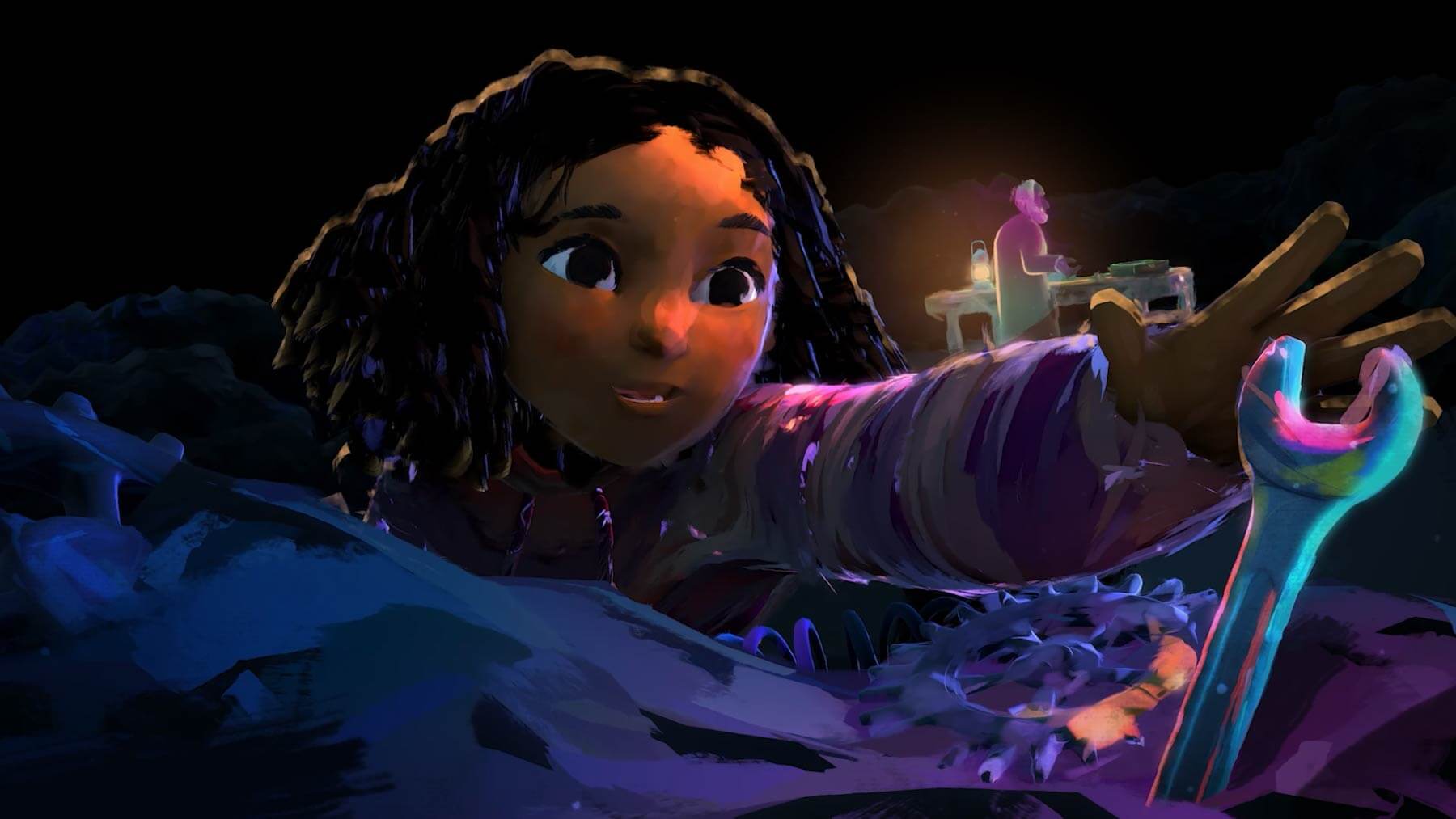
In response, the charity partnered with animation studio Art&Graft to create What is Dyslexia?, a small but mighty film with the ambition to reach the top of Google when its titular phrase is searched. I spoke to Vicky Ghose, Stephen Middleton, and Mike Moloney to learn more about the collaborative process, the making of the film, and where it might go next.
What attracted you to the project and to working with Made by Dyslexia?
The initial idea and the concept of this was so powerful that we thought we couldn’t turn it down. That simple concept [of the What is Dyslexia search] was trying to flip it on its head, wasn’t it? It was like put the positive stuff up front on top when you when you search for it online. So as a young kid or, I guess anybody with dyslexia, is that the first thing that they see about it is positive and not negative.
We thought ‘you know, we’re going to have to do it, and if we do it, we have to absolutely smash it’, because the concept is excellent. Their ambition is absolutely exceptional, we just have to do the idea justice with how we make it. I mean, what an amazing project to be part of!
It’s really intelligent with what it was doing, because it was working with how kids are behaving and how they’re learning these days – hijacking that Google search and making sure we got it where it needed to be, which right was right at the top of the search. It’s not a brief you get very often!
It felt like an opportunity to use our animation superpowers for good, to help reach an audience that that needed it. We knew we weren’t going to make any profit or anything like that. It was an emotional day when it launched, because it got national coverage, and one of the first comments was the heartbreaking: an old man who said, “This is so moving and so incredible. I wish it had been there when I was small because, it’s life changing.”.
Did you design the look of the film with young dyslexic viewers in mind in particular?
I think it was always aimed towards kids and families, but it was important that it was really engaging and fit the bill of being exciting and emotive. The sort of painterly technique and the colors we used helped us make it eye-catching and engaging, and I think it allowed us to communicate a lot more of the film’ emotions and the journey of Lola.
We worked closely from the early stages alongside our director the Made by Dyslexia team, so it was always kind of in those conversations that we find a visual language that felt like it captured like a dyslexic mind. Dyslexic thinking is categorized by Kate, who’s from the Made by Dyslexia charity, as being more unconventional and creative, so the visuals were designed to kind of hang on that a little bit.
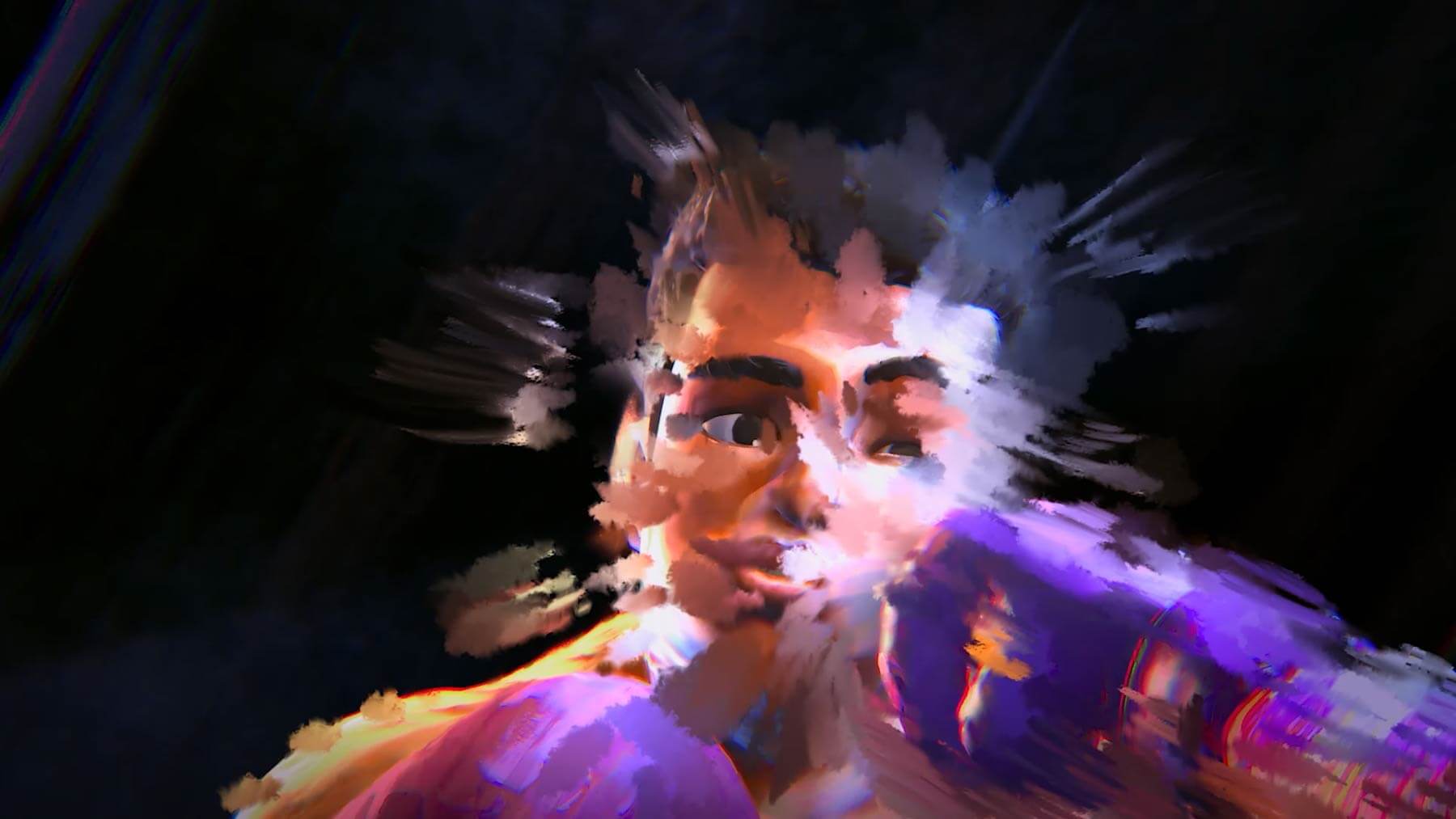
The way that light behaves, the way that the texture behaves, it has a kind of life to it and a movement to it which feels unconventional and innately creative. And so it’s trying to reflect in the art direction and the motion technique how a dyslexic mind works.
Art&Graft utilize a broad range of aesthetics and you’ve used a painterly style before for campaigns for Royal Ascot and Google Quantum. Was the technical process similar for What is Dyslexia?
With every project, we like to make life hard for ourselves, and so we try and devise a visual language and an art direction that best suits that particular project. It was certainly the case with this: how can we yeah create a unique art direction and visual language that captures the essence of the script and the message that it’s trying to convey?
We’ve got real kind of mix of talent in in the studio, and this is a combination of obviously a lot of 3D underneath it, but also this kind of hand drawn loose aesthetic as well. So there was quite a bit of R&D that went into finding that visual direction at the start, and we wanted to be ambitious.
Looking through your press and behind the scenes materials, you had quite a few iterations of character designs – how did you land on the final designs in the end?
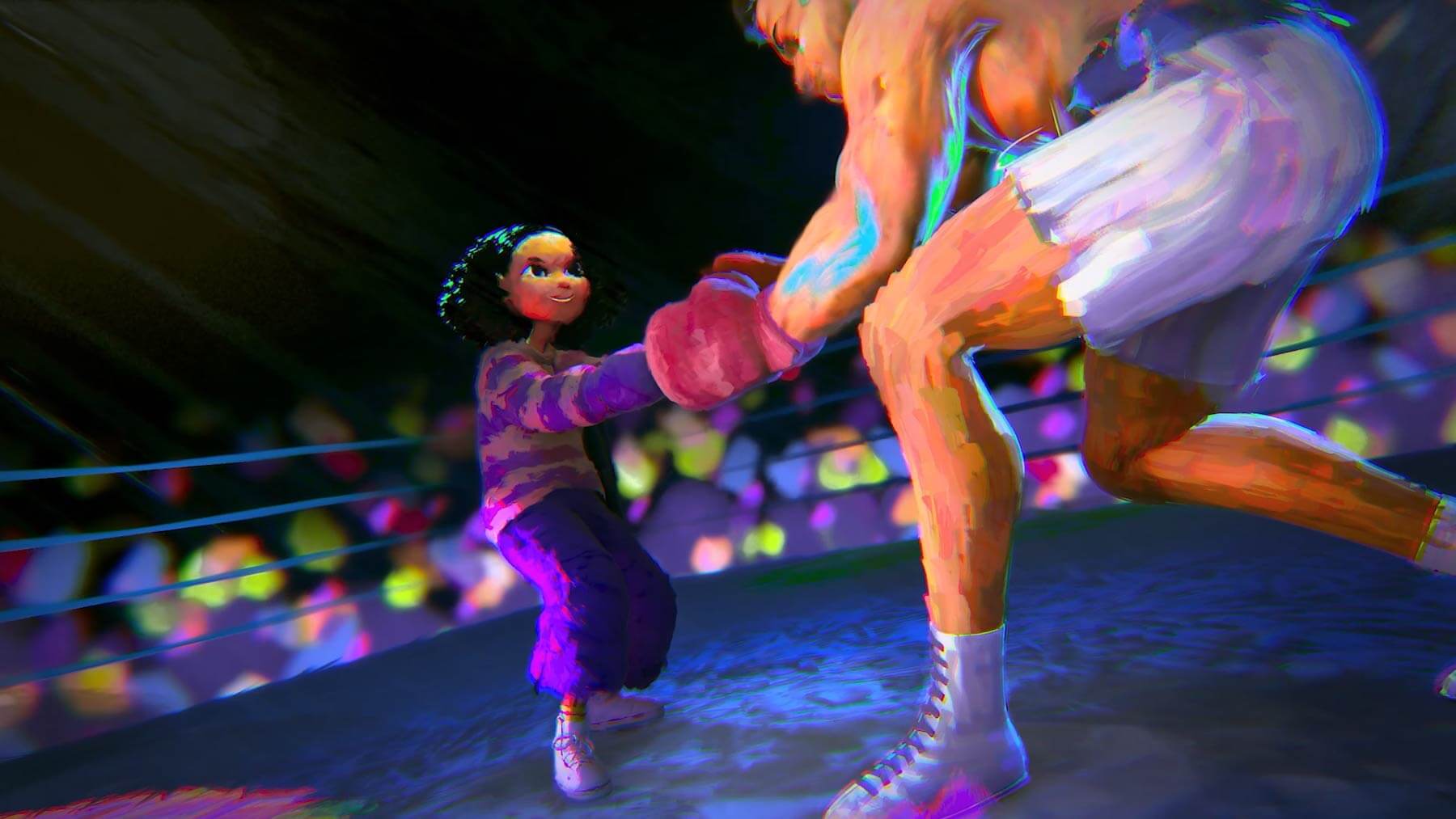
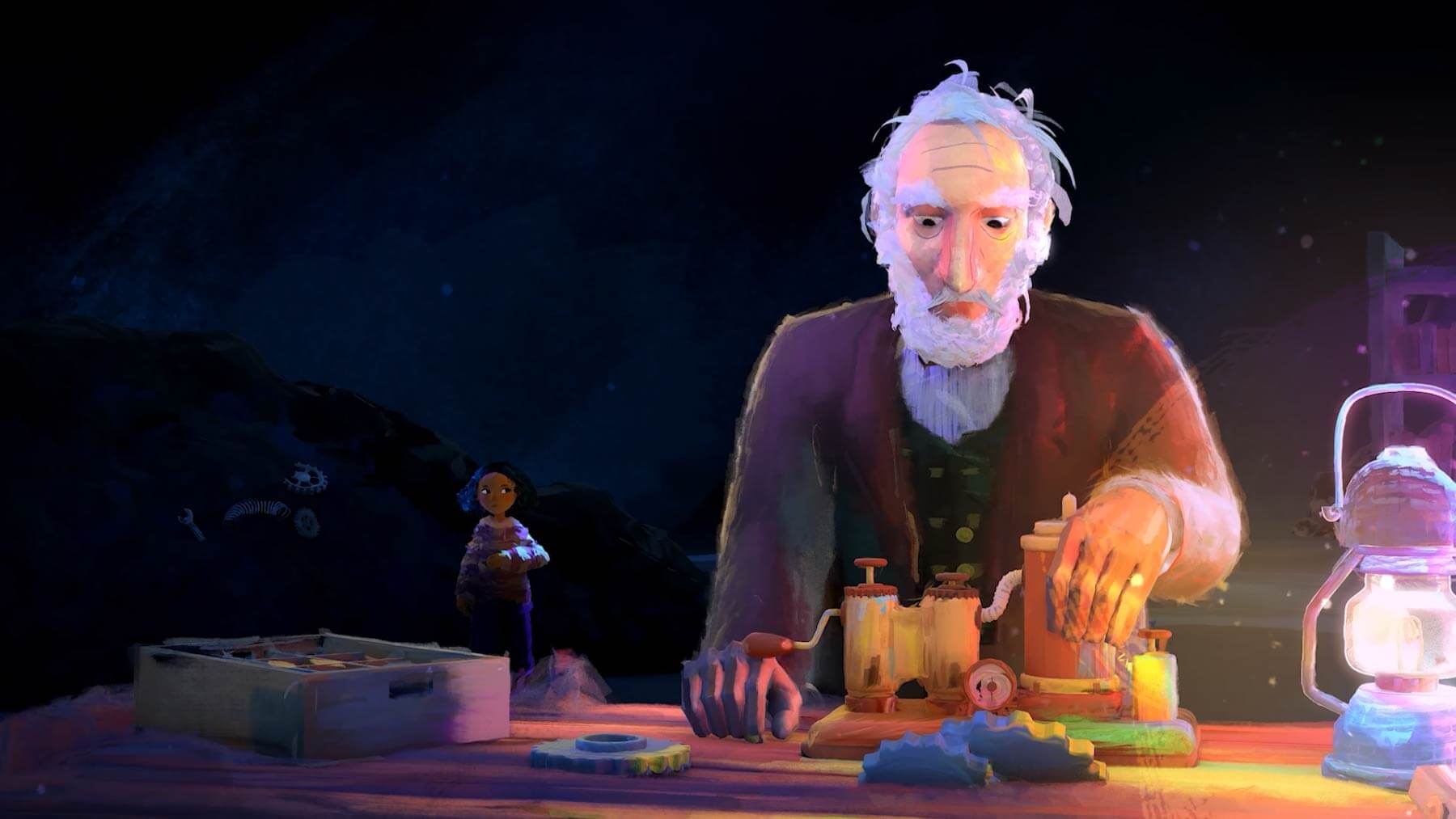
I think as always with the character design process, a lot of it comes from reference and research and casting and finding similar people, whether that’s in pop culture or actors or anybody you feel like connected. Obviously there are some like famous faces in this as well – hopefully you can recognize some of those guys, like Muhammad Ali and Henry Ford.
It’s always about trying to capture the essence of that person, in a way that feels like it belongs to the world, but without removing too much; asking what’s special about them, and distilling that essence.
When I was watching it, I was first reminded of the kind of the scratchy, anarchic style of the Spider-Verse movies. Were there any inspirations from other animated films or from any other artworks that you had when you were coming up with a style for What is Dyslexia?
I can definitely see the link. I think that sort of movement of the material and the paint is definitely in that space, but we’d always approached it from an art direction point of view, wanting it to feel human and warm and have that like very 2D painterly quality to it. And also to be able to feel that there are these three-dimensional camera movements and a sense of space and depth – you can get the performance out of the characters in the best way in 3D – but that the technique itself feels like it exists within a 2D painterly world.
A lot of the R&D work that the team were doing was trying to blend those two things together, like how much the paint should move, what the colour palette and colour balance should be, and how light behaves. Exploring those things informed where we would go with it, rather than necessarily having those keystone references.
The colours that we went with were quite punchy. It was getting to work with an unconventional colour scheme, really trying those to work together in this black void on top of this kind of hand drawn sketchy style, that led us to the final art direction. Made by Dyslexia also use a very a colour palette that is very bright. It’s a lot to do with the idea of the dyslexic brain, and the metaphor that light is not broken – it refracts.
So you just couldn’t go with the conventional kind of direction, right? It wouldn’t feel right.
How did you find working with Made by Dyslexia and with the central cast of the film?
They are just a brilliant team. I think one of the first things we wanted to do was to get them in the studio and meet them, and just say how much the film means to us and how excited we were to work on it together. This was going to be a long road together, and we wanted them to know what was going to be happening and how it was going to be happening because we needed to do it together.
They have ambitions that a superhero would be proud of, you know? They’re incredible and they really get stuff done, and they’ll find a way of doing things on a shoestring – they got all the actors involved. They’re absolute powerhouses, and lovely people as well, which is just a dream.
They couldn’t wait to see what we shared with them each week, which means a lot when guys are staying late and working really hard, painstakingly making everything perfect. To have it so well appreciated means everything.
It’s Dyslexia Awareness Month in October, so they played the film in Piccadilly Circus and made a link that they could send out to schools to play in assemblies and talk about. For the launch they got in touch with the BFI, who loved it. So had a big launch event at the IMAX, and they got the astronaut Dr. Maggie Aderin-Pocock to do a talk about her journey with dyslexia. The man who invented the Trunki came to talk, and they invited loads of kids and schools, and it was just a really joyous inspirational event.
Where would you like What is Dyslexia to go next?
I mean, it’s important that it goes everywhere, because that’s the whole point of it. We wanted to create a piece of work which people engage with, whether they were dyslexic or not, and wanted to get it out there just by enjoying it and understanding the importance of sharing. It’s got such a broad appeal – anybody who’s had sort of diagnosis as a kid and feels that they’re possibly limited can identify, and it just shows you that you’re not.
Head to the film’s website to see more of the behind the scenes process and assets.