

“We will continue to do it until we can’t do it any longer” – the team behind Wildwood break down their latest adventure

© Blackbear & Laika
Ambition is at the heart of Wildwood. The latest film from Laika looks to stand out amongst cheaply, quickly made sequels to give the world something expertly crafted by some of the world’s most dedicated and talented stop-motion artisans. Set in a fantasy version of the studio’s hometown of Portland, Wildwood bites off more character, landscape and movement diversity than most productions could handle.
The inspiration for this tale of two kids, Prue and Kurtis, being thrust into a magical forest, comes from the Collin Meloy and Carson Ellis’ book of the same name, as well as director Travis Knight’s lifelong admiration of fantasy. “Wildwood breathes the same air of these classic fantasies and fairy tales that I loved since I was a child, things like Tolkien and C.S. Lewis and L. Frank Baum,” Knight tells Skwigly. “This felt like it was painting in those same colors, and yet it had its own unique and idiosyncratic flair because it was brought to life by these two amazing, strange and beautiful artists in Colin and Carson. And then when you bring another group of strange and beautiful artists into the mix at Laika, it starts to develop its own unique flavor.”
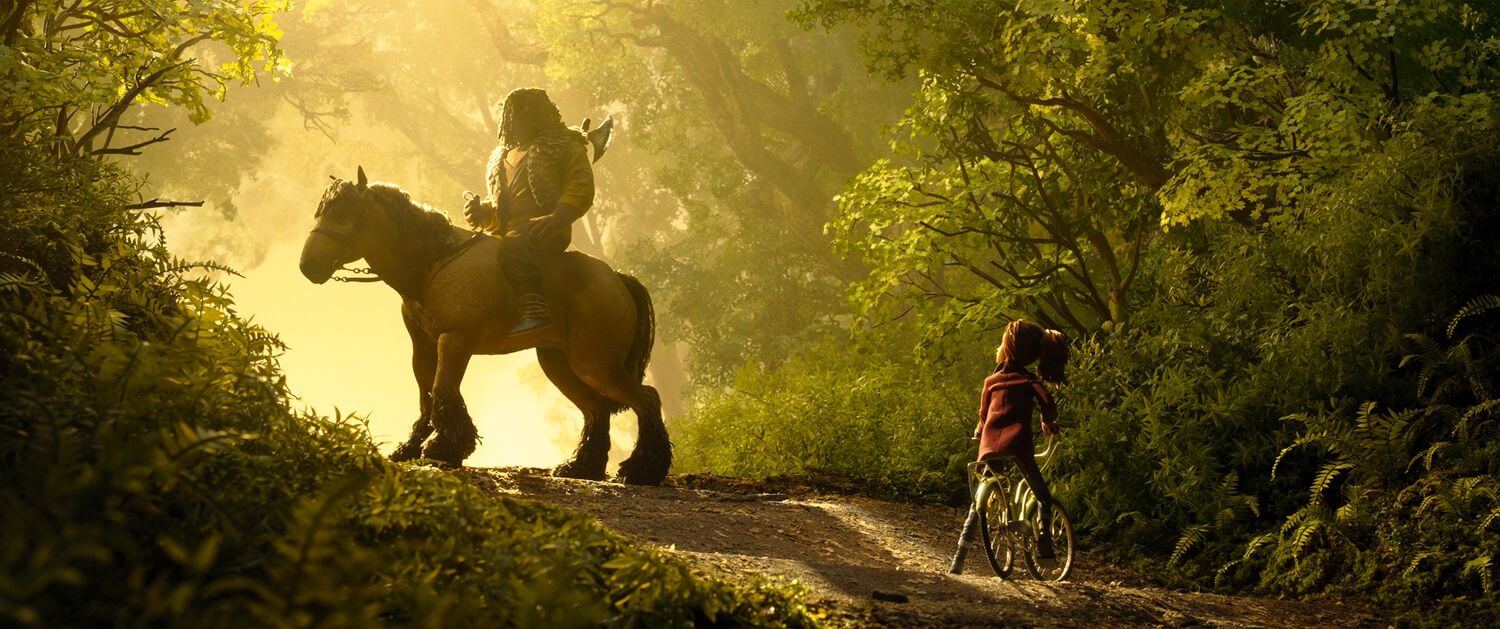
The first challenge for Knight was to establish a fantasy realm that felt of Laika’s own creation, rather than something overly familiar to audiences, “Because we know these worlds so well, you can start drawing from the details of them and then you put your own prism of stylization on top of that, and it starts to feel like a place we haven’t seen before. One of the joys for me was reimagining this place that I was born in, that our studio is based in, reimagining that place as a fantasy realm on a par with Westeros or Oz or Middle Earth. It was a strange thing to imagine, but it was an absolute joy to bring to life.”
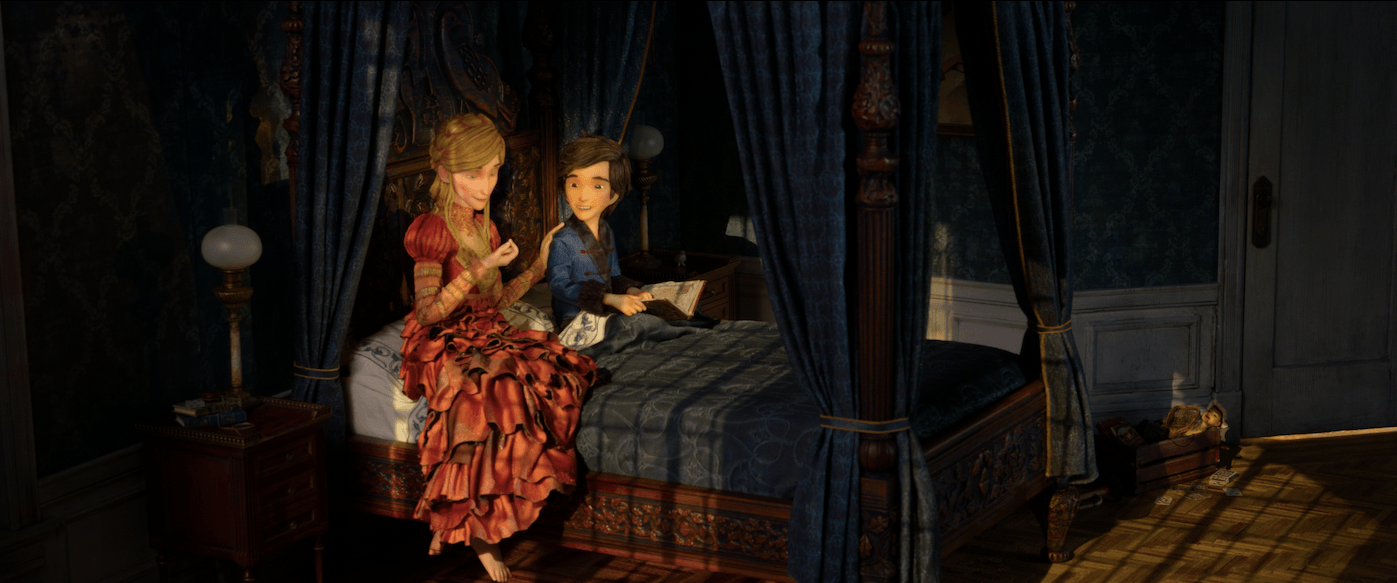
Another early task was to decide on the look of the characters, something costume designer Deborah Cook was key to. “I was aware of this book for a long time in advance before we set about making it, so I had a few ideas,” Cook tells Skwigly. “I talked with Travis about what ideas he had for the characters, and what he wanted from them, and we set some creative guardrails that reveal the characters.”
Those guardrails then expand out to the rest of the crew. Production designer Nelson Lowry tells us about how Wildwood is a true culmination of the studio’s work, “We really couldn’t have made this film any earlier than we did because of all the technical challenges and our working relationships together. The character designs and the costumes come first and they’re the purest form of stylisation, and then I build a world around that. The shape language and the textures and style of the clothing are reflected in the environment.”
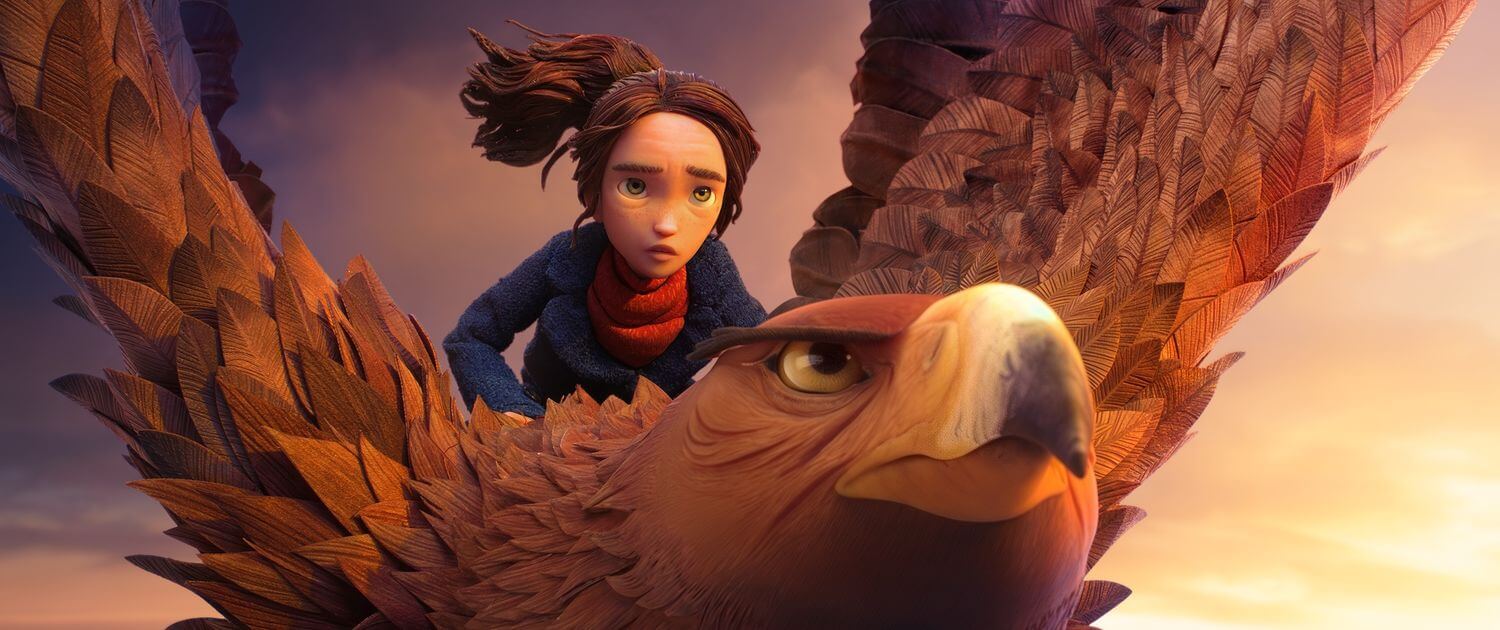
Head of character and practical effects, Oliver Jones’ first move was to translate the character designs into fabricated puppets, “We have to start learning about the iconography of the characters and these signature details that we can extrapolate across other areas of the movie,” Jones tells Skwigly. “I’m trying to take those cues and make sure that it’s coherent when we’re moving from Prue, let’s say, and she’s got a couple of little flicks that are breaking the silhouette, that you’re seeing those same ideas come across in a coyote or in an eagle or something like that. Those rules become very important.”
© Blackbear & Laika
For Brad Schiff, head of character animation, the rigging side of the project was an initial concern, “Rigging used to be for suspending characters in midair because we’re fighting gravity all the time, but now we’re able to develop our own performance rigs that allow for even more precise, nuanced movement. Every film has been R&D for the next one. We started to use reference all the time, and animators are now committed to being better performers, better actors, and that really played a hand in the naturalism in this movie.”
For as much as Wildwood is a technical feat, one of Knight’s biggest jobs was to ensure that the audience is immersed into the world, not thinking about the technique, “I think the process of creating art leaves fingerprints on the art, and what you’re seeing with a movie like this is the collective humanity of everyone involved bringing these things to life. I do think it enhances the story that we’re telling, but in the end, it’s not the point. The point is the story that you’re telling, the themes that you’re exploring, the characters that you hopefully have grown to love over the course of the movie. You hope that people forget about technique and they don’t see these things as inert assemblages of steel and silicon and fabric. That’s the miracle of stop motion, you take something that has never lived, and because somebody else gives that thing a piece of their life, it springs to life.”
© Blackbear & Laika
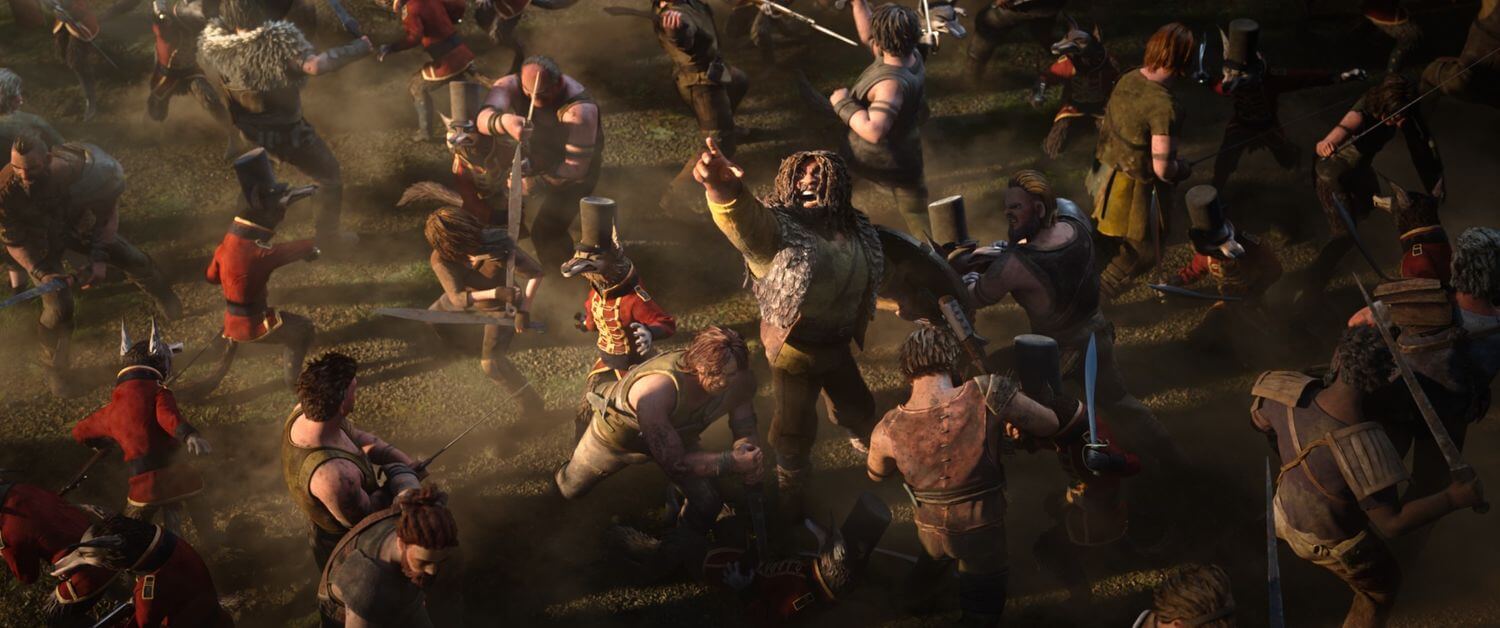
The actual world of Wildwood is fraught with political angst. We see useless bureaucrats, a fascist queen and a rebellion of bandits fighting for freedom. “There are so many different layers within the film,” states Knight. “It’s a political satire, it’s an eco fable, it’s a grand adventure story, but what we never lose sight of is the primary question that’s driving the entire narrative, which is how far would you go for someone you love? In life and in our movie, love asks you to hold on, but life sometimes forces you to let go and this film deals with the cost of that. It deals with the cost of loving someone and losing someone.”
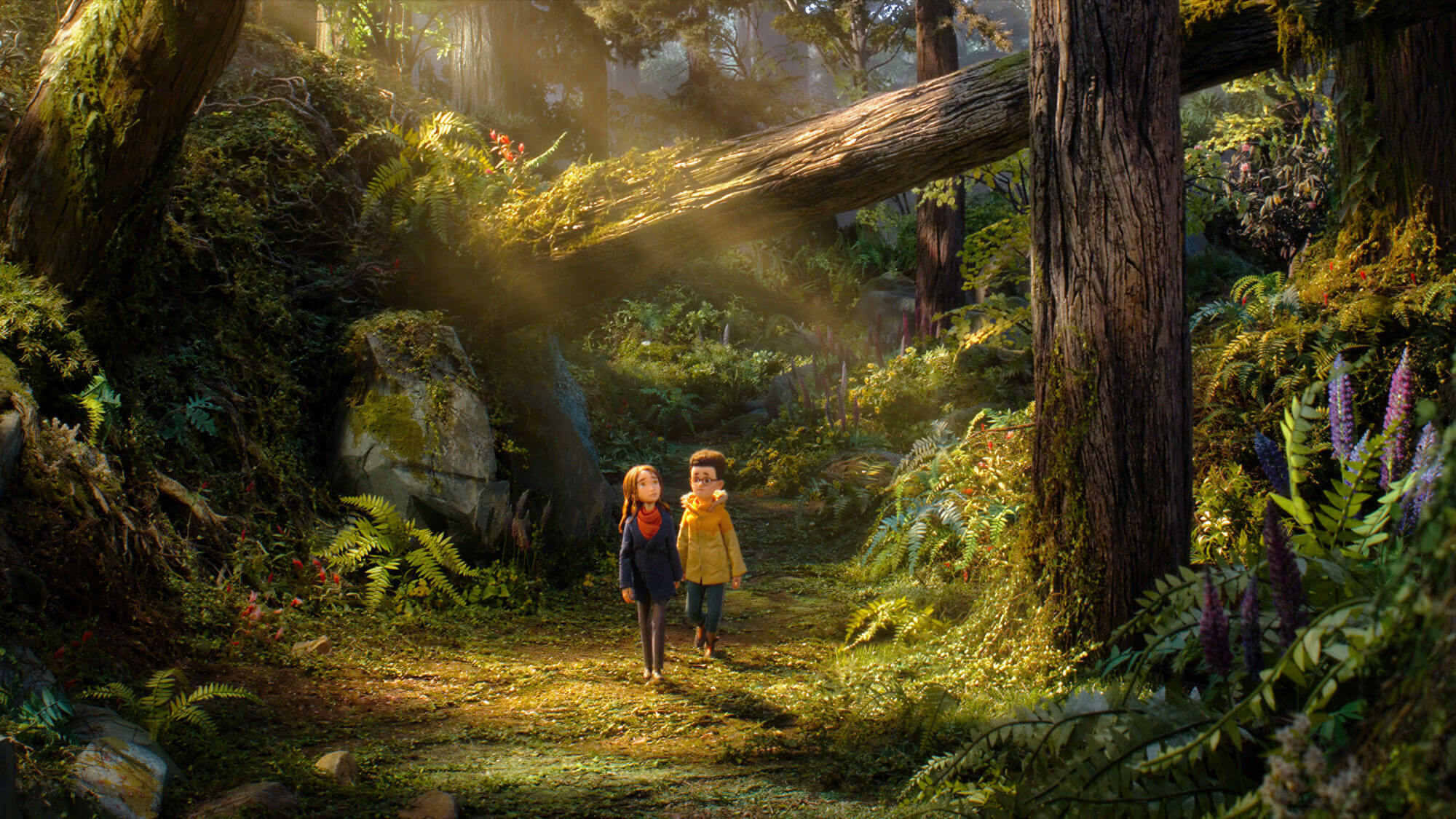
Big ideas require a big scale, and every department on Wildwood delivers on making the film feel huge. “There are 136 unique locations, which is double what we did on Kubo,” says Lowry. “It’s the largest film for us ever, and it’s about spreading resources and attention to detail across all of those, and the environments actually become characters. It was a large volume of work at a much higher frequency of detail and finish in the film. People say it’s more realistic, I think it’s more naturalistic, because it’s still stylised.”
For Cook, the idea of scale applies to making sure smaller puppets still feel like full sized people, “Fabric is woven for our scale and our world, our sense of gravity. But when you move that onto a character that size, 1/5 scale, it still moves in the same way. So we have to engineer everything from underneath the costumes. All of these costumes that you see have a certain amount of understructure to them that enables them to move in scale with the puppet. There’s a follow-through movement that you would get for free on a human, they don’t need their clothing engineered from underneath because their body moves it. But for the animators, they have to follow along to make it look like a realistic movement, like the costume movement is being propelled by the body underneath it.”
© Laika & Blackbear
Jones had the pleasure of working out how to fabricate Septima, a tiny mouse who often sits on Kurtis’ shoulder, “The tried and tested way of producing something like that is to produce an overscale asset, which is more akin to the scale of our puppets, something around 10 inches tall. But we spent a long time developing the smallest animatable puppet we’ve ever produced, which is barely an inch tall, and it has a fully articulated armature that’s made out of bronze cast chest block. It has animatable ball and socket shoulders, and then it has waterjet cut limbs, and it’s completely animatable. But these guys have to use tweezers to get the performance.”
The scale of the film was also grand in the number of shots put on screen. There are 2700 shots in Wildwood , with only 20 of them needing to be reshot. “This movie had about 1000 more shots than Missing Link had, which was our biggest prior to this, and 900 of those were a second or less,” explains Schiff. “The sheer amount of work that an animator has to do because the shots are so short, they’re owning multiple units, so they’re bouncing between four different units at any given time. Often, there’s not a beginning and a middle and an end to every shot. Wildwood is shot like a live-action film, so there’s quick cutting and so many shots are just middle. Getting your head around that sometimes for an animator is a really difficult thing.”
© Laika & Blackbear
Laika is a studio committed to original storytelling, even as the cinematic landscape around it becomes less conducive to originals existing and thriving. Knight wants to hold on to that aspect of the studio for as long as humanly possible, “You can try as much as you can to fight against the tide, but it’s interesting because we’re increasingly seeing consolidation in our business, we’re seeing fewer and fewer people making movies, we’re seeing few opportunities to get films made. Oftentimes, those films have to have a Roman numeral behind them, or they will not be considered. It’s so difficult to get anything made, and yet that doesn’t mean we shouldn’t try.
“We’ve always tried at our shop to try to tell interesting and beautiful and original stories that connect with audiences, but it’s not easy. I believe this because I’ve devoted my life to it, art needs advocacy. It needs champions. It needs people who believe in it, who try whatever they can to keep these things alive. I think about my own life, and it’s only some of these types of stories that connected with me as a lonely kid growing up in Portland, Oregon, that actually made me feel less alone. Those are the types of stories that I want us to tell. I’m hopeful that this movie will connect with some kid like I was and make them look at the world in a slightly more hopeful way. That’s what we do, and we will continue to do it until we can’t do it any longer.”