


Coming Home – Don Bluth: Somewhere Out There: Review

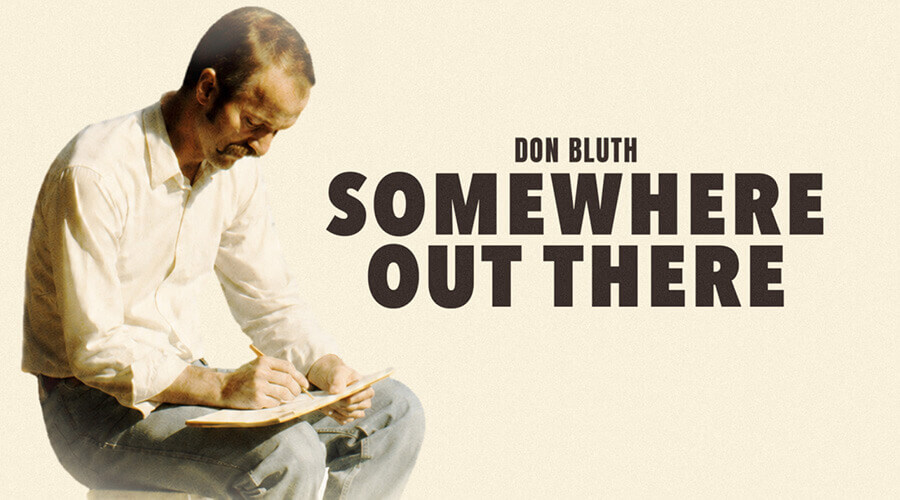
Calling famed animator and director Don Bluth a Disney imitator isn’t necessarily untrue. He worked for the company, idolised Walt, and after he left to establish his own namesake studio the stylistic similarities between their work and his were hard to deny (I dare you to find anyone under 35 who didn’t assume at some point that Anastasia was a Disney picture). However, this does a disservice to a man whose drive and determination was perhaps even stronger than that of his hero; after all, he was one of few to fight the Disney company head on, in a battle that arguably generated their finest work.
More than anything, directors Dave LaMattina and Chad N. Walker constructed their documentary Don Bluth: Somewhere Out There to depict its subject as a tortured artist – almost literally. The recurring motif of the film, frequently (and maybe excessively) overlayed on top of archive footage of Bluth and his works, is Powell and Pressburger’s interpretation of The Red Shoes, a Hans Christian Andersen tale about a woman compelled to endlessly dance by the titular footwear. For Bluth, this is the life of an artist: rapturous, inescapable, barbaric.
Structured with title cards containing the names of Hero’s Journey stages vis a vis Joseph Campbell’s theorisation – appropriate for such a by-the-numbers filmmaker – Don Bluth: Somewhere Out There is at once a celebration, an elegy, and a cautionary tale. Tracking the career of the filmmaker from his exit from Disney in the 1970s to his present day stage work, with sprinklings of his early years in between, it’s a real love letter for any fan.
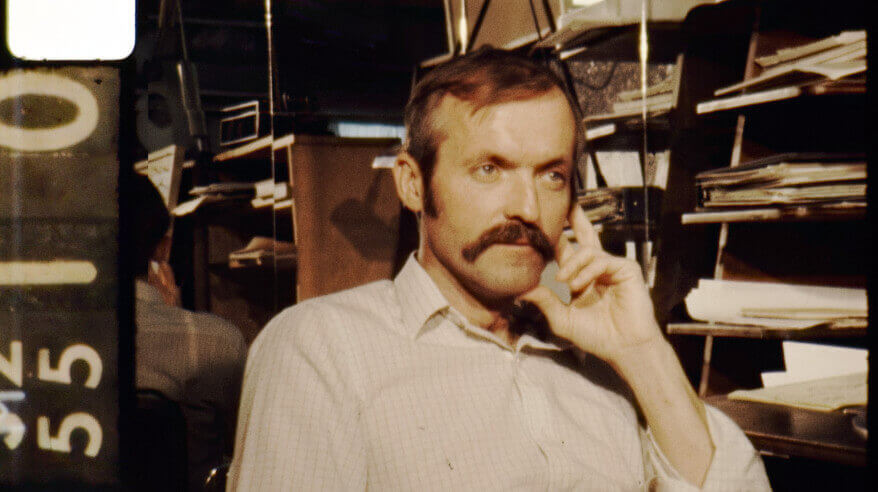
Still from ‘Don Bluth: Somewhere Out There’: A young Bluth.
(Image courtesy of Copper Pot Pictures)
So, I suppose I must confess something: I don’t count myself as one. Bluth is a truly talented animator, but his films never quite connected to me as a child or in adulthood. Opposed to the classical majesty of Disney or the freshness of Studio Ghibli, Bluth’s brand of cinematic animation was a little too Campbell for my personal taste. So did I find value in a movie so fixated on his life, his artistry, his drive?
Approaching this film as a lover of animation, but not particularly of Bluth, I was fascinated by what an odd figure he turned out to be. Sporting a Walt inspired moustache and a rural Utah earnestness, he’s that kind of Ned Flanders’ normal that’s so ordinary it circles back to bizarreness. This dialectic between Bluth as the All-American Hero and the insecure underdog tracks throughout his career, and even across settings and histories, his films share a common theme of a seemingly underpowered protagonist trying to find their way home.
Intriguingly, Bluth’s commitment to his Mormon faith is put out rather matter of factly, the film making no comments that designate the director as a cult member nor valorise the moral fibre that the LDS Church instilled. This creates a fascinating tension in his own Hero’s Journey – was Bluth’s call to adventure his initial hiring at Disney, or his call to mission just a year into the job? My own apprehension towards this All-American religion was represented onscreen by an Irish person bluntly telling Bluth that they didn’t think Mormons did things like make animated movies. Bluth laughs it off, but doesn’t his mission, which directly interrupted his original stint at Disney, suggest there’s a kernel of truth to this?
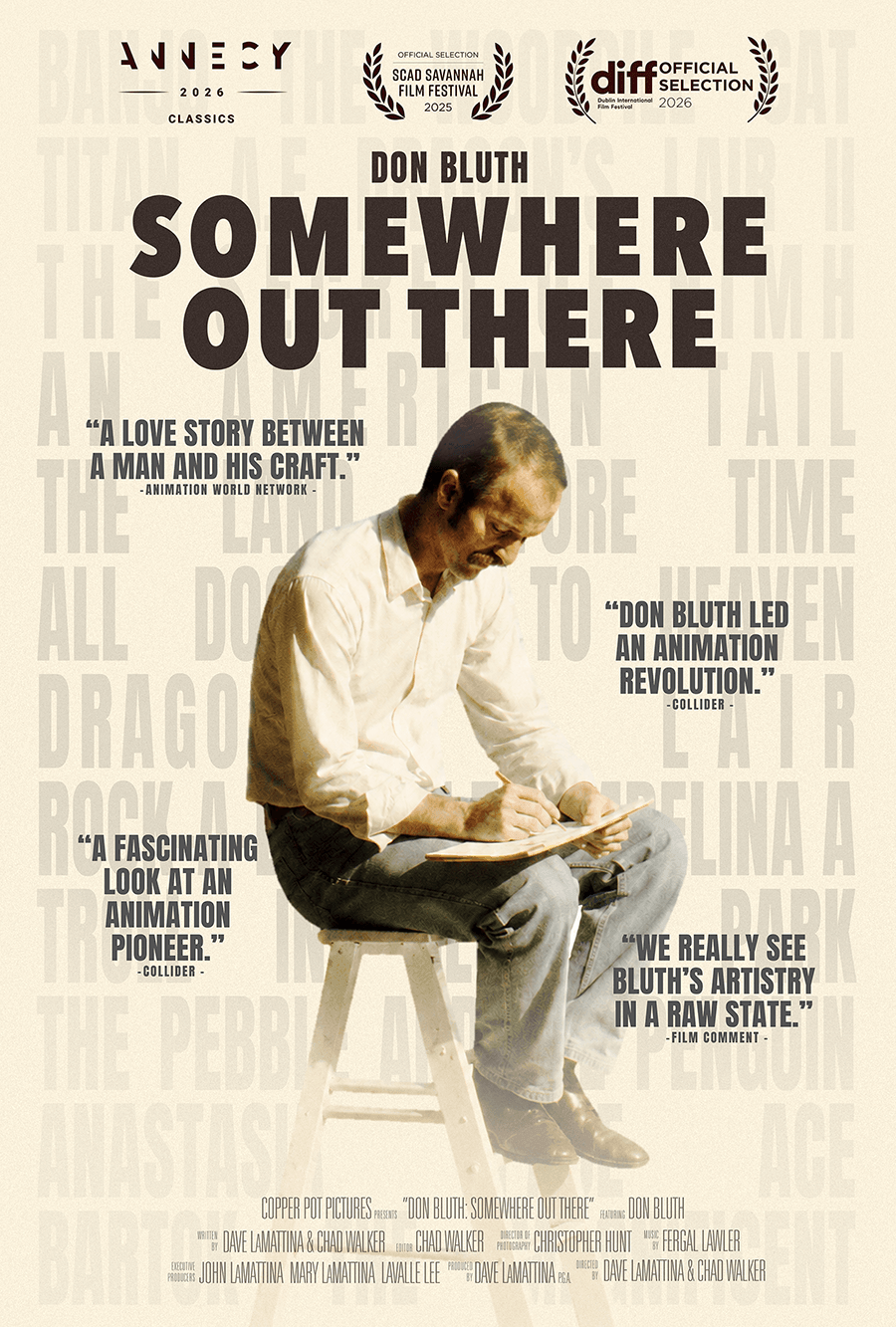
Film poster for ‘Don Bluth: Somewhere Out There’
One component that this story could have fleshed out further is, surprisingly, Bluth’s actual work. Though we spend a good quantity of time on the artistic development of The Secret of N.I.M.H. and An American Tail, this is largely left behind once we reach The Land Before Time, which is primarily framed in box office terms. By the time we get to Anastasia, the film is almost doing what Bluth lamented both Disney and Saturday morning cartoons for: focusing on the monetary gain rather than the art of animation.
The film also tackles a more unexpected topic for a movie about animation, that being masculinity (or the lack thereof). Though Bluth dismisses his work on the revolutionary arcade games Dragon’s Lair and Space Ace at points, much preferring his feature film work and disparaging them as ‘cartoons’, it also seems that the latter contains some of his most personal storytelling. Seeing himself as the Infanto Ray effected Ace, a gangly teenager navigating a world of monsters, and Ace’s true buffed up form as his own ‘jock’ father, it’s a startling reveal of the insecurity that rests beneath a thick veneer of conformity.
LaMattina and Walker don’t quite frame Bluth’s extraordinary life as a tragedy, but they certainly complicate the narrative of Bluth as the underdog genius whose noble sacrifice at the altar of animation made it all worth it. An especially poignant line from Bluth comes in the final moments of the film: when asked if he has any regrets, he quickly brushes off the notion, before almost offhandedly remarking that he does, in fact, regret never marrying or having children. For a man belonging to a religion where one must be wed to reach the highest plane of heaven, this carries a greater weight. For a filmmaker whose work all centres around the reunification of the family, it’s even heavier.
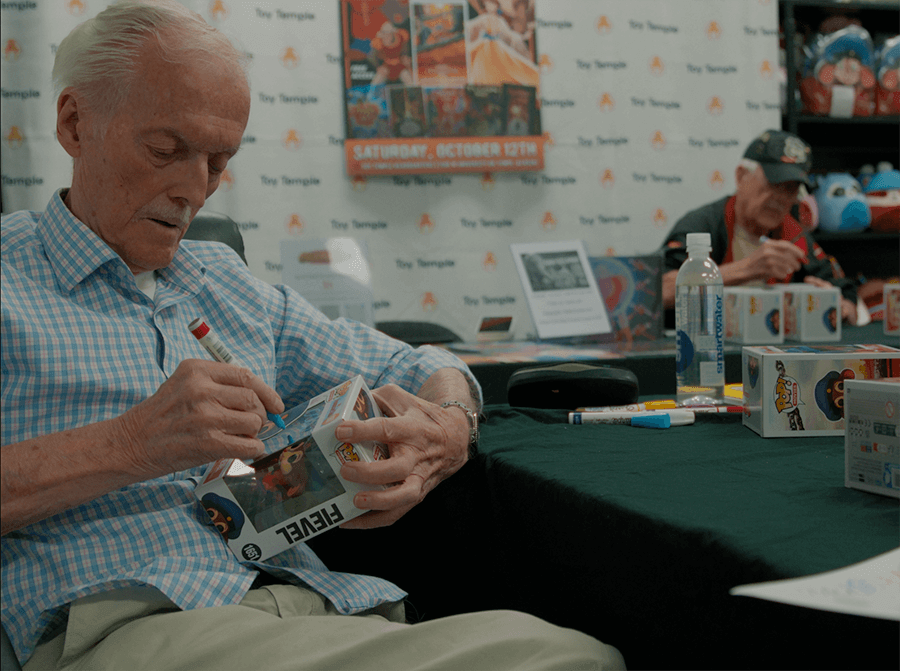
Still from ‘Don Bluth: Somewhere Out There’: Bluth signing a Fievel Funko Pop! figure.
(Image courtesy of Copper Pot Pictures)
Bluth concedes that the artistry would have been impossible otherwise – an idea established earlier on by his frustration at animators who left Ireland to return to their families back in the US – but the sadness in his tone suggests a lamentation. Unlike Fievel, Mrs Brisby, or Littlefoot, you don’t get the sense that Bluth ever quite found his way home. But plenty of VHS copies of his animated worlds found their way into ours, and doesn’t that count for something? The filmmakers might be reverent, but they’re also surprisingly ambivalent, which by the sober close turns into Somewhere Out There’s greatest strength.
Don Bluth: Somewhere Out There is available now on Amazon Prime Video in the UK and the US. It arrives on digital platforms in Ireland on 4 December, with wider international availability expected from that date.