
Nathan Greno Talks ‘Swapped’ and Why Great Animation Doesn’t Need Dialogue
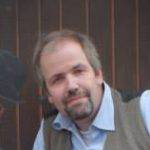
Nathan Greno was born in 1975 in the small town of Kenosha, Wisconsin. His talent for art, design, and storytelling led him from the Columbus College of Art and Design in Ohio to the Disney Studios in 1996, where he started working as a story artist on films such as Mulan, Brother Bear, and Meet the Robinsons. He became head of the story department on Bolt and subsequently got the opportunity to co-direct his first animated feature film, Tangled (2010). In 2018, Greno left Disney Studios for the newly formed Skydance Animation Studios under the artistic direction of John Lasseter. His first feature film at Skydance is the animated adventure Swapped which premiered on Netflix in early May.
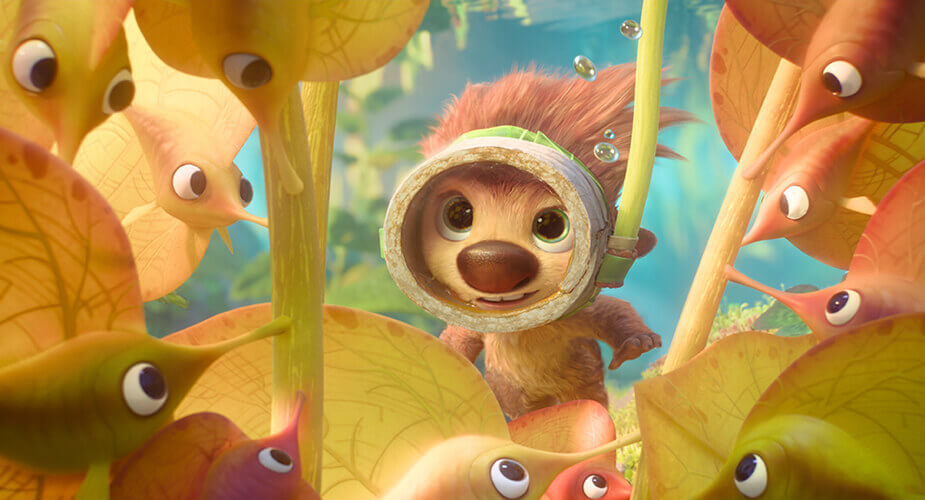
I’m a big fan of non-verbal storytelling. At the beginning of Swapped you have one of the most lovely non-verbal things going on – the underwater scene. Was it tough to come up with something like that?
You know, I love animation because it’s a visual medium and visual storytelling. I think sometimes we’ve seen a lot of animated movies where they do get very talky and very heavy with dialogue. We have a chance to really control the shots, the acting, get in there and really work and rework things. The idea, like you’re saying, to tell a story with as little dialogue as possible, we’re looking for that throughout this whole film.
As we were putting the storyboards together, it seemed to be working. We do internal screenings, and people within the studio seemed to get it, and then we could take it to an even more nuanced level when it got into production and animation. The reaction to this has been fantastic. I couldn’t be happier that people are so excited, and they keep bringing up those scenes that don’t have dialogue. There’s obviously a hunger for that kind of storytelling in animation.
So, why animation for you? Was it the visual storytelling? Was it being the God of everything because you can create everything and you are in charge of everything? What attracted you to animation?
When I was a kid, I was always creating my own comic strips and comic books and things like that. At some point, I started noticing credits. There wasn’t VHS back then, so I had to go to the theater to see Disney films, and they used to rerun the classics every couple of years. Sometimes our schools would show films like Dumbo. I really fell in love with those movies and how they emotionally made me feel. The classic Disney films, especially Bambi, Dumbo, and the 1950s films like Cinderella and Peter Pan, were just amazing to me.
At some point, I realised there were names in the credits and thought: people actually make these movies. They don’t just spring from the head of Zeus. I grew up in a very small factory town in Wisconsin, and the assumption was that I’d end up working in one of those factories like my dad and grandfather. But I had such a passion for visual storytelling. Over time, I started figuring out how someone from a small town could make their way to Hollywood. What I eventually discovered about animation, especially after reading The Illusion of Life, was how collaborative it is. Even as a director, the most exciting part for me is the teamwork and everyone bringing something to the table. That’s why I love animation.
You must have noticed live action in your youth, which in the end is much quicker than animation…
Yes. (laughing)
Why not try that? Why animation?
I love to draw. When I was making my own comic strips and comic books as a kid, I did have control over the story and how it was being told. I would watch these hand-drawn Disney films and sit there drawing myself. I’d watch these movies, which are basically moving drawings, and it all connected for me. There’s just a charm and appeal to animation.
I love live action movies too, of course. I grew up with Star Wars, Indiana Jones and all these amazing films, and to this day I’m still inspired by live action movies. But for me, what was driving me was working on animated films. There’s something uniquely special about animation when it’s done well. It lives on forever. We still talk about Disney’s earliest films like Snow White, and there are very few older live action films, maybe The Wizard of Oz or something like that, which are still discussed in the same way. A lot of live action films become dated over time, and many people won’t even watch black and white movies anymore, which is a shame. But animation doesn’t seem to have that problem. There’s a timeless quality to it.
How do you define the role of the director for an animated feature film?
I look at my role as the keeper of the story. I’m working with hundreds of people across all these different departments, and I think the smartest way to make a film, or honestly do anything as a team, is to surround yourself with incredibly talented people who are more talented than you in certain ways. I’m not the greatest layout artist or the greatest animator in the world, but I can talk to animators and layout artists about story, and together we can tell that story. That’s what I feel like I do. I hold the story and work on it with the story team and writers, then go from department to department talking about where we’re going with it, the direction and the nuance. That’s what I do.
When you’re guiding a story through the development proces, how do you know when to reject a great idea, especially one that’s visually exciting but not actually helping the story? And how do you say no to creative people in that situation?
If we understand what the story is we are telling, and that is clear throughout the process, then people can come in with different ideas. Here is the way I look at it. I have worked with directors in the past where it almost feels like we are trying to hit a single bullseye on a dartboard, and all we are trying to do is make exactly what the director thinks, like there is only one right answer.
The way I look at things is slightly different. I know where my bullseye is, but I think of the whole dartboard. As people are throwing ideas, I am asking: are we still on the dartboard? Because if we all understand the story we are telling, somebody might throw out an idea and I will realise: actually, that is smarter than what I had in mind. I might move the bullseye over there. There is no scorecard in animation. Nobody keeps track of who came up with which idea, and none of that matters. If somebody has a brilliant idea, let’s put it in the movie. We will all look smart if the movie works.
I talk to the crew about this dartboard idea all the time. Sometimes people are throwing ideas at a completely different wall, and it is like: the dartboard is over here, that is not the story we are telling. It might be a visually interesting idea, but it belongs in a different movie. That is how I approach collaboration. I want people’s ideas because they are only going to make the movie better.
How long does it take to go from that first idea, through all the iterations and changes, to finally locking the screenplay and starting production? I imagine the difficult part is knowing when to stop refining it. If I were in your shoes, I’d probably keep trying to make it better forever. How do you know when the story is finally ready?
Well, we have schedules and budgets, but each movie is different and has its own path. I worked on Swapped for six or seven years, and it was a constant process of evolution. Early on, I knew I wanted to tell a story about empathy, so we started digging into what empathy actually means. A big part of it is walking a mile in someone else’s shoes and understanding where they are coming from, and that naturally suggested a transformation story. At first we were talking about a human transforming into an animal, but we realised we had seen that kind of story many times before, so we started exploring different approaches.
We started building the structure around a very small and vulnerable creature seeing the world from different points of view. Throughout the process, we kept refining the story through internal screenings and feedback. You get so close to a film that you need fresh eyes to point out what is or is not working.
We would slowly put sequences into production one piece at a time, while still refining the rest of the movie around them. Some of the first sequences we locked were scenes that relied heavily on acting and visual storytelling rather than dialogue. We honestly kept working on Swapped almost right up until release. Even in the last few months before the movie came out, we were still refining sequences.
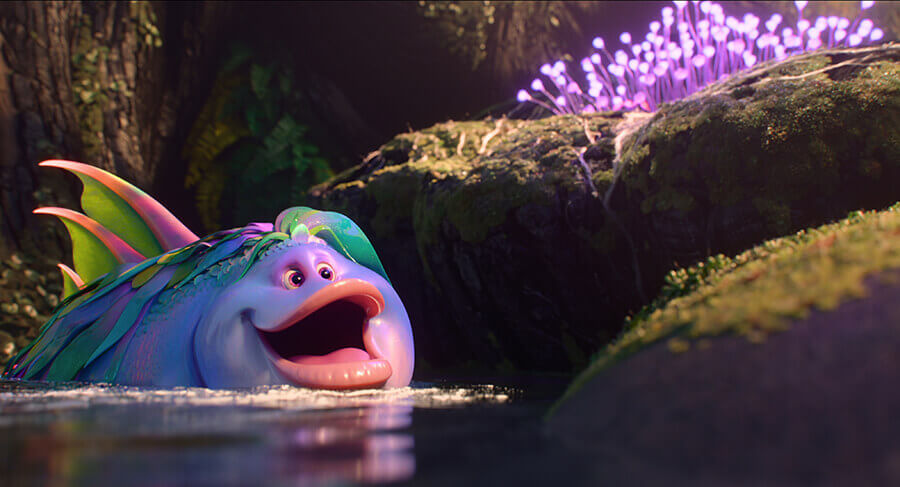
If I had to say who the star of the film is, I would answer: The Light. It looks incredible. You want to be there every second of the movie. Underwater, over the water, in all the danger. It looks so unbelievably great.
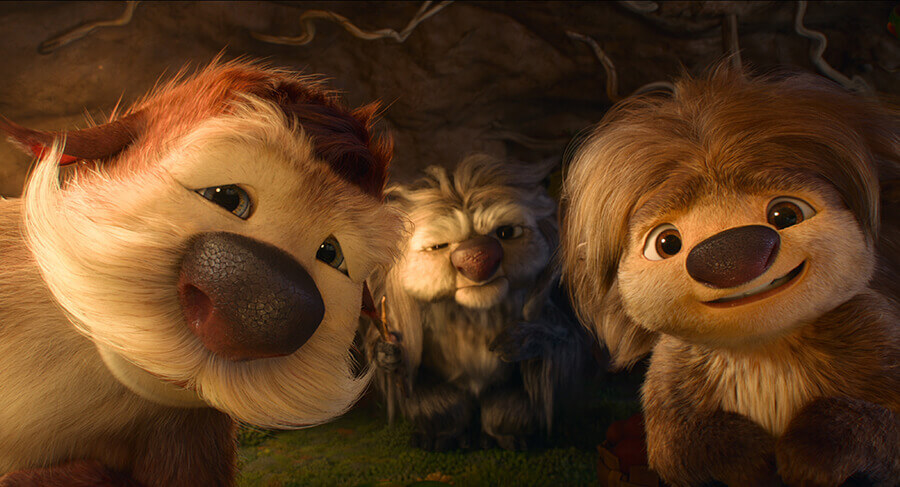
Our production designer was Noëlle Triaureau, Matt Williames was in charge of characters, and there was a whole team of artists focused entirely on the art direction of the film. Early on, knowing that it was going to be a world of animals, we needed to figure out what this world was. We had the idea that it would all take place in a valley to kind of contain the world a bit, even though the scale of the valley is huge. And we wanted it to be a place that, if you could visit, you would. We wanted it to be so beautiful. Even when the world is broken, it is still gorgeous. It is still a place you want to be.
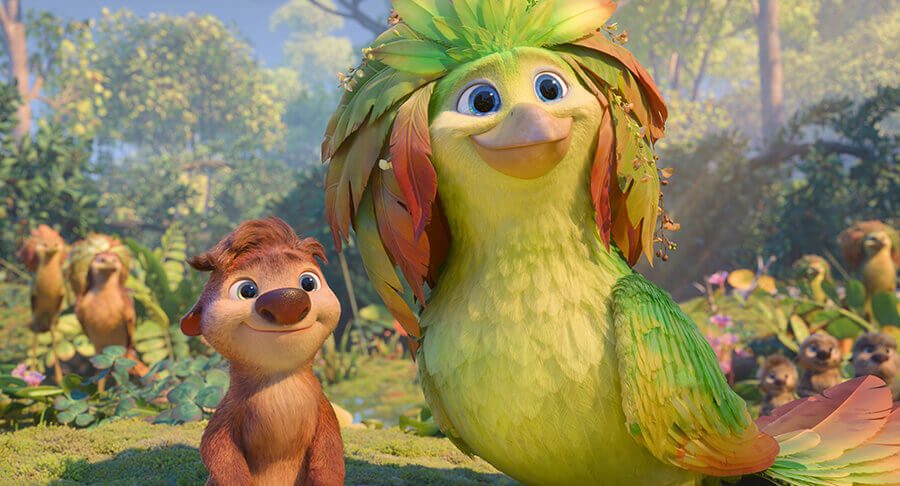
Telling a story about empathy, we wanted the audience to be right in line with our protagonist, Ollie. Ollie is in a bubble, and he does not know he is in a bubble. And we, the audience, do not know we are in the bubble with him. Our understanding is his understanding of this world. That is why we made a lot of decisions to avoid established clichés. Instead of using animals the audience already understands, we created our own species. So when you come into the movie, you are learning about this world at the same time as Ollie.
The Pookoo are the smallest species in the valley, and we wanted this huge contrast between them and these giant walking redwood trees. None of the creatures speak the same language, which was actually very difficult. People would say, can we just do it like The Jungle Book? But we kept pushing back on that because the creatures are meant to feel completely different from one another. They seemingly cannot relate to each other, and that is where this fantasy element in the movie came from.
When the film becomes more dialogue-driven, with the parents scolding the kid and the grandmother telling what seems like a big creation story, there’s a really funny moment where the mother says, “He’ll get nightmares,” and after all that build-up, the kid just says, “That’s it?” I loved the contrast between the expectation and the reaction. How much do you think about audience expectations when telling a story? Do you have a specific audience in mind while making your films?
As far as audiences go, the movie is really for everyone. When I think about this film, I think about my family in Wisconsin. We want it to work for kids, but also for teens and adults, and it is difficult to make a movie that truly plays for everyone.
What you are talking about is layering ideas into the film. A child might pick up on one thing, while an adult notices something more nuanced. You can watch a movie as a kid and then watch it again later in life and suddenly appreciate different layers within it. That was important to me, especially because the world feels like it is lacking empathy right now. Especially in the States, there is a lot of division, and that is one of the reasons I wanted to put that idea into the film.
You can currently watch Swapped on Netflix in the UK.